In this field note11 sections +Close −
- 01What responsible trekking means in the Karakoram
- 02Waste does not disappear beyond the roadhead
- 03Toilets, washing and water protection
- 04Porter welfare is environmental and human responsibility
- 05Village etiquette in Askole and across Baltistan
- 06Local purchasing that produces real benefit
- 07Wildlife, plants and fragile ground
- 08Carbon claims need honesty
- 09A responsible trekker’s packing checklist
- 10Internal planning links
- 11Frequently asked questions
Responsible trekking in Gilgit-Baltistan is not achieved by carrying a reusable bottle and posting a photograph of an empty trail. It is the result of dozens of operational decisions: how a team buys food, packs loads, treats water, hires and equips staff, uses camps, manages toilets, behaves in villages and brings waste back from the mountains.
We see the consequences of those decisions from both ends of the journey. Our expedition work is organised in Skardu, and many of the people who guide, cook, drive and carry for our teams come from Askole and other villages of Baltistan. A clean campsite matters to the next group, but it also matters to the families whose water, grazing land and seasonal income are connected to the route.
Expert tip from Askole: The most useful question is not “Does this look eco-friendly?” Ask, “Where will this item, wage, load or bag of waste be at the end of the expedition?”
What responsible trekking means in the Karakoram
The principles are simple, but conditions are not. Beyond Askole there is no municipal collection truck following a trekking group. On the Baltoro, Biafo or Hispar, the team carries a complete moving camp through exposed valleys and glaciers. Fuel, food, sanitation and transport have to be planned before departure.
Area | Weak practice | Responsible field practice |
|---|---|---|
Waste | Burning mixed rubbish or hiding it under stones | Separating, recording and returning non-biodegradable waste |
Staff | Treating porters as an unlimited source of labour | Agreed wages, controlled loads, insurance, equipment and medical care |
Water | Washing or toileting near collection points | Protected collection areas and sanitation well away from water |
Villages | Photographing people without asking | Permission, privacy and respectful dress and behaviour |
Spending | Bringing every supply from outside the region | Buying suitable goods and services locally at fair prices |
Camps | Expanding into undisturbed ground for convenience | Using established sites and following the guide’s camp plan |
The Gilgit-Baltistan Directorate of Tourist Services asks visitors to carry waste until proper disposal is available, use designated camps, avoid collecting natural objects and minimise plastic and other non-biodegradable materials. Those are minimum expectations. A serious operator also plans the labour, transport and cost required to follow them.
Waste does not disappear beyond the roadhead
Packaging is the most visible problem. Snack wrappers, drink sachets, batteries, damaged sandals, gas canisters, broken tent parts and wet wipes do not decompose on a glacier. Fire does not solve the problem: low-temperature burning leaves residue and releases harmful smoke, while burying waste merely hides it until ice or meltwater exposes it again.
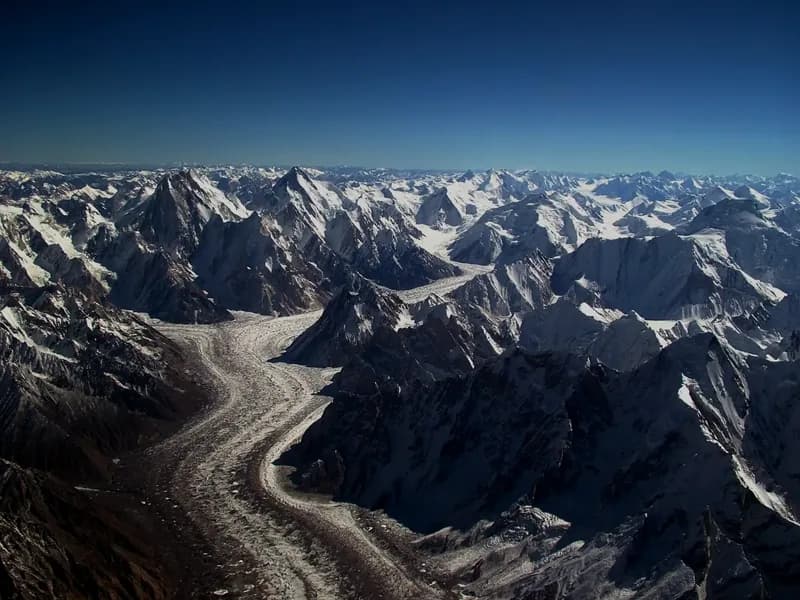
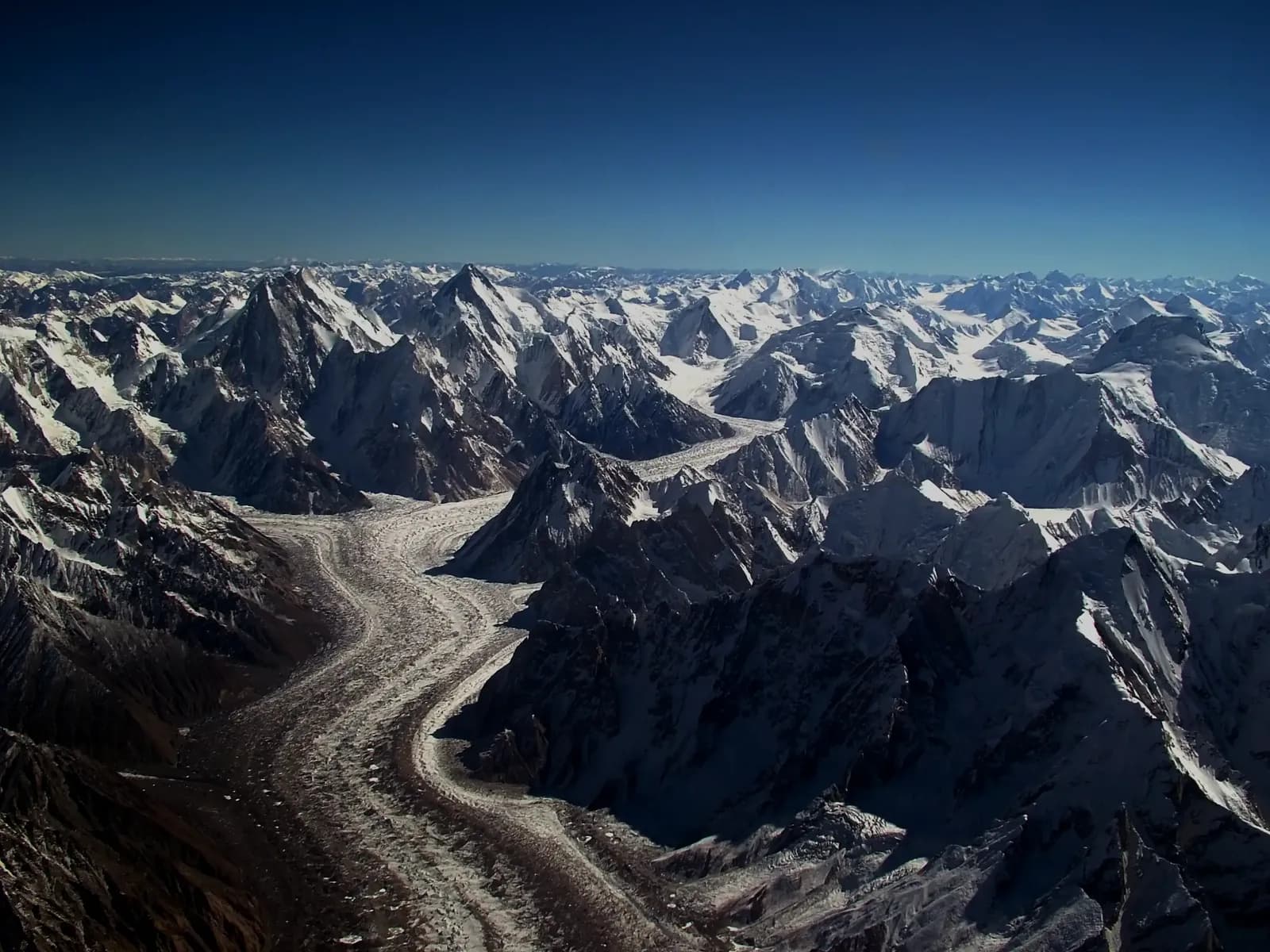
{{image:Baltoro_glacier_from_air.webp|Aerial view of the Baltoro Glacier and surrounding Karakoram peaks|The Baltoro is a moving expedition corridor, not a waste-disposal site. Every team must plan what comes back to Askole.}}
A practical expedition waste system
- Remove unnecessary packaging in Skardu before loads are finalised.
- Assign labelled bags for food waste, recyclables, sanitary waste and hazardous items.
- Keep batteries, canisters, medicine packaging and broken electronics separate.
- Count high-risk items at issue and on return.
- Carry personal wrappers until the guide identifies the group collection point.
- Never place wipes, menstrual products, packaging or batteries in a toilet pit.
- Bring non-biodegradable waste back to the roadhead for the best available disposal.
Food waste also needs judgement. Small amounts of appropriate organic matter may be handled according to the camp system, but scattering leftovers attracts animals and leaves a poor site for the next team. In busy camps, one careless group quickly becomes a large problem.
Toilets, washing and water protection
Water on a Karakoram trek may come from streams, springs, snowmelt or glacial sources. The kitchen team chooses a collection point, settles or filters sediment where practical and applies the group treatment routine. Participants protect that system by keeping soap, toothpaste, food scraps and toilet use well away from the source.
Established camps differ. Some have basic fixed toilets; others use a temporary expedition arrangement. Conditions change with floods, erosion, season and maintenance. Follow the guide rather than creating an informal site behind the nearest rock. Carry toilet paper and a sealable bag for non-biodegradable hygiene waste.
Biodegradable soap is still soap. Use only a small amount and never directly in a stream. The same rule applies to washing clothes and dishes. At cold or crowded upper camps, a careful cloth wash is often more responsible than demanding large quantities of heated water.
Porter welfare is environmental and human responsibility
Porters, cooks and guides make remote trekking possible. Ethical operation includes clear recruitment, agreed wages, load limits, insurance, food, safe drinking water, shelter, functional clothing and footwear, medical assessment and a safe response when someone becomes ill or injured.
A legal maximum load should not automatically become the target for every stage or worker. Terrain, altitude, weather, individual condition and the shape of a load all matter. We weigh and organise cargo in Skardu and Askole, remove excess participant baggage and rebalance when field conditions change. Loose personal items added after weighing undermine that system.
The UIAA guidance on work in hypoxic conditions advises that load limits may need adjustment for altitude, trail and weather. It also treats health care and equipment for porters as questions travellers should ask an organiser.
What a participant can check
- Ask whether staff are insured for the assigned work and altitude.
- Keep your duffel within the stated weight allowance.
- Do not ask an individual porter to carry an unofficial extra bag.
- Report unsafe equipment to the expedition leader, not through public confrontation.
- Treat tips as separate from wages.
- Coordinate donated equipment through the leader so distribution is fair.
- Notice whether an ill worker is assessed, supported and accompanied rather than simply dismissed.
Village etiquette in Askole and across Baltistan
Askole is a home, not a themed entrance gate to K2. People are working, farming, attending school, caring for relatives and preparing expedition loads. Ask before photographing anyone, especially children. A friendly conversation does not automatically grant permission to publish a portrait online.
Dress and behaviour should fit the setting. Public affection, loud late-night activity, alcohol and intrusive drone use can cause offence or conflict. Drones may also be restricted for security, privacy, conservation or permit reasons; do not launch one because a map application shows open airspace.
Use greetings, listen to the local guide and allow people to decline a photograph without persuasion. Do not enter homes, fields, mosques or enclosed compounds without invitation. During Ramadan and religious occasions, take particular care with public eating, drinking and noise, following the guidance of the team.
Local purchasing that produces real benefit
Local benefit is strongest when it is part of the operating model. Drivers, guides, cooks, porters, accommodation, vehicle repair, food purchasing and equipment services can all retain value in Gilgit-Baltistan. Buying a token souvenir at the end of a trip is welcome, but it is not a substitute for fair employment through the full supply chain.
Not every item should be sourced in the last village. Specialised medical supplies, technical equipment and bulk food need advance quality control. Responsible purchasing balances safety and reliability with fair local procurement. It avoids bargaining a small producer below a reasonable price while paying international prices without question elsewhere.
Wildlife, plants and fragile ground
Do not feed wildlife, approach animals for photographs or leave food accessible around camp. Keep distance from livestock and follow instructions when dogs guard herds. Plants grow slowly in high, cold environments; avoid pulling vegetation or widening a camp into undisturbed ground.
Rock cairns, fossils and apparently ordinary stones belong to the landscape. Building new markers can confuse navigation, while removing natural or cultural objects gradually strips a place of its character. Stay on the route selected by the guide where doing so is safe.
Carbon claims need honesty
An international expedition has a footprint. Flights, vehicles, food, fuel and manufactured equipment all contribute. We should reduce what we can measure before making claims about compensation. That means efficient group transport, durable equipment, repair, careful fuel planning, less packaging and avoiding unnecessary cargo.
Carbon offsets do not clean a campsite, protect a water source or correct an unsafe porter load. If an operator discusses offsets, ask what standard and accounting method are used. Treat them as one possible measure after direct reductions, not as a permission slip for waste.
A responsible trekker’s packing checklist
Bring from home
- Durable water bottles or a hydration system with adequate capacity
- Rechargeable batteries where suitable and a secure bag for used cells
- A washable cloth, small soap supply and hand sanitiser
- Reusable eating items if these are not provided by the operator
- Sealable bags for personal hygiene waste and broken items
- Clothing and equipment that has already been tested and can be repaired
Do in Skardu
- Remove retail boxes and excess plastic before final weighing.
- Buy only the snacks and toiletries you will actually use.
- Confirm the personal baggage limit and keep essential layers in the daypack.
- Ask how the expedition separates and returns waste.
- Review local etiquette, photography and drone rules with the guide.
Do every day on the trail
- Check the tent area before departure, including under rocks and guy lines.
- Secure small wrappers against wind.
- Use the designated toilet and water points.
- Report damaged equipment before it becomes abandoned rubbish.
- Keep a respectful distance from homes, livestock and wildlife.
Internal planning links
For a supported glacier journey, compare the K2 Base Camp Trek, Snow Lake and Hispar La Trek and Biafo Glacier Trek. Continue with our Field Notes on life on the Baltoro, Askole village and Karakoram permits, rescue and porter welfare.
Frequently asked questions
What does Leave No Trace mean in Gilgit-Baltistan?
It means planning loads and camps so waste returns to an appropriate disposal point, water sources remain protected, established sites are used where practical, wildlife is not disturbed and cultural places are respected. The exact method must fit local regulations and field conditions.
Should trekkers give equipment directly to porters?
Speak with the expedition leader first. Coordinated distribution is usually fairer and helps ensure equipment is functional, correctly sized and given according to operational need.
Can wet wipes be buried in a camp toilet?
No. Most wipes contain fibres that persist for years. Carry used wipes and other non-biodegradable hygiene products out in sealed bags.
Is bottled water the safest choice?
Not usually on a remote trek. A managed treatment system and reusable bottles avoid large amounts of plastic. Follow the expedition’s water instructions and bring the required capacity.
How can I tell whether an operator treats porters responsibly?
Ask specific questions about wages, insurance, load control, food, shelter, equipment, medical care and the procedure for an ill or injured worker. Clear operational answers are more useful than a general ethical claim.
Are drones allowed on Karakoram treks?
Do not assume they are. Security, protected-area, permit, village privacy and aviation restrictions can apply and can change. Obtain current written approval and the operator’s consent before carrying or flying a drone.
End of field note
Continue your research.
Browse all notes