In this field note14 sections +Close −
- 01Askole is a home before it is a roadhead
- 02The rhythm of the year
- 03Farming and water
- 04Expedition work and household income
- 05What happens when an expedition arrives
- 06Roads, bridges and communications
- 07School, family life and privacy
- 08Faith and everyday etiquette
- 09Buying locally without creating pressure
- 10Waste and sanitation at the village edge
- 11What visitors often misunderstand
- 12Visitor checklist
- 13Internal planning links
- 14Frequently asked questions
Askole is often described in expedition itineraries with one phrase: the last village before the Baltoro. That is geographically useful and socially incomplete. Askole is a home, an agricultural settlement, a place of worship and schooling, and an important source of skilled expedition labour. K2-bound visitors see only a short section of a life that continues before and after the summer trekking season.
Our connection to Askole is operational and personal. Loads assembled in Skardu are checked again here. Local porters, guides, cooks and animal owners join teams. Road and trail information passes between households and expedition leaders. When a bridge, flood or landslide changes access, Askole residents often know the reality before a distant office does.
Visitors should arrive curious but not intrusive. The village does not exist as scenery for an expedition launch. Understanding that simple fact makes every conversation, photograph and transaction more respectful.
Local perspective: Askole is where the road ends for a visitor, but it is not the end of anyone else’s world. Families here are connected to Shigar, Skardu and the wider region through education, trade, marriage and seasonal work.
Askole is a home before it is a roadhead
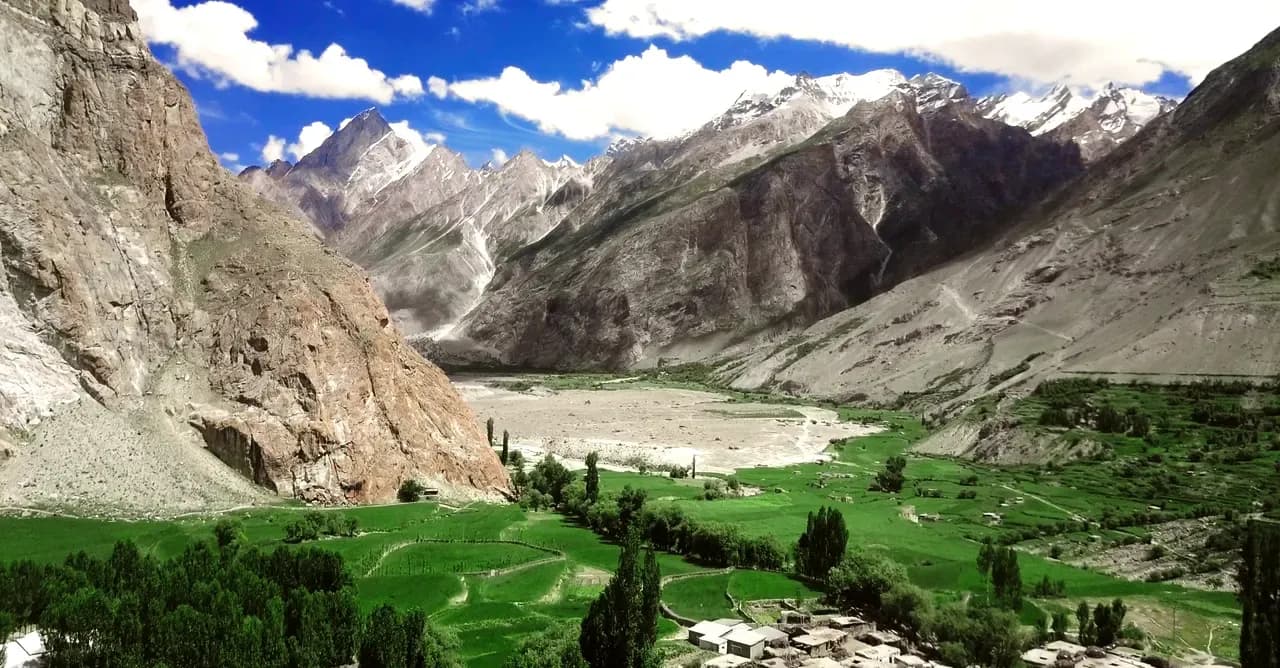
The village lies in the Braldu valley system of Baltistan. Houses, lanes, fields, irrigation channels, animal areas and community spaces occupy limited workable ground between steep mountains and the river environment. Every piece of flat land has practical value.
What an expedition sees | What it means locally |
|---|---|
A final equipment check | Seasonal work, wages, animal hire and community coordination |
Narrow green fields | Food, fodder and carefully managed irrigation |
Porters assembling loads | Skilled mountain labour with family responsibilities |
A rough access road | Connection to markets, health care, education and administration |
A quiet lane | Private residential space, not an open tourist attraction |
The settlement pattern reflects climate and terrain. Cultivation depends on water being directed carefully through channels. Animals, grain, vegetables and stored fodder are part of household resilience. A careless visitor who blocks a channel, walks through a planted plot or leaves packaging near livestock is not making a small mistake in empty land.
The rhythm of the year
Askole’s busiest expedition period is only one season. Spring brings field work, irrigation preparation and the gradual return of easier road movement. Summer combines agriculture with trekking and climbing employment. Autumn is a time for harvesting, storage and preparation for cold months. Winter reduces outside traffic and can make transport, heating and supplies more difficult.
This rhythm shapes staff availability. A porter may also be a farmer, parent, carpenter, driver or shopkeeper. Expedition departures interact with planting, harvest, religious events and family duties. Recruitment therefore requires local coordination rather than assuming unlimited labour is waiting at the roadhead.
Winter should not be romanticised as peaceful isolation. Snow, cold, damaged roads and distance from services create real work. Families plan fuel and food carefully, and medical or mechanical problems are harder to solve than in Skardu.
Farming and water
Cultivated land is precious. Fields and trees provide food, fodder, shade and stability. Water moves through managed channels from mountain and glacial sources. Maintenance is shared work, and a blockage can affect more than one household.
Visitors should use designated camp, toilet and washing areas. Never pour soap, food waste or fuel near a channel. Do not step across a wall or enter a field for a better photograph without asking. Livestock may move through the same narrow lanes as expedition teams; give animals space and follow the owner’s direction.
Changing heat, flood and water patterns add pressure. It is tempting for visitors to attribute every damaged bank or dry patch directly to climate change. Local observation matters, but a single scene cannot prove a climate trend. Listen first, and avoid turning someone’s damaged field into a dramatic backdrop.
Expedition work and household income
The Karakoram expedition economy creates important seasonal employment. Roles include trekking guides, climbing staff, cooks, kitchen assistants, porters, high-altitude porters, animal handlers, drivers, accommodation staff, shopkeepers and load coordinators.
These jobs are not interchangeable. A person carrying on the approach is not automatically trained or equipped for steep glacier work. A high-altitude climbing porter has a different role, risk and pay structure. Responsible operators define assignments, control loads and insure workers for the actual task.
What fair operation should include
- Clear recruitment and agreed wages
- Loads weighed and recorded before departure
- Food, safe water and suitable shelter
- Clothing and footwear appropriate to the assigned stage
- Insurance and emergency documentation
- Medical assessment and treatment
- A safe return plan for illness or injury
- Payment and tips handled transparently
Guests can help by staying within their baggage allowance and not giving private carrying instructions to individual workers. One extra day bag looks minor, but multiplied across a group it alters the load plan.
What happens when an expedition arrives
A typical team does not simply park and start walking. Vehicles reach the best available roadhead, which may differ after flood or repair work. Group equipment is unloaded and checked. Loads are divided between porters and pack animals where the route allows. Staff lists, baggage weights and final camp items are confirmed.
Participants keep essential clothing, water, medicine, documents, headlamp and sun protection in daypacks. The main duffel joins the transport system and may reach camp later. Anything unnecessary should have been left securely in Skardu, not discarded in the village.
The start can look slow to an excited trekker. That time is not wasted. A careful load issue reduces disputes, injuries and missing equipment farther up the valley.
Roads, bridges and communications
The road from Skardu through Shigar toward Askole has improved over time, but it remains a mountain access route exposed to landslides, rockfall, river erosion and construction. Driving time varies. A journey description should not be read as a fixed transfer schedule.
Vehicle access may stop before the usual point. Teams then reorganise loads and walking stages. This is why contingency time and flexible vehicles matter. Pressure to force a crossing or drive unstable ground because an itinerary says “arrive Askole” is unsafe.
Mobile and data coverage can be limited or inconsistent. Expedition teams use planned communications, but residents also depend on available networks for family, business and emergencies. Visitors should not assume constant charging or bandwidth and should keep important documents offline.
School, family life and privacy
Children walking near an expedition are not an invitation for photographs or gifts. Ask an adult before photographing a child, and respect a refusal. Do not distribute sweets or money randomly; it can create competition and undermine family or school routines.
If a team wants to support a community initiative, it should first ask what is useful, who manages it and how materials will be maintained. Donated equipment that does not fit local needs becomes another disposal problem. Long-term relationships are better than a quick public presentation designed around the donor.
Homes and enclosed courtyards are private. Enter only when invited. Remove shoes when asked, accept hospitality graciously and follow the guide on appropriate behaviour. A host may offer more than a household can easily spare, so expedition staff should coordinate group visits rather than arriving unannounced.
Faith and everyday etiquette
Religion is part of community life. Dress modestly, keep public behaviour restrained and avoid entering a mosque without permission and guidance. During Ramadan or religious gatherings, follow the local team on public eating, drinking, photography and noise.
Basic courtesy travels well:
- Greet people before asking a question or taking a photograph.
- Learn and use a few appropriate local greetings through the guide.
- Keep voices low near homes early and late in the day.
- Ask before flying a drone; permission and security restrictions can apply.
- Never photograph checkpoints or sensitive installations.
- Do not publish a person’s name, home or story without consent.
Buying locally without creating pressure
Local purchases can support households when goods are available and fairly priced. Tea, food, animal hire, accommodation and services may all form part of the expedition supply chain. The operator should agree terms rather than pushing prices down at the last moment.
Guests buying small items should carry appropriate cash and avoid aggressive bargaining over a modest amount. At the same time, Askole cannot be expected to stock specialist batteries, medicines or climbing hardware. Bring critical items from home or Skardu.
Waste and sanitation at the village edge
Askole receives waste from households, vehicles and expeditions but does not have the disposal infrastructure of a large city. The best approach is to prevent waste before it arrives. Remove retail packaging in Skardu and retain non-biodegradable rubbish within the operator’s return system.
Use the toilet arrangement provided. Do not leave wipes or hygiene products in pits, near channels or behind walls. Keep fuel and repair fluids contained during vehicle or equipment work. Before leaving, the group should sweep the loading area for cable ties, snack wrappers, bottle caps and small pieces of tape.
What visitors often misunderstand
“Everyone in Askole works as a porter”
No. Households combine many livelihoods, and roles differ by skill, season, age and choice.
“The village is remote, so life is unchanged”
Askole is connected to regional markets, education, media and migration. Remoteness affects access; it does not freeze a community in the past.
“Gifts always help”
Unplanned gifts can create unfairness or waste. Ask local partners what is needed and how it should be distributed.
“A roadhead is public expedition space”
The road and loading points pass through a living settlement. Privacy, fields, water and normal village movement continue around the team.
Visitor checklist
Before arrival
- Pack critical items in Skardu; do not expect specialist supplies.
- Remove unnecessary packaging.
- Keep baggage within the agreed weight.
- Ask the guide about photography and current community events.
- Carry respectful village clothing.
In Askole
- Stay in designated guest and loading areas.
- Ask before photographing any person or home.
- Keep clear of irrigation channels and planted fields.
- Follow toilet, washing and waste instructions.
- Let staff manage recruitment and loads without interference.
On departure
- Check the site for small litter.
- Keep essentials in the daypack.
- Do not add loose items to porter loads.
- Thank hosts and staff without delaying operations.
- Treat the first walking stage as part of acclimatisation, not a race.
Internal planning links
Askole begins the K2 Base Camp Trek, Snow Lake and Hispar La Trek and many K2 expeditions. Read our shorter Askole village field note, responsible trekking guide and life on the Baltoro.
Frequently asked questions
Where is Askole?
Askole lies in Baltistan’s Braldu valley system and is the principal roadhead for many central Karakoram routes, including the Baltoro and Biafo approaches.
Can travellers stay in Askole?
Expedition arrangements may include a campsite or simple local accommodation depending on the itinerary and current services. Expect basic facilities and follow the operator’s plan.
Is there mobile signal in Askole?
Coverage can be limited or inconsistent and should not be guaranteed. Keep documents and emergency contacts offline.
Can I photograph village life?
Ask permission from the person and, for children, an appropriate adult. Do not enter fields, homes or courtyards for a photograph without invitation.
How do Askole residents benefit from expeditions?
Seasonal work includes guiding, carrying, cooking, animal hire, driving, accommodation and supply services. The quality of benefit depends on fair recruitment, pay, safety and local purchasing.
What should I donate to the village?
Do not guess. Ask a trusted local partner or community body what is useful, how it will be distributed and whether it can be maintained.
End of field note
Continue your research.
Browse all notes