In this field note11 sections +Close −
- 01Short answer: challenging, but achievable
- 02What makes the trek difficult?
- 03Terrain: the Baltoro is not a normal trail
- 04Altitude: fitness helps, but awareness matters more
- 05Weather: pack for heat and snow on the same trip
- 06How fit do you need to be?
- 07Training plan before the trek
- 08Gear that matters most
- 09Be ready for expedition-style living
- 10Insurance and documents are part of preparation
- 11So, how difficult is it actually?
Short answer: challenging, but achievable
The K2 Base Camp Trek is a hard high-altitude trek, not a technical climb. Most fit trekkers can complete it with the right preparation, good boots, sensible pacing, and an experienced guide team. The challenge comes from sustained days on rough glacier terrain, altitude, remote camps, changing weather, and the mental effort of staying steady for almost three weeks.
For the standard K2 Base Camp route, you do not need mountaineering experience. If your itinerary crosses Gondogoro La, the trip becomes more serious: the pass is an alpine crossing with snow, ice, fixed ropes, and early starts. Trekkers normally use crampons or microspikes, a harness, helmet, and safety sling when conditions require it.
What makes the trek difficult?
The difficulty is cumulative. No single day is impossible for a prepared trekker, but the route asks you to repeat long days while sleeping high, eating simply, and moving across unstable ground. That is what separates K2 Base Camp from easier lodge-style treks.
- Distance: expect roughly 160 km, or about 100 miles, across the full trekking route depending on the exact itinerary.
- Daily walking: many days are around 5-6 hours, with typical distances of 12-16 km on trekking days.
- Terrain: much of the route follows rubble-covered glacier, moraine, boulders, loose rock, ice, meltwater channels, and uneven trails.
- Altitude: the average trekking elevation is around 4300 meters, and altitude symptoms become more likely above 3500 meters.
- Weather: lower valley days can be hot, while Concordia and K2 Base Camp can bring snow, wind, rain, hail, or dust even in summer.
- Remoteness: once beyond Askole, there are no road-access towns. Evacuation depends on weather, daylight, helicopters, and coordination.
Terrain: the Baltoro is not a normal trail
After the first approach days, the trek spends a lot of time on or near the Baltoro Glacier. This glacier is often covered with rock and mountain debris, so it does not always look like clean blue ice. You may walk over boulders, gravel, ice blocks, muddy sections, side streams, and rolling moraine that constantly rises and falls.
This terrain is tiring because your feet rarely land on a flat surface. Ankles, knees, hips, and balance all work harder than they would on a smooth trail. The safest and most efficient approach is simple: stay with the guide line, avoid wandering, and let the local team choose the route through boulders, crevasse zones, and meltwater.
Altitude: fitness helps, but awareness matters more
K2 Base Camp is high enough for altitude to be a real factor. Strong hikers can still feel headaches, poor sleep, appetite loss, nausea, or unusual fatigue. There is no guaranteed way to avoid symptoms, and medication such as Diamox must be discussed with a qualified doctor before travel.
The best preparation is a conservative acclimatization plan, good hydration, steady eating, honest communication, and a willingness to slow down. Our guide team watches for changes in sleep, appetite, coordination, breathing, mood, and energy. If symptoms become unsafe, descent is the correct decision.
Weather: pack for heat and snow on the same trip
The Karakoram does not give one kind of weather. Lower sections can feel extremely hot in the sun, especially in the afternoon. Higher camps near Concordia and K2 Base Camp can be cold, windy, and snowy. A good clothing system must handle sun, dust, rain, snow, wind, and freezing nights.
- Use breathable sun layers for lower valleys and exposed glacier days.
- Carry a warm down or synthetic jacket for evenings and high camps.
- Bring waterproof shell jacket and trousers, not just a light windbreaker.
- Protect eyes, lips, face, and hands from strong UV and glacier reflection.
- Keep spare dry socks and sleeping layers protected inside dry bags.
How fit do you need to be?
You should arrive able to walk for several hours on consecutive days while carrying a daypack. The goal is not race fitness. The goal is durable trekking fitness: strong legs, stable ankles, a strong back, good aerobic capacity, and the patience to keep moving at a steady pace.
A good training window is three to four months. If you already hike regularly, use that time to build consistency and pack weight. If you are starting from a lower base, begin earlier and progress gradually.
Training plan before the trek
- Hike on trails with hills, stairs, or uneven ground at least once a week.
- Build up to long back-to-back walking days so your body learns to recover overnight.
- Train with a loaded daypack similar to what you will carry on the trek.
- Add leg strength work: squats, lunges, step-ups, stair climbing, sled pushes, and controlled descents.
- Add core and back work so your pack does not exhaust your posture.
- Practice balance and ankle stability on uneven ground or controlled gym exercises.
- Stretch calves, hamstrings, hips, and lower back after training sessions.
- Break in your trekking boots before arrival. Do not bring brand-new boots to Askole.
Gear that matters most
You do not need to buy the most expensive version of every item, but you should not cut corners on boots, waterproofs, sleeping gear, warm layers, sun protection, or water treatment. The Karakoram is a poor place to discover that a critical item is uncomfortable or unreliable.
- Daypack around 35-45 liters for water, layers, snacks, camera, rain gear, and personal medicine.
- Expedition duffel for porter transport, ideally durable and weather resistant.
- Broken-in waterproof trekking boots with good ankle support and grip.
- Four-season sleeping bag suitable for cold Baltoro and Concordia nights.
- Layering system: base layers, fleece, down jacket, shell jacket, shell trousers, trekking pants, gloves, hat, and sun protection.
- Water bottles or hydration capacity for 2-3 liters plus purification backup.
- Headlamp with spare batteries for early starts and camp use.
- If crossing Gondogoro La: crampons or microspikes, harness, helmet, sling, and related pass gear as advised by the operator.
Be ready for expedition-style living
K2 Base Camp is not a lodge trek. Camps, food, equipment, fuel, and supplies move with the team by porter and support staff. You should be comfortable sleeping in tents, washing simply, packing your duffel efficiently, and living with changing routines. Good operators make camp life organized and comfortable, but it is still wilderness travel.
Mental preparation matters here. Bring a book, journal, camera, cards, or small entertainment for rest days and weather holds. Expect quiet evenings, early mornings, simple routines, and occasional discomfort. The trekkers who enjoy the route most are usually the ones who accept the expedition rhythm early.
Insurance and documents are part of preparation
Standard travel insurance is often not enough for K2 Base Camp because much of the route is above 4000 meters and evacuation can be expensive. Your policy should explicitly cover high-altitude trekking and emergency helicopter evacuation in Pakistan.
- Passport and Pakistan visa copies
- Trekking permit paperwork handled through a licensed local operator
- Printed insurance certificate with altitude and evacuation cover
- Emergency contact details and medical summary
- Passport photos for permits or local registration
- Cash reserve for tips, delays, and small local expenses
So, how difficult is it actually?
The K2 Base Camp Trek is difficult enough that you should train seriously, pack carefully, and respect the altitude. It is not so difficult that only elite athletes can do it. A prepared trekker with good endurance, broken-in boots, a patient mindset, and a responsible guide team has a realistic chance of completing the journey safely.
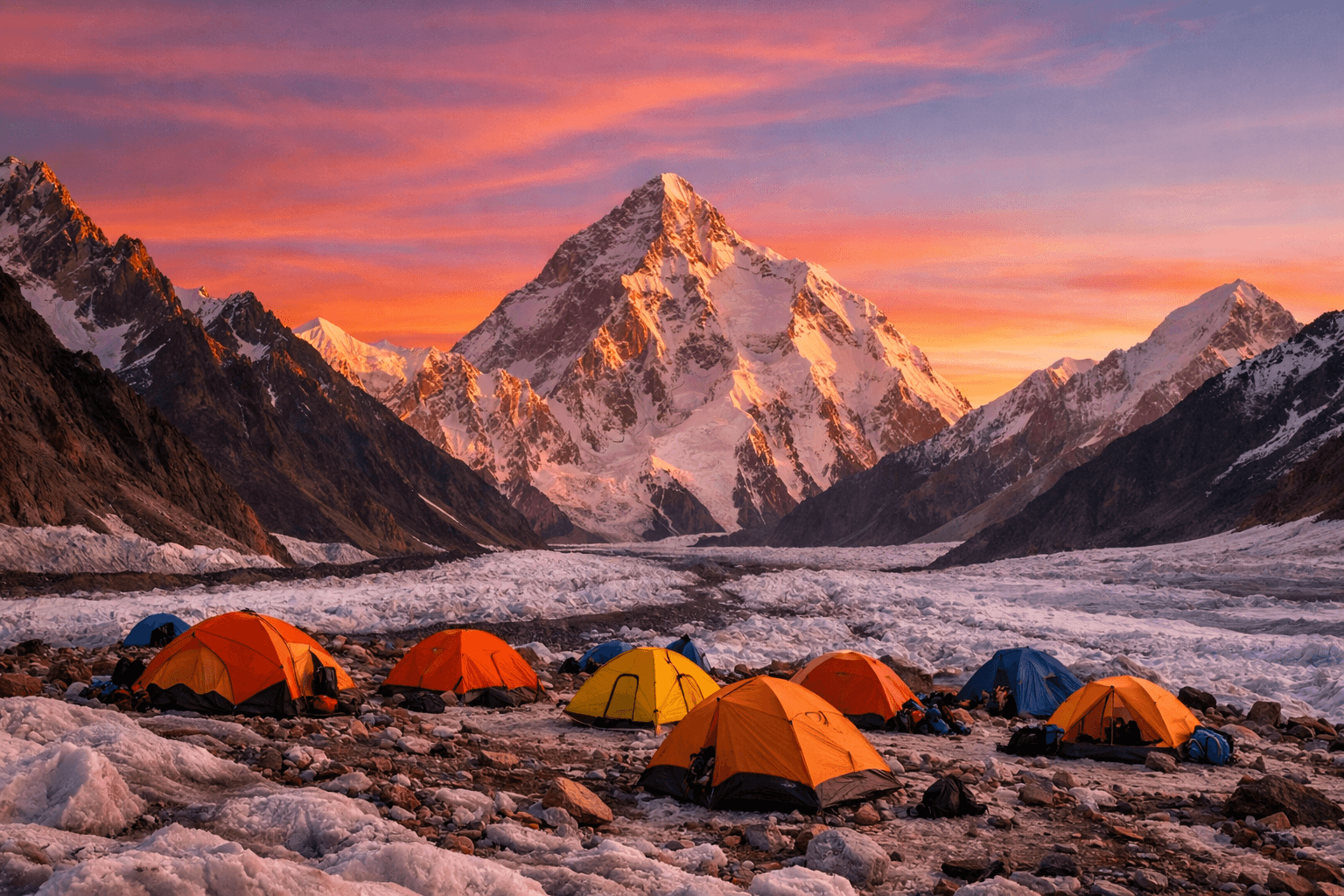
The reward is enormous: the Baltoro Glacier, Concordia, Broad Peak, the Gasherbrums, and finally K2 itself. Prepare properly, stay humble, listen to your guides, and the trek can become one of the most memorable journeys of your life.
End of field note
Continue your research.
Browse all notes