In this field note12 sections +Close −
- 01The journey from Askole
- 02A normal day in camp
- 03What walking on the Baltoro feels like
- 04Sleeping tents and camp organisation
- 05Food and appetite at altitude
- 06Water on a glacier
- 07Toilets, washing and personal hygiene
- 08Weather and temperature changes
- 09Power and communication
- 10Health and recovery
- 11Respect for staff and camps
- 12Frequently asked questions
Life on the Baltoro is simple, physical and highly organised. Beyond Askole there is no continuous lodge network, no road resupply and no guarantee of mobile coverage. The team carries its shelter, kitchen, food, fuel, medical supplies and personal baggage from camp to camp.
Most trekkers adapt quickly when they understand the routine. The difficulty is rarely one dramatic moment. It is the accumulation of early mornings, rough moraine, cold camps, limited privacy and repeated walking days at increasing altitude.
The Baltoro rewards good habits: pack before breakfast, keep essential layers in the daypack, eat before you lose your appetite and report small health problems early.
The journey from Askole
Askole is the last permanent village before the classic Baltoro approach. Equipment is sorted there into porter and animal loads. From this point, an item left behind cannot be replaced easily, and unnecessary weight affects the whole transport plan.
The early trail follows the Braldu system through dry, exposed terrain. Conditions can feel hot in direct sun even though cold nights and high camps lie ahead. Paiju is the transition point for many teams before the route moves onto the Baltoro’s moraine.
A normal day in camp
Our guides usually start early enough to use cooler conditions and leave time for a steady pace. Participants pack sleeping equipment and personal baggage, eat breakfast, fill bottles and prepare the daypack. The crew then dismantles the camp, divides loads and moves ahead or behind according to the day’s system.
- Wake, wash and pack personal equipment
- Breakfast and a brief health check
- Start with waterproofs, warm layers, water and medication in the daypack
- Walk at a sustainable group pace with controlled breaks
- Reach camp, change into dry clothing and rehydrate
- Attend the guide briefing and prepare for the next morning
Porters and camp staff have dismantled one camp, carried the expedition and started building another. The kitchen or dining tent may not be ready when the first participants arrive. Patience at this point is part of good camp etiquette.
What walking on the Baltoro feels like
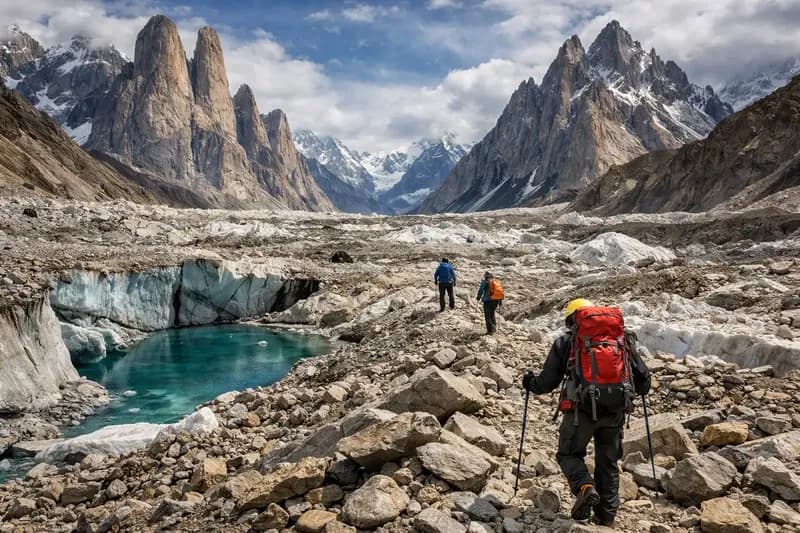
The Baltoro is not a smooth white surface. Much of it is covered by moraine: loose stones, gravel, larger boulders, dirty ice, short rises, meltwater channels and shifting lines. The glacier changes every year, so guides adjust the route rather than following a fixed pavement.
Good balance matters more than speed. Use broken-in boots and walking poles, keep space between walkers on loose sections and avoid standing directly below someone crossing unstable ground. A fast start often produces tired legs and careless foot placement later in the day.
Sleeping tents and camp organisation
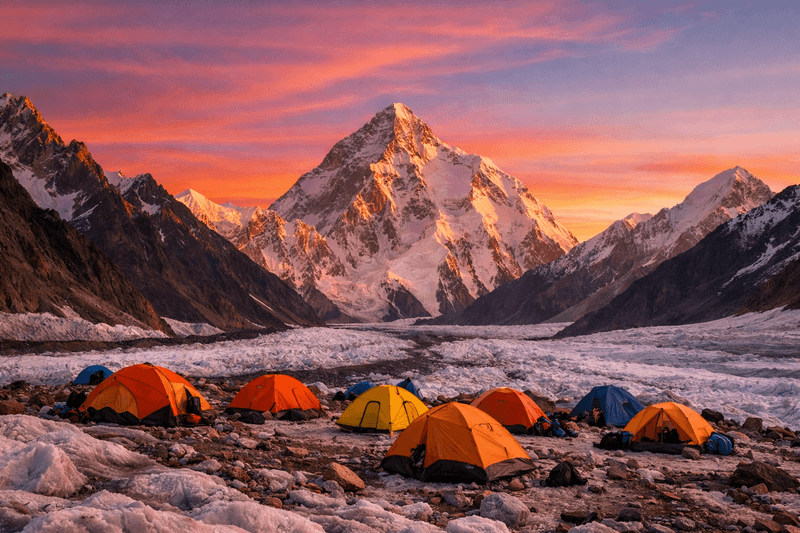
A sleeping tent becomes the participant’s small private space. Keep wet footwear near the entrance, protect the sleeping bag from damp and organise equipment before darkness. A few minutes of order prevents a cold search for gloves or headlamp batteries before an early departure.
Campsites vary. Some are on compact earth, others on stone or moraine. Wind, snow and glacier movement affect how tents can be placed. Staff select the best workable ground, but perfectly level pitches are not always available.
Useful tent habits
- Keep the sleeping bag in a waterproof liner inside the porter duffel
- Change out of damp walking layers soon after arrival
- Store water bottles upright and protect filters from freezing
- Keep batteries and electronics warm overnight
- Use earplugs if wind or neighbouring tents disturb sleep
- Pack most items before going to breakfast
Food and appetite at altitude
The kitchen team plans meals that can be transported safely over a long route. Fresh vegetables and fruit become less available as the expedition moves away from Askole. Meals therefore change gradually toward durable ingredients, soups, rice, pasta, potatoes, pulses, eggs and other foods that travel well.
Altitude can reduce appetite while the body is using more energy. Eat steadily before hunger disappears. Familiar trail snacks are useful on longer days. Dietary restrictions and serious allergies must be reported during booking because specialised products are not always available in Skardu.
Water on a glacier
Glacial water often contains fine sediment and can remain cloudy. The expedition kitchen follows a treatment routine appropriate to the camp. Participants should fill bottles when instructed and carry enough capacity for the planned day.
Do not wash, use soap or dispose of food beside a water collection point. In freezing conditions, keep bottles and filters inside the tent. A filter that freezes can be damaged even when it looks normal.
Toilets, washing and personal hygiene
Facilities are basic and vary between established camps. Washing is limited, especially at cold upper camps. Hand hygiene before eating is more important than trying to maintain a hotel routine.
- Carry hand sanitiser, toilet paper and a small quick-drying cloth
- Use biodegradable soap well away from streams and collection areas
- Pack menstrual products and personal hygiene supplies from home
- Carry used wipes and non-biodegradable waste out in sealed bags
- Treat foot hot spots before they become blisters
Wet wipes do not break down reliably in the mountain environment. They must not be left in toilet pits.
Weather and temperature changes
Lower approach days can be hot, dry and dusty. Higher camps can be cold, windy or snowy in the same operating season. Direct sun on the glacier is strong, while shade and evening temperatures fall quickly.
Use layers rather than one heavy walking jacket: sun protection, breathable base layers, insulation, wind protection and full waterproofs. Keep a warm layer accessible during breaks. Weather in the Karakoram often changes faster than a forecast suggests.
Power and communication
There is no dependable mains electricity beyond Askole. Teams may carry solar charging, satellite communications and radios, but these systems serve expedition operations first. Bring power banks, short reliable cables and enough battery capacity for the route.
Families should understand that a missed personal message does not mean there is an emergency. Communication schedules depend on camp workload, battery management, signal access and weather. Agree on realistic expectations before leaving Skardu.
Health and recovery
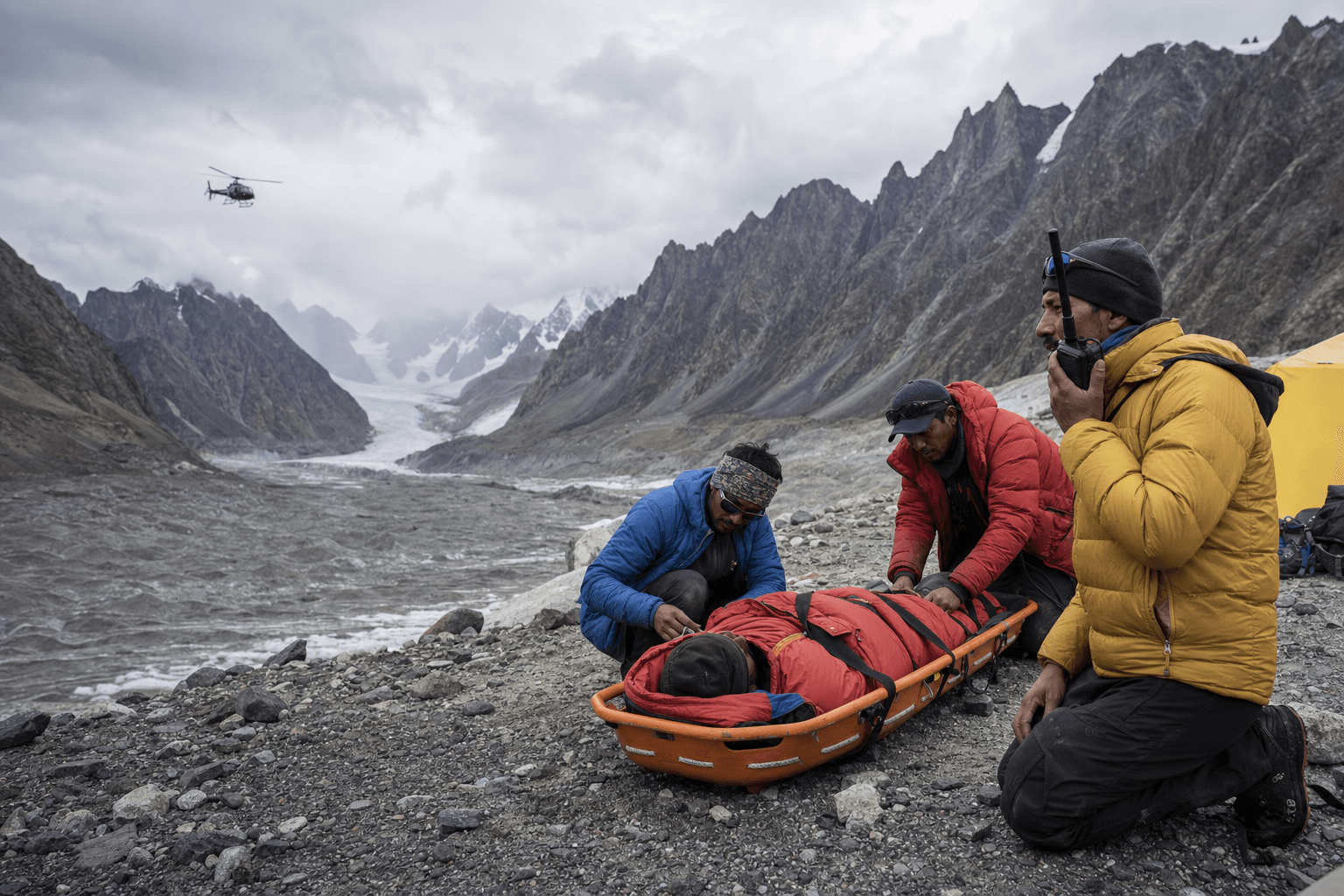
A disciplined arrival routine improves recovery: change into dry clothing, drink, eat something, organise the tent, inspect feet and rest. Tell the guide about headache, nausea, unusual fatigue, diarrhoea, cough, poor balance or sleep difficulty.
People sometimes stay silent because they do not want to slow the team. On the Baltoro, that can turn a manageable issue into a complicated evacuation. Early reporting gives the guide more choices.
Respect for staff and camps
A Baltoro camp works because porters, cooks, guides and helpers move a large system every day. Keep personal baggage within the allowance, do not add loose items to porter loads and avoid directing individual staff outside the guide’s plan.
Use designated toilets, keep litter secured and follow waste instructions. The glacier is not able to absorb batteries, packaging, wipes or damaged equipment. What arrives with the expedition must be managed responsibly.
Frequently asked questions
Are there lodges on the Baltoro Glacier?
No continuous lodge system exists on the classic route. Organised teams use tents and carry camp equipment between established sites.
Can I shower during the trek?
Full washing opportunities are limited and depend on weather, water, fuel and camp arrangements. Plan for careful basic hygiene rather than regular showers.
Is there phone signal at Concordia?
Coverage and services cannot be guaranteed. Remote teams use expedition communication systems according to the route and operational plan.
Do I need technical climbing equipment for the Baltoro?
The standard K2 Base Camp approach is a trek, but Gondogoro La itineraries can require technical equipment. Follow the list for the exact journey.
End of field note
Continue your research.
Browse all notes