Rock ClimbingAskole Region

Great Trango Tower Climbing

Great Trango Tower climbing logistics for the 6,286m granite massif above the Baltoro and Trango Glacier region.

Askole Region — 6,286 m

Great Trango Tower Rock Climbing
Karakoram · Pakistan
Duration
38 days
Max Altitude
6,286 m
Difficulty
Hard
Group Size
2 - 6 climbers
Season
Summer / Autumn

Adventure Overview

Great Trango Tower Climbing

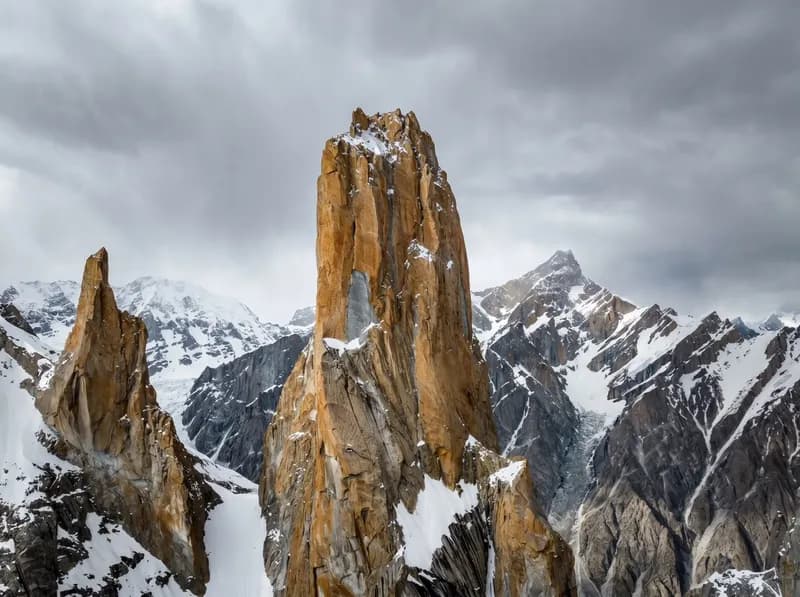
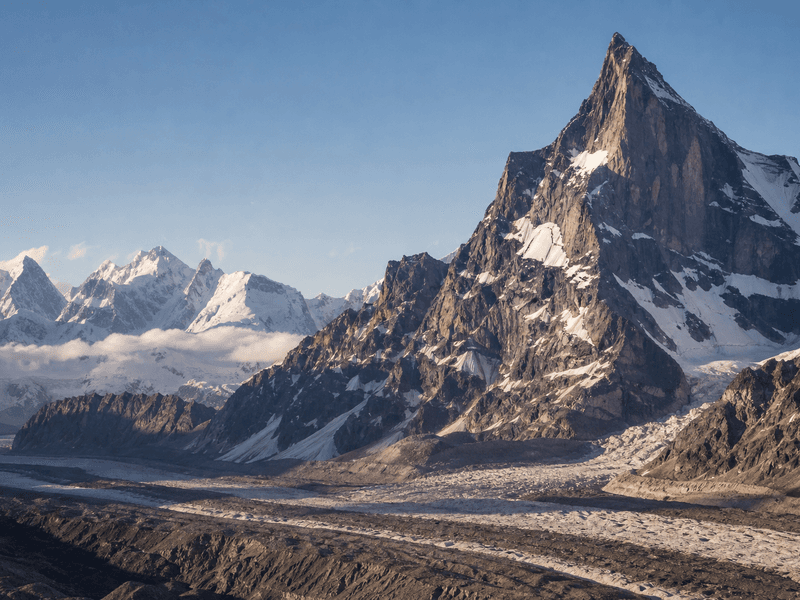
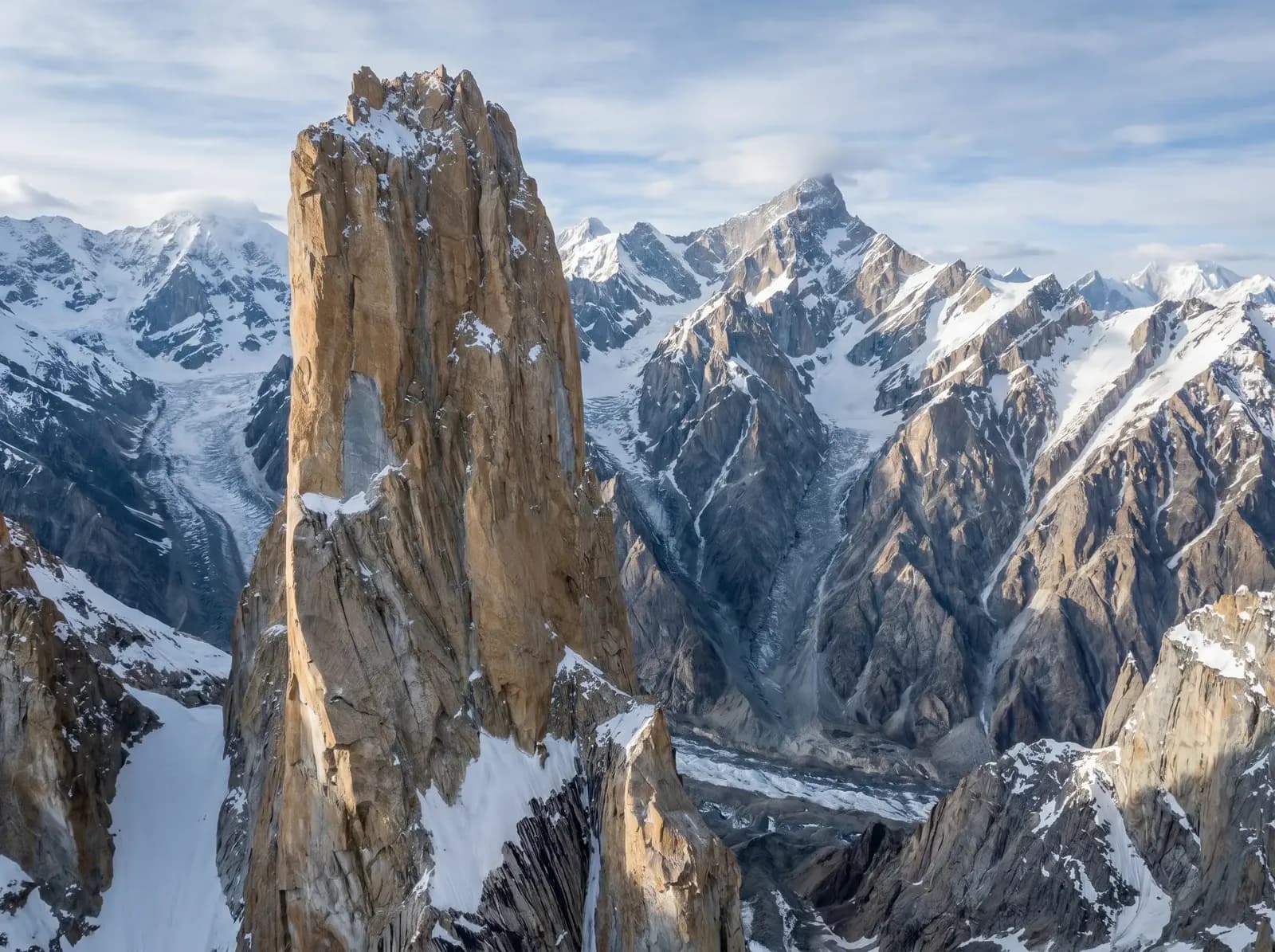
Great Trango Tower is the highest point of the Trango Towers group at 6,286 metres. It stands north of the Baltoro Glacier in the Baltoro Muztagh of the Karakoram and is known for huge granite walls, complex alpine terrain, and historically significant big-wall climbs.

This is a logistics and base camp support programme for highly experienced climbing teams. Great Trango is a massif with several summits and faces, so the exact route, base camp side, and climb strategy must be decided by the team after reviewing current conditions and ability.

Climbing Character

  • World-class high-altitude big-wall and alpine rock climbing in the Trango group.
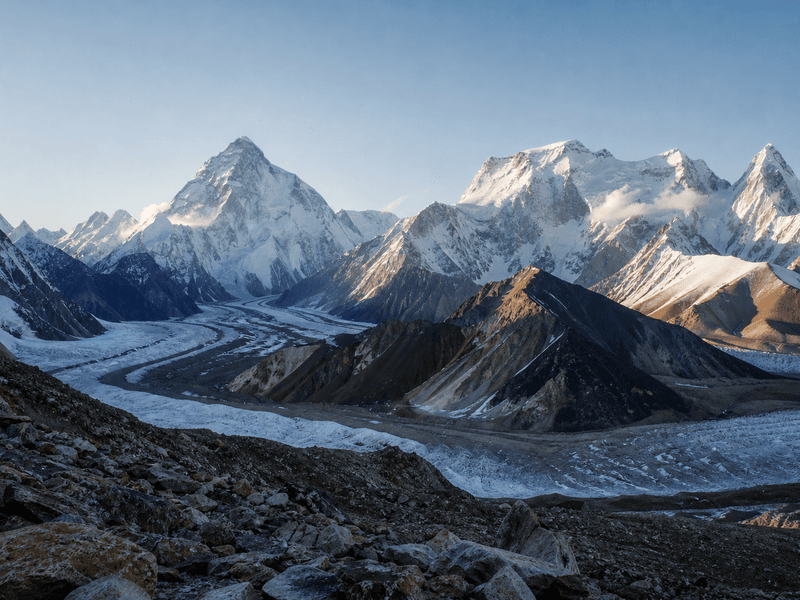
  • Approach from Skardu and Askole through the Baltoro corridor to the Trango side.
  • Suitable only for elite or very experienced teams with route-finding, hauling, aid/free, snow, ice, and descent skills.
  • Summit success is never promised; weather, wall condition, altitude, rockfall, and descent safety control the plan.

Suitable For

Who This Trip Is For

This objective is for advanced big-wall and alpine climbing teams with previous major wall experience, high-altitude judgement, complex descent skills, and the ability to remain self-sufficient above base camp.

It is not suitable for first-time expedition climbers. Teams should have clear leadership, strong rescue systems, realistic route goals, and the discipline to abandon the climb when conditions are wrong.

Mountain History

Recent Records & Notable Events

RecordVerified

First ski descent from the main summit

The trio climbed and skied the north-northwest route in one long day from a 5,000-metre high camp, completing the first ski descent from Great Trango Tower's main summit.

Person or Team
Christina Lustenberger, Jim Morrison and Chantel Astorga
Source: American Alpine Journal
New RouteVerified

First ascent of the east face to the East Summit

The Norwegians completed the first route up Great Trango's immense east face to the East Summit. Both climbers died during the descent, and the ascent became a landmark of commitment and tragedy in big-wall climbing.

Person or Team
Hans Christian Doseth and Finn Dæhli; Norwegian expedition
Source: American Alpine Journal
First AscentVerified

First ascent of the main summit

The American team reached Great Trango Tower's 6,286-metre main summit from the Trango Glacier via the west side, completing the mountain's first ascent.

Person or Team
Dennis Hennek, James Morrissey, Galen Rowell, John Roskelley and Kim Schmitz
Source: American Alpine Journal

Departures & Pricing

Plan Your Departure

Expedition Price

On request

Pricing depends on group size, route support, permits, and preferred departure window.

Listed Dates

Flex

Seats Open

Ask

Departure Dates

Plan a custom departure

Departure Window

Flexible

Flexible dates by request

Share your preferred arrival window and our team will confirm route timing, permits, and local crew availability.

Custom departure windows are confirmed with route timing, permits, and crew availability.

Itinerary

Day-by-Day Route Plan

Route Span

Days 1-38

25 detailed stages

Opening Stage

Day 1: Arrival in Islamabad

Final Stage

Day 38: Skardu to Islamabad or Final Buffer

  1. Day01Arrival in IslamabadDaily route segment

    Airport reception, hotel transfer, rest, and initial briefing.

    After immigration and baggage collection, a Namla Expeditions representative meets the group in the arrivals area and coordinates the hotel transfer. At check-in, the team confirms delayed baggage, emergency contacts, insurance details, dietary information already supplied, and the next morning’s schedule. The first full briefing introduces the Great Trango Tower Climbing route, transport and weather contingencies, luggage separation, communications, and outstanding equipment questions. The remainder of the day is intentionally unstructured for rest, hydration, and recovery after international travel.

  2. Day02Formal Briefing and Technical Cargo ReviewDaily route segment

    Review route options, paperwork, insurance, cargo weights, technical gear, communication, and emergency plan.

    This is a working preparation stage for the Great Trango Tower Climbing, not simply a free day. The Namla Expeditions team reviews passport and permit details, insurance and emergency contacts, personal equipment, group loads, food, fuel, communications, medical kits, and transport timing. Participants lay out critical clothing and technical items so missing or unsuitable equipment can be identified before leaving town. Staff then separate road, porter, base-camp, and personal baggage, followed by an evening briefing on weather, wake-up time, and the next route segment.

  3. Day03Fly to SkarduDaily route segment

    Take the weather-dependent flight to Skardu or prepare for the road contingency if flights are cancelled.

    The operations team checks the latest airline and weather information before leaving the hotel and coordinates the airport transfer, tickets, and expedition baggage. Mountain flights remain weather-dependent; if a cancellation occurs, Namla Expeditions explains the available road contingency and revises later stages without compressing essential acclimatisation or safety time. After landing, the group collects all luggage before transferring to the hotel. A short arrival briefing covers meals, local timing, equipment access, and the next day’s plan.

  4. Day04Skardu Logistics and Expedition PreparationDaily route segment

    Finalize food, fuel, porters, technical cargo, base camp equipment, and any last supplies.

    This is a working preparation stage for the Great Trango Tower Climbing, not simply a free day. The Namla Expeditions team reviews passport and permit details, insurance and emergency contacts, personal equipment, group loads, food, fuel, communications, medical kits, and transport timing. Participants lay out critical clothing and technical items so missing or unsuitable equipment can be identified before leaving town. Staff then separate road, porter, base-camp, and personal baggage, followed by an evening briefing on weather, wake-up time, and the next route segment.

  5. Day05Drive to AskoleDaily route segment

    Travel by 4x4 through Shigar and the Braldu Valley to Askole.

    The group leaves after breakfast with personal bags and expedition loads secured in the assigned vehicles. Namla Expeditions drivers and field staff assess road, river, traffic, and weather conditions throughout the journey; stops are made for permits, meals, photography, and comfort only where parking is safe. Travel time can change after landslides or road works, so the day remains flexible. On arrival, rooms or tents are allocated, luggage is checked, and the guide gives a short briefing before dinner and rest.

  6. Day06Askole to Jhula or Korofong AreaDaily route segment

    Begin trekking with porters through the lower Braldu approach.

    After breakfast, the camp crew packs the shared equipment and the porter team receives the day’s allocated loads while participants carry their personal daypacks. The lead guide sets a sustainable pace over the terrain described above, with planned stops for water, food, layer changes, and regrouping before exposed, loose, or glaciated sections. On reaching camp, the team checks in with the guide, changes into dry layers, hydrates, and inspects feet and equipment. Dinner is followed by a weather, health, and route briefing for the next stage.

  7. Day07Trek to PaijuDaily route segment

    Continue to Paiju below the Baltoro Glacier and prepare for glacier-side travel.

    After breakfast, the camp crew packs the shared equipment and the porter team receives the day’s allocated loads while participants carry their personal daypacks. The lead guide sets a sustainable pace over the terrain described above, with planned stops for water, food, layer changes, and regrouping before exposed, loose, or glaciated sections. On reaching camp, the team checks in with the guide, changes into dry layers, hydrates, and inspects feet and equipment. Dinner is followed by a weather, health, and route briefing for the next stage.

  8. Day08Paiju Rest and Porter PreparationDaily route segment

    Rest, hydrate, rebalance loads, and prepare for the Trango Glacier approach.

    This is a working preparation stage for the Great Trango Tower Climbing, not simply a free day. The Namla Expeditions team reviews passport and permit details, insurance and emergency contacts, personal equipment, group loads, food, fuel, communications, medical kits, and transport timing. Participants lay out critical clothing and technical items so missing or unsuitable equipment can be identified before leaving town. Staff then separate road, porter, base-camp, and personal baggage, followed by an evening briefing on weather, wake-up time, and the next route segment.

  9. Day09Move Toward Trango GlacierDaily route segment

    Step onto the Baltoro approach and branch toward the Trango side according to chosen base camp access.

    After breakfast, the camp crew packs the shared equipment and the porter team receives the day’s allocated loads while participants carry their personal daypacks. The lead guide sets a sustainable pace over the terrain described above, with planned stops for water, food, layer changes, and regrouping before exposed, loose, or glaciated sections. On reaching camp, the team checks in with the guide, changes into dry layers, hydrates, and inspects feet and equipment. Dinner is followed by a weather, health, and route briefing for the next stage.

  10. Day10Establish Great Trango Base CampDaily route segment

    Set sleeping tents, dining tent, kitchen, toilet tent, storage, communication, water, and waste systems.

    The team first agrees a stable camp layout that separates sleeping, cooking, dining, storage, sanitation, communications, and waste areas. Namla Expeditions staff pitch and secure the shared tents, organise water and food routines, inventory arriving cargo, and test radios, satellite equipment, charging systems, and emergency resources included in the confirmed package. Participants inspect personal climbing equipment and identify anything damaged or missing. A detailed orientation then covers camp movement, hygiene, communications schedules, route access, weather updates, and emergency responsibilities.

  11. Day11Base Camp Systems and Route DiscussionDaily route segment

    Review route options, hazards, weather, technical team roles, descent plans, and equipment caches.

    This is a structured base-camp working day. The expedition leader reviews the intended route, objective hazards, recent conditions, forecast, camp sequence, turnaround rules, descent options, communications, and emergency responsibilities with the full team. Participants inspect personal and shared technical equipment, practise the movement or hauling systems relevant to the route, and report health or acclimatisation concerns before moving higher. Namla Expeditions staff check food, fuel, medical resources, power, radios, storage, sanitation, and waste arrangements. The evening briefing records the next safe objective without treating upward progress as automatic.

  12. Day12Approach ReconnaissanceDaily route segment

    Scout the selected face or ridge access, inspect glacier or snow sections, and identify safe travel times.

    After breakfast, the camp crew packs the shared equipment and the porter team receives the day’s allocated loads while participants carry their personal daypacks. The lead guide sets a sustainable pace over the terrain described above, with planned stops for water, food, layer changes, and regrouping before exposed, loose, or glaciated sections. On reaching camp, the team checks in with the guide, changes into dry layers, hydrates, and inspects feet and equipment. Dinner is followed by a weather, health, and route briefing for the next stage.

  13. Day13Technical Systems and First CarryDaily route segment

    Prepare rack, ropes, haul systems, bivy equipment, and carry or cache loads if conditions allow.

    The expedition leader sets the day’s objective only after reviewing the forecast, snow, ice and rock conditions, team health, equipment, and progress from the previous rotation. The stage may be used for reconnaissance, a load carry, route preparation, camp establishment, acclimatisation, skills work, rest, or retreat; reaching a higher point is never automatic. Climbers check ropes, anchors, protection, stoves, radios, and personal systems before leaving. Agreed communication and turnaround times remain binding, and the team holds position or descends when conditions move outside the plan.

  14. Day14Acclimatization and RestDaily route segment

    Take a short acclimatization movement or rest at base camp while monitoring weather and health.

    A rest or acclimatisation day is managed actively and may change with weather and team condition. Priorities are sleep, regular meals, hydration, foot care, drying clothing, charging essential devices, and repairing equipment. When appropriate, the guide leads a short, unhurried acclimatisation walk before returning to the same sleeping altitude. Each participant reports headache, nausea, unusual fatigue, sleep problems, or other concerns privately and promptly. Staff reorganise loads and supplies, and the evening briefing confirms whether the planned route can continue safely.

  15. Day15First Climbing Block BeginsDaily route segment

    Start route work, fixing, climbing, or hauling according to the selected line and style.

    The expedition leader sets the day’s objective only after reviewing the forecast, snow, ice and rock conditions, team health, equipment, and progress from the previous rotation. The stage may be used for reconnaissance, a load carry, route preparation, camp establishment, acclimatisation, skills work, rest, or retreat; reaching a higher point is never automatic. Climbers check ropes, anchors, protection, stoves, radios, and personal systems before leaving. Agreed communication and turnaround times remain binding, and the team holds position or descends when conditions move outside the plan.

  16. Day21Main Wall or Ridge ProgressDaily route segment

    Continue upward movement during the best available weather. Progress depends on route difficulty, hauling, bivies, and conditions.

    The expedition leader sets the day’s objective only after reviewing the forecast, snow, ice and rock conditions, team health, equipment, and progress from the previous rotation. The stage may be used for reconnaissance, a load carry, route preparation, camp establishment, acclimatisation, skills work, rest, or retreat; reaching a higher point is never automatic. Climbers check ropes, anchors, protection, stoves, radios, and personal systems before leaving. Agreed communication and turnaround times remain binding, and the team holds position or descends when conditions move outside the plan.

  17. Day28Upper Route and Summit WindowDaily route segment

    Use a flexible block for the upper wall, summit ridge or selected high point, and the start of descent.

    A summit attempt begins only after a final go-or-no-go review of weather, route condition, acclimatisation, team strength, equipment, and descent time. The group normally starts early, checks every harness, rope, light, layer, food, water, radio, and emergency item, then moves in the rope or climbing system agreed by the leader. Pace must remain sustainable and turnaround times apply even close to the objective. Reaching the summit is not guaranteed; the ascent is only half the day, and a controlled descent to secure shelter remains the priority.

  18. Day31Descent and Base Camp RecoveryDaily route segment

    Complete the descent, return to base camp, check all members, and recover.

    A rest or acclimatisation day is managed actively and may change with weather and team condition. Priorities are sleep, regular meals, hydration, foot care, drying clothing, charging essential devices, and repairing equipment. When appropriate, the guide leads a short, unhurried acclimatisation walk before returning to the same sleeping altitude. Each participant reports headache, nausea, unusual fatigue, sleep problems, or other concerns privately and promptly. Staff reorganise loads and supplies, and the evening briefing confirms whether the planned route can continue safely.

  19. Day32Reserve Weather or Descent DayDaily route segment

    A spare day for storms, delayed descent, equipment recovery, or recovery.

    A rest or acclimatisation day is managed actively and may change with weather and team condition. Priorities are sleep, regular meals, hydration, foot care, drying clothing, charging essential devices, and repairing equipment. When appropriate, the guide leads a short, unhurried acclimatisation walk before returning to the same sleeping altitude. Each participant reports headache, nausea, unusual fatigue, sleep problems, or other concerns privately and promptly. Staff reorganise loads and supplies, and the evening briefing confirms whether the planned route can continue safely.

  20. Day33Second Reserve or Equipment RecoveryDaily route segment

    Recover caches where possible, dry gear, and prepare camp for departure.

    A rest or acclimatisation day is managed actively and may change with weather and team condition. Priorities are sleep, regular meals, hydration, foot care, drying clothing, charging essential devices, and repairing equipment. When appropriate, the guide leads a short, unhurried acclimatisation walk before returning to the same sleeping altitude. Each participant reports headache, nausea, unusual fatigue, sleep problems, or other concerns privately and promptly. Staff reorganise loads and supplies, and the evening briefing confirms whether the planned route can continue safely.

  21. Day34Pack Base CampDaily route segment

    Clear camp, sort waste, prepare porter loads, and close the climbing operation.

    Departure begins with a complete inventory of personal and group equipment. Tents and technical gear are dried where conditions allow, caches are accounted for, waste is separated for removal, and porter or vehicle loads are balanced within the agreed limits. Namla Expeditions staff inspect the site so equipment, rubbish, fuel, and food are not left behind. The guide also reviews the exit route, forecast, water, camp availability, and participant condition. Everyone keeps essential clothing, food, water, medication, and travel documents accessible rather than packing them into carried cargo.

  22. Day35Trek Back Toward PaijuDaily route segment

    Retrace the Trango and Baltoro approach toward lower camps.

    After breakfast, the camp crew packs the shared equipment and the porter team receives the day’s allocated loads while participants carry their personal daypacks. The lead guide sets a sustainable pace over the terrain described above, with planned stops for water, food, layer changes, and regrouping before exposed, loose, or glaciated sections. On reaching camp, the team checks in with the guide, changes into dry layers, hydrates, and inspects feet and equipment. Dinner is followed by a weather, health, and route briefing for the next stage.

  23. Day36Return Toward AskoleDaily route segment

    Continue the exit trek toward the road head.

    After breakfast, the camp crew packs the shared equipment and the porter team receives the day’s allocated loads while participants carry their personal daypacks. The lead guide sets a sustainable pace over the terrain described above, with planned stops for water, food, layer changes, and regrouping before exposed, loose, or glaciated sections. On reaching camp, the team checks in with the guide, changes into dry layers, hydrates, and inspects feet and equipment. Dinner is followed by a weather, health, and route briefing for the next stage.

  24. Day37Drive to SkarduDaily route segment

    Transfer by jeep to Skardu when road conditions allow.

    The group leaves after breakfast with personal bags and expedition loads secured in the assigned vehicles. Namla Expeditions drivers and field staff assess road, river, traffic, and weather conditions throughout the journey; stops are made for permits, meals, photography, and comfort only where parking is safe. Travel time can change after landslides or road works, so the day remains flexible. On arrival, rooms or tents are allocated, luggage is checked, and the guide gives a short briefing before dinner and rest.

  25. Day38Skardu to Islamabad or Final BufferCompletion day

    Fly to Islamabad if weather permits or use the road plan. This day protects against mountain transport delays.

    The operations team checks the latest airline and weather information before leaving the hotel and coordinates the airport transfer, tickets, and expedition baggage. Mountain flights remain weather-dependent; if a cancellation occurs, Namla Expeditions explains the available road contingency and revises later stages without compressing essential acclimatisation or safety time. After landing, the group collects all luggage before transferring to the hotel. A short arrival briefing covers meals, local timing, equipment access, and the next day’s plan.

Field Planning

Prepare for the Journey

Fitness

Preparation & Fitness

Difficulty level: Hard. Great Trango combines altitude, long granite faces, route complexity, glacier approach, snow or ice sections, hauling, wall bivouacs, storms, cold, and difficult retreat options.

  • Prepare with advanced big-wall systems, hauling, aid and free climbing, fixed-line movement, long rappels, snow or ice travel, and rescue practice.
  • Confirm group gear early: ropes, portaledges, haul bags, rack, anchors, bivy systems, communications, medical kit, and repair supplies.
  • Plan for flexible route selection; Great Trango has multiple faces and summits, and the safest objective may change on arrival.

Safety

Safety & Logistics

Safety planning must include weather monitoring, rockfall and avalanche exposure, anchor quality, descent options, altitude health, wall food and water, and the strength of every member. The local team supports base camp and evacuation communication, while the climbing team remains responsible for technical decisions on the wall unless specialist guiding is contracted.

Helicopter rescue in the Karakoram is weather and permission dependent. Teams need insurance, communication redundancy, spare food and fuel, conservative descent plans, and enough schedule margin for storms.

Permits

Permits & Local Operations

Great Trango Tower is below 6,500 metres, so it is not handled like an 8,000m or high-royalty peak. The approach still lies in the Baltoro and Trango restricted/protected mountain region, so correct visa category selection, restricted-area trekking or climbing paperwork, CKNP or environmental fee handling where applicable, insurance documents, route details, and licensed local operator coordination are required.

Namla Expeditions coordinates Islamabad, Skardu, Askole, Baltoro approach, porter movement, base camp staff, food, fuel, camping equipment, waste return, and communications planning. Final official requirements are confirmed before booking because local procedures can change.

What's Covered

Inclusions & Exclusions

Included

  • Restricted-area trekking and climbing paperwork coordination for the Baltoro and Trango region, visa support letter assistance, CKNP or environmental fee handling where applicable, and current permit-category confirmation before booking.
  • Airport transfers in Islamabad, hotel accommodation in Islamabad and Skardu on the agreed sharing basis, and expedition briefing support.
  • Domestic Islamabad-Skardu flights when operating, plus practical road-contingency planning when weather cancels flights.
  • Private 4x4 transport between Skardu and Askole for the approach and return, with cargo movement coordinated by the local operations team.
  • Porter support for agreed expedition loads to and from base camp, with load limits confirmed before departure.
  • Approach and base camp meals prepared by the expedition cook, including drinking-water management suitable for remote Karakoram camps.
  • Approach and base camp camping support including sleeping tents, kitchen tent, dining tent, toilet tent, kitchen equipment, tables, chairs, and fuel logistics.
  • Base camp first-aid kit, emergency oxygen for altitude incidents at base camp, satellite communication planning, weather monitoring, and evacuation coordination support.

Not Included

  • International airfare to and from Pakistan, Pakistan visa fees, airport taxes, and travel outside the confirmed itinerary.
  • Personal travel, rescue, medical, and evacuation insurance. Insurance must cover technical rock climbing, remote rescue, and the maximum altitude of the chosen objective.
  • Personal clothing, sleeping bag, climbing shoes, approach shoes, harness, helmet, belay device, ascenders, jumars, descenders, personal aid gear, personal protection, and personal medical kit.
  • Big-wall group technical equipment such as ropes, portaledges, haul bags, haul lines, hardware racks, bolts, drills, fixed lines, or specialist rescue equipment unless clearly included in the final written quotation.
  • Personal guide, high-altitude porter, route-fixing team, extra porterage, private room, single tent, satellite phone usage, battery charging, laundry, snacks, bottled drinks, and tips.
  • Extra hotel nights, meals, transport, porter costs, permit changes, evacuation, rescue, or route changes caused by weather, road closure, flight cancellation, illness, accident, or government procedure.

Common Questions

Frequently Asked Questions

How high is Great Trango Tower?

Great Trango Tower is commonly listed at 6,286 metres, the highest point of the Trango Towers group.

Is Great Trango different from Trango Tower?

Yes. Great Trango Tower is the larger massif and highest point of the group. Trango Tower usually refers to Nameless Tower nearby.

Does this include technical guiding?

The standard package is logistics and base camp support. Technical guiding, route fixing, portaledges, group ropes, and specialist wall support must be quoted separately.

Are high-peak royalties required?

Great Trango is below 6,500 metres, but the Baltoro and Trango approach requires correct restricted-area paperwork and local fee handling. Current requirements are confirmed before booking.

Who should join?

Only advanced teams with major big-wall, alpine rock, descent, hauling, rescue, and high-altitude expedition experience should consider Great Trango.

From the Field Notes

From the same region

Related Journeys

Great Trango Tower Rock Climbing

Start Your Journey

Plan Great Trango Tower Climbing with our local team

Reach our team directly. No booking system, no automated responses — a direct line to the people who run these routes.

Price on request