ExpeditionsAskole Region

Gasherbrum I Expedition (8,080m)

A 50-day Karakoram expedition to Gasherbrum I, the Hidden Peak, with Askole-based logistics, Baltoro approach, base camp support, and high-camp planning.

Askole Region — 8,080 m

GasherBrum 1 Expedition
Karakoram · Pakistan
Duration
50 days
Max Altitude
8,080 m
Difficulty
High-Altitude Expedition
Group Size
1 - 12 climbers
Season
Summer
Journey Code
NE_G1EX

Adventure Overview

The Hidden Peak beyond Concordia

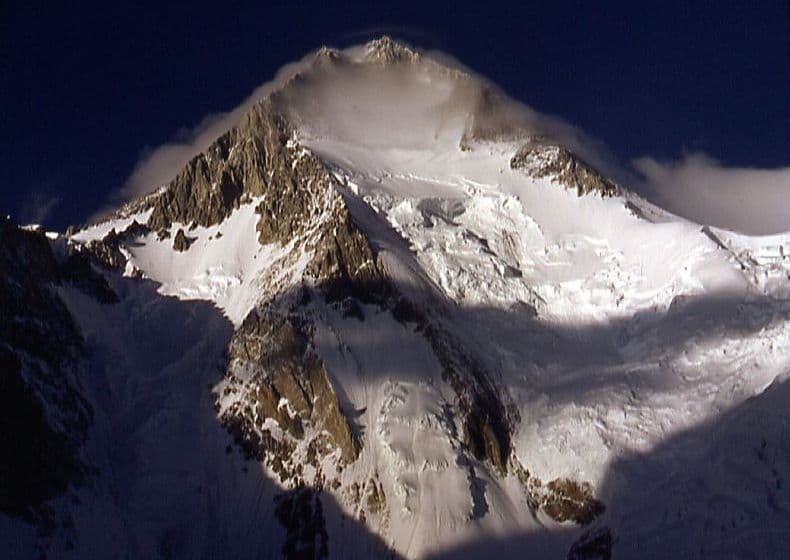
Gasherbrum I, 8,080 m, is the highest summit of the Gasherbrum group and one of the more serious 8,000 m objectives in Pakistan. The mountain sits beyond Concordia in the upper Baltoro, far enough from the trailhead that the expedition has to be planned with patience from the first porter load in Askole to the last weather call at base camp.

We run this expedition as a local Karakoram operation, not as a copied city-office package. Our team comes through Askole, Skardu, and the Baltoro every season, so the details that matter - porter movement, food at base camp, road timing, liaison work, and weather delays - are handled by people who know the route in real conditions.

Climbing Character

Gasherbrum I is not a warm-up peak. The approach is long, the base camp is remote, and the upper mountain requires confident movement on glacier, fixed line, steep snow, and mixed high-altitude terrain. Most teams use three high camps above base camp with at least one acclimatisation rotation before committing to a summit window.

The best season is the main Karakoram summer window, usually late June through July into early August. We keep summit plans flexible because snow condition, wind, and avalanche risk decide the pace more than any printed itinerary.

Suitable For

Who This Trip Is For

Gasherbrum I is for experienced high-altitude climbers who want a serious Karakoram 8,000 m expedition with local support from the route communities. It is not suitable for first-time mountaineers or climbers whose only experience is guided trekking.

The right climber is patient, self-managed, honest about fitness, and able to work with a team through weather delays and uncomfortable days at altitude. The summit is the goal, but coming back with the team healthy is the standard we will not compromise.

Route Notes

Additional Trip Detail

Highlights

Route Highlights

Gasherbrum I, the Hidden Peak, is a remote 8,080m Karakoram expedition reached by the Baltoro and upper glacier systems.

  • Long approach through Askole, Baltoro Glacier, Concordia, and the Gasherbrum basin.
  • Remote base camp environment with fewer passing teams than the main K2 corridor.
  • A technical 8000m objective requiring strong acclimatization and disciplined weather decisions.

Terrain

Terrain and Route Notes

The route includes glacier travel, crevasse zones, steep snow, high camps, and exposed upper-mountain terrain. The exact climbing line and camp placement depend on season conditions.

Camp Life

Accommodation and Meals

Approach camps are supported by local staff and porters. Base camp is planned as the working hub for meals, rest, communications, equipment sorting, and weather monitoring.

Support

Guides, Porters, and Local Support

Support can include permit handling, porter organization, base camp setup, cooks, liaison assistance, and high-altitude porter planning where the expedition brief requires it.

Mountain History

Recent Records & Notable Events

Winter AscentVerified

First winter ascent of Gasherbrum I

Bielecki and Gołąb reached the summit via the normal route, completing the first winter ascent of Gasherbrum I. A separate international team disappeared high on the mountain during the same winter season.

Person or Team
Adam Bielecki and Janusz Gołąb; Polish Winter Gasherbrum I Expedition
Source: American Alpine Journal
First AscentVerified

First ascent of Gasherbrum I

Kauffman and Schoening reached the summit of Gasherbrum I, then widely known as Hidden Peak, by the southeast ridge. It remains the only 8,000-metre peak whose first ascent was made by an American team.

Person or Team
Andrew Kauffman and Peter Schoening; American expedition led by Nicholas Clinch
Source: American Alpine Journal

Departures & Pricing

Plan Your Departure

Expedition Price

On request

Pricing depends on group size, route support, permits, and preferred departure window.

Listed Dates

Flex

Seats Open

Ask

Departure Dates

Plan a custom departure

Departure Window

Flexible

Flexible dates by request

Share your preferred arrival window and our team will confirm route timing, permits, and local crew availability.

Custom departure windows are confirmed with route timing, permits, and crew availability.

Itinerary

Day-by-Day Route Plan

Route Span

Days 1-50

22 detailed stages

Opening Stage

Day 1: Arrive in Islamabad

Final Stage

Day 50: Departure from Islamabad

  1. Day01Arrive in IslamabadDaily route segment8,080m

    Arrive at Islamabad International Airport and transfer to the hotel. We keep this day simple: rest, check luggage, and meet the Namla Expeditions representative who will handle the next morning briefing.

    After immigration and baggage collection, a Namla Expeditions representative meets the group in the arrivals area and coordinates the hotel transfer. At check-in, the team confirms delayed baggage, emergency contacts, insurance details, dietary information already supplied, and the next morning’s schedule. The first full briefing introduces the Gasherbrum I Expedition (8,080m) route, transport and weather contingencies, luggage separation, communications, and outstanding equipment questions. The remainder of the day is intentionally unstructured for rest, hydration, and recovery after international travel.

  2. Day02Islamabad briefing and permit checksDaily route segment8,080m

    Expedition briefing, passport and permit file review, equipment discussion, and final city purchases. If a government briefing is required, we arrange the schedule with the liaison officer and relevant offices.

    This is a working preparation stage for the Gasherbrum I Expedition (8,080m), not simply a free day. The Namla Expeditions team reviews passport and permit details, insurance and emergency contacts, personal equipment, group loads, food, fuel, communications, medical kits, and transport timing. Participants lay out critical clothing and technical items so missing or unsuitable equipment can be identified before leaving town. Staff then separate road, porter, base-camp, and personal baggage, followed by an evening briefing on weather, wake-up time, and the next route segment.

  3. Day03Fly to SkarduDaily route segment

    Weather permitting, fly from Islamabad to Skardu over the Indus and Karakoram foothills. If flights are cancelled, we move by road on the Karakoram Highway according to conditions and safety. Overnight in Skardu.

    The operations team checks the latest airline and weather information before leaving the hotel and coordinates the airport transfer, tickets, and expedition baggage. Mountain flights remain weather-dependent; if a cancellation occurs, Namla Expeditions explains the available road contingency and revises later stages without compressing essential acclimatisation or safety time. After landing, the group collects all luggage before transferring to the hotel. A short arrival briefing covers meals, local timing, equipment access, and the next day’s plan.

  4. Day04Skardu preparation dayDaily route segment8,080m

    Final food packing, porter load planning, oxygen and high-camp equipment checks if included, and a last review of the approach. Skardu is also the best place to solve small gear problems before the road ends.

    This is a working preparation stage for the Gasherbrum I Expedition (8,080m), not simply a free day. The Namla Expeditions team reviews passport and permit details, insurance and emergency contacts, personal equipment, group loads, food, fuel, communications, medical kits, and transport timing. Participants lay out critical clothing and technical items so missing or unsuitable equipment can be identified before leaving town. Staff then separate road, porter, base-camp, and personal baggage, followed by an evening briefing on weather, wake-up time, and the next route segment.

  5. Day05Drive Skardu to AskoleDaily route segment

    Drive by 4WD through Shigar and the Braldu Valley to Askole, the last village before the Baltoro. The road is rough and changes every season, so we start early and keep the day flexible. Overnight Askole.

    The group leaves after breakfast with personal bags and expedition loads secured in the assigned vehicles. Namla Expeditions drivers and field staff assess road, river, traffic, and weather conditions throughout the journey; stops are made for permits, meals, photography, and comfort only where parking is safe. Travel time can change after landslides or road works, so the day remains flexible. On arrival, rooms or tents are allocated, luggage is checked, and the guide gives a short briefing before dinner and rest.

  6. Day06Trek Askole to JholaDaily route segment

    Begin trekking from Askole with the porter team. The route follows the Braldu side valleys, crosses dry and hot sections, and reaches Jhola for the first full camp of the approach.

    After breakfast, the camp crew packs the shared equipment and the porter team receives the day’s allocated loads while participants carry their personal daypacks. The lead guide sets a sustainable pace over the terrain described above, with planned stops for water, food, layer changes, and regrouping before exposed, loose, or glaciated sections. On reaching camp, the team checks in with the guide, changes into dry layers, hydrates, and inspects feet and equipment. Dinner is followed by a weather, health, and route briefing for the next stage.

  7. Day07Trek Jhola to PaiyuDaily route segment

    Continue to Paiyu, one of the important camps before the Baltoro Glacier. Views begin to open toward the Trango towers and the big granite walls of the Karakoram.

    After breakfast, the camp crew packs the shared equipment and the porter team receives the day’s allocated loads while participants carry their personal daypacks. The lead guide sets a sustainable pace over the terrain described above, with planned stops for water, food, layer changes, and regrouping before exposed, loose, or glaciated sections. On reaching camp, the team checks in with the guide, changes into dry layers, hydrates, and inspects feet and equipment. Dinner is followed by a weather, health, and route briefing for the next stage.

  8. Day08Rest and porter preparation at PaiyuDaily route segment8,080m

    A practical rest day for acclimatisation, washing, baking bread, and re-sorting porter loads before entering the rougher Baltoro ground. This day helps the whole caravan move better higher up.

    This is a working preparation stage for the Gasherbrum I Expedition (8,080m), not simply a free day. The Namla Expeditions team reviews passport and permit details, insurance and emergency contacts, personal equipment, group loads, food, fuel, communications, medical kits, and transport timing. Participants lay out critical clothing and technical items so missing or unsuitable equipment can be identified before leaving town. Staff then separate road, porter, base-camp, and personal baggage, followed by an evening briefing on weather, wake-up time, and the next route segment.

  9. Day09Trek Paiyu to UrdukasDaily route segment

    Step onto the Baltoro system and move through moraine and glacier-side trail to Urdukas. This is one of the most beautiful camps on the approach, with views toward Trango, Cathedral, and the Baltoro peaks.

    After breakfast, the camp crew packs the shared equipment and the porter team receives the day’s allocated loads while participants carry their personal daypacks. The lead guide sets a sustainable pace over the terrain described above, with planned stops for water, food, layer changes, and regrouping before exposed, loose, or glaciated sections. On reaching camp, the team checks in with the guide, changes into dry layers, hydrates, and inspects feet and equipment. Dinner is followed by a weather, health, and route briefing for the next stage.

  10. Day10Trek Urdukas to Goro IIDaily route segment

    Move deeper onto the Baltoro Glacier. The walking is colder and more exposed, with Masherbrum, Muztagh Tower, and the upper Baltoro skyline becoming stronger through the day.

    After breakfast, the camp crew packs the shared equipment and the porter team receives the day’s allocated loads while participants carry their personal daypacks. The lead guide sets a sustainable pace over the terrain described above, with planned stops for water, food, layer changes, and regrouping before exposed, loose, or glaciated sections. On reaching camp, the team checks in with the guide, changes into dry layers, hydrates, and inspects feet and equipment. Dinner is followed by a weather, health, and route briefing for the next stage.

  11. Day11Trek Goro II to ConcordiaDaily route segment

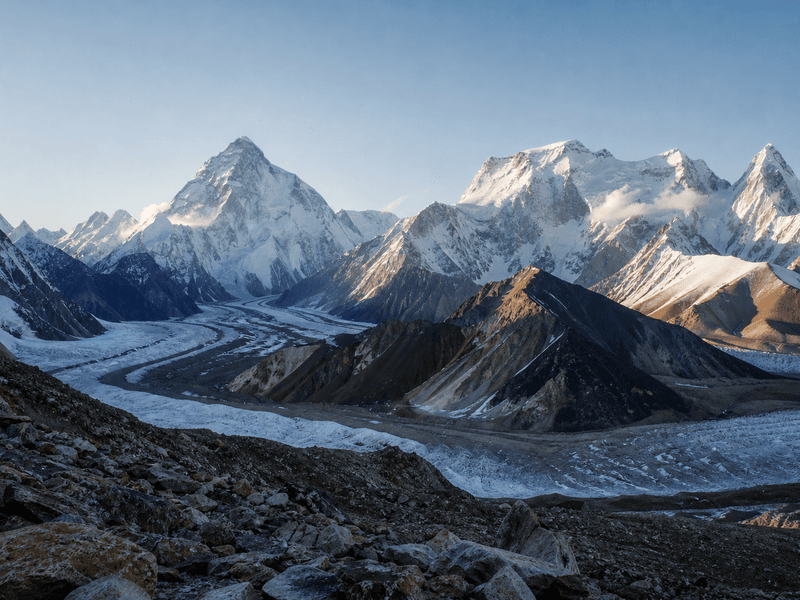
    Reach Concordia, the great meeting point of the Baltoro and Godwin-Austen glaciers. On a clear day K2, Broad Peak, Gasherbrum IV, Chogolisa, and many other peaks stand in a full circle around camp.

    After breakfast, the camp crew packs the shared equipment and the porter team receives the day’s allocated loads while participants carry their personal daypacks. The lead guide sets a sustainable pace over the terrain described above, with planned stops for water, food, layer changes, and regrouping before exposed, loose, or glaciated sections. On reaching camp, the team checks in with the guide, changes into dry layers, hydrates, and inspects feet and equipment. Dinner is followed by a weather, health, and route briefing for the next stage.

  12. Day12Concordia to Gasherbrum I Base CampDaily route segment5,150 m

    Leave Concordia and move toward the Gasherbrum side of the upper Baltoro. Establish base camp near 5,150 m, settle the kitchen, communications, tents, and climbing equipment, and begin the slower rhythm of expedition life.

    The team first agrees a stable camp layout that separates sleeping, cooking, dining, storage, sanitation, communications, and waste areas. Namla Expeditions staff pitch and secure the shared tents, organise water and food routines, inventory arriving cargo, and test radios, satellite equipment, charging systems, and emergency resources included in the confirmed package. Participants inspect personal climbing equipment and identify anything damaged or missing. A detailed orientation then covers camp movement, hygiene, communications schedules, route access, weather updates, and emergency responsibilities.

  13. Day13Base camp organisation and climbing briefingDaily route segment

    Sort loads for Camp 1, review glacier travel, fixed-line protocol, radio procedure, oxygen plan if selected, and emergency signals. The first movement above base camp is decided by weather and snow condition.

    This is a structured base-camp working day. The expedition leader reviews the intended route, objective hazards, recent conditions, forecast, camp sequence, turnaround rules, descent options, communications, and emergency responsibilities with the full team. Participants inspect personal and shared technical equipment, practise the movement or hauling systems relevant to the route, and report health or acclimatisation concerns before moving higher. Namla Expeditions staff check food, fuel, medical resources, power, radios, storage, sanitation, and waste arrangements. The evening briefing records the next safe objective without treating upward progress as automatic.

  14. Day14Climbing period: base camp to summit and returnDaily route segment

    Days 14 to 42 are reserved for acclimatisation rotations, load carries, rest days, weather holds, summit attempt, and descent. A normal plan uses Camps 1, 2, and 3 above base camp, with at least one rotation before the summit push.

    Gasherbrum I demands discipline on the upper mountain. We do not chase a summit in poor wind or unstable snow. The leader and high-altitude staff assess the route daily and choose the safest available window for the team.

  15. Day43Base camp to Goro IIDaily route segment

    After clearing base camp and checking every load, begin the return trek down the Baltoro. The first day out from Gasherbrum I base camp is usually long but satisfying after weeks on the mountain.

    After breakfast, the camp crew packs the shared equipment and the porter team receives the day’s allocated loads while participants carry their personal daypacks. The lead guide sets a sustainable pace over the terrain described above, with planned stops for water, food, layer changes, and regrouping before exposed, loose, or glaciated sections. On reaching camp, the team checks in with the guide, changes into dry layers, hydrates, and inspects feet and equipment. Dinner is followed by a weather, health, and route briefing for the next stage.

  16. Day44Goro II to Khoburtse or Urdukas sideDaily route segment

    Continue down-glacier through the familiar camps. The team moves carefully because tired legs and loose moraine can be a poor combination after the climbing period.

    After breakfast, the camp crew packs the shared equipment and the porter team receives the day’s allocated loads while participants carry their personal daypacks. The lead guide sets a sustainable pace over the terrain described above, with planned stops for water, food, layer changes, and regrouping before exposed, loose, or glaciated sections. On reaching camp, the team checks in with the guide, changes into dry layers, hydrates, and inspects feet and equipment. Dinner is followed by a weather, health, and route briefing for the next stage.

  17. Day45Khoburtse to JholaDaily route segment

    Leave the main glacier section and descend toward the warmer Braldu Valley. Camp at Jhola or a nearby safe site depending on trail and river conditions.

    After breakfast, the camp crew packs the shared equipment and the porter team receives the day’s allocated loads while participants carry their personal daypacks. The lead guide sets a sustainable pace over the terrain described above, with planned stops for water, food, layer changes, and regrouping before exposed, loose, or glaciated sections. On reaching camp, the team checks in with the guide, changes into dry layers, hydrates, and inspects feet and equipment. Dinner is followed by a weather, health, and route briefing for the next stage.

  18. Day46Jhola to AskoleDaily route segment

    Final trekking day back to Askole. The porter team is paid and thanked properly here before we return to the road system.

    After breakfast, the camp crew packs the shared equipment and the porter team receives the day’s allocated loads while participants carry their personal daypacks. The lead guide sets a sustainable pace over the terrain described above, with planned stops for water, food, layer changes, and regrouping before exposed, loose, or glaciated sections. On reaching camp, the team checks in with the guide, changes into dry layers, hydrates, and inspects feet and equipment. Dinner is followed by a weather, health, and route briefing for the next stage.

  19. Day47Drive Askole to SkarduDaily route segment

    Drive by 4WD from Askole to Skardu. The timing depends on the Braldu road, water crossings, and any repair work after landslides. Overnight Skardu.

    The group leaves after breakfast with personal bags and expedition loads secured in the assigned vehicles. Namla Expeditions drivers and field staff assess road, river, traffic, and weather conditions throughout the journey; stops are made for permits, meals, photography, and comfort only where parking is safe. Travel time can change after landslides or road works, so the day remains flexible. On arrival, rooms or tents are allocated, luggage is checked, and the guide gives a short briefing before dinner and rest.

  20. Day48Fly Skardu to IslamabadDaily route segment

    Fly to Islamabad if the weather allows. If flights are not operating, we arrange the road journey by the safest available route and keep the team updated throughout.

    The operations team checks the latest airline and weather information before leaving the hotel and coordinates the airport transfer, tickets, and expedition baggage. Mountain flights remain weather-dependent; if a cancellation occurs, Namla Expeditions explains the available road contingency and revises later stages without compressing essential acclimatisation or safety time. After landing, the group collects all luggage before transferring to the hotel. A short arrival briefing covers meals, local timing, equipment access, and the next day’s plan.

  21. Day49Islamabad contingency and farewellDaily route segment

    A buffer day for weather delays, equipment packing, and farewell dinner. We always advise climbers to keep flexibility before international departure from Pakistan.

    Namla Expeditions reconfirms the flight time and terminal before hotel checkout, then coordinates the airport transfer with enough time for security, baggage, and airline formalities. The operations team helps resolve any final luggage or document issue before the group enters the terminal. International tickets should retain sensible buffer after mountain travel because domestic flights and road journeys can be delayed. Services conclude after airport drop-off, unless additional accommodation or onward travel has been arranged in writing.

  22. Day50Departure from IslamabadCompletion day

    Transfer to Islamabad International Airport for the flight home. The expedition ends after the airport drop-off.

    Namla Expeditions reconfirms the flight time and terminal before hotel checkout, then coordinates the airport transfer with enough time for security, baggage, and airline formalities. The operations team helps resolve any final luggage or document issue before the group enters the terminal. International tickets should retain sensible buffer after mountain travel because domestic flights and road journeys can be delayed. Services conclude after airport drop-off, unless additional accommodation or onward travel has been arranged in writing.

Field Planning

Prepare for the Journey

Fitness

Preparation & Fitness

Difficulty Rating: Hard

In practical terms this is an extreme high-altitude expedition, even though the CMS difficulty label is Hard. Expect a long approach, weeks above 5,000 m, heavy cold, low oxygen, fixed-line climbing, and real avalanche and crevasse exposure.

Preparation

Begin serious preparation at least 6 months before departure:

  • Regular uphill endurance days carrying 12-18 kg
  • Strength training for legs, core, and shoulders
  • Practice with crampons, jumars, abseil device, and down-climbing on fixed rope
  • Previous altitude exposure above 6,000 m, preferably above 7,000 m
  • Medical and dental checks before travel
  • Full personal gear test before flying to Pakistan

Acclimatization

Altitude & Pacing

The programme should allow careful rotations and recovery at base camp. Climbers need previous high-altitude expedition experience and the ability to move efficiently while carrying loads.

Equipment

Clothing & Equipment

A complete 8000m kit is required, including high-altitude boots, expedition insulation, glacier gear, fixed-line equipment, high-camp sleeping systems, and robust eye and hand protection.

Safety

Safety & Logistics

Safety Approach

We manage safety through conservative timing, daily weather review, radio contact, clear turnaround rules, and honest communication between base camp and the climbing team. Helicopter evacuation in the Karakoram depends on weather, military clearance, and insurance approval, so prevention matters more than rescue promises.

Local Staff and Porter Welfare

Porter loads are planned before leaving Askole and staff wages, food, shelter, and insurance are included. We do not build a low price by pushing risk onto porters or kitchen staff. A strong base camp begins with a well-treated local team.

Permits

Permits & Local Operations

Permits and Government Formalities

We arrange the mountaineering permit, peak royalty file, liaison officer coordination, environmental/garbage fee process, and local authority paperwork through the proper Pakistan channels. Passport copies, visa details, rescue insurance, and expedition forms should reach us well before arrival so the file is not rushed.

Approach and Base Camp

The expedition moves Islamabad - Skardu - Askole, then follows the Baltoro Glacier through Paiyu, Urdukas, Goro II, Concordia, and onward to Gasherbrum Base Camp at roughly 5,150 m. The same Baltoro approach serves K2 and Broad Peak teams, but the Gasherbrum branch is quieter and feels more remote after Concordia.

High Mountain Support

The climbing plan is built around base camp support, high-camp carries, fixed-rope coordination where required, weather forecasting, radio contact, and local high-altitude staff. Oxygen, one-to-one climbing support, and extra personal porterage can be added to the final proposal when the team size and service level are confirmed.

What's Covered

Inclusions & Exclusions

Included

  • Islamabad airport arrival and departure transfers
  • Hotel accommodation in Islamabad and Skardu on twin-share basis as agreed in the final proposal
  • Domestic flights Islamabad-Skardu-Islamabad when operating, with road transfer support if mountain weather cancels flights
  • 4WD jeep transport between Skardu and Askole both ways
  • Pakistan expedition permit, peak royalty, liaison officer coordination, and environmental/garbage fee processing
  • All meals during the approach trek, at base camp, and during the climbing period
  • Askole porters for expedition loads to base camp and back, within the agreed porter allowance
  • Base camp kitchen, dining tent, toilet tent, shower tent, communications tent, and shared charging setup where power is available
  • Experienced cook, kitchen crew, base camp staff, and local high-altitude support staff
  • High-camp tents, group rope-fixing coordination, and high-camp food carried according to the climbing plan
  • Daily weather forecast support during the main climbing period
  • VHF/walkie-talkie communication between base camp and climbing team where signal allows
  • Group medical kit and emergency response plan filed before departure
  • Staff wages, food, accommodation, basic equipment, and insurance
  • Welcome briefing in Skardu and final debrief in Islamabad or Skardu
  • Gasherbrum I base camp setup around 5,150 m with full-board kitchen service during the climbing period

Not Included

  • International flights to and from Islamabad
  • Pakistan visa fee and personal visa documentation costs
  • Lunches and dinners in Islamabad and Skardu unless specifically included in the final proposal
  • Travel insurance with high-altitude mountaineering and helicopter evacuation cover, mandatory for every climber
  • Personal climbing clothing and equipment, including down suit, boots, crampons, harness, ascender, descender, helmet, and sleeping bag
  • Personal oxygen, mask, regulator, and extra high-altitude support unless selected in the final service level
  • Personal satellite phone, data, Wi-Fi, battery charging beyond the shared camp setup, and excess baggage charges
  • Extra hotel nights, meals, and transport caused by weather delays, road blockage, flight cancellation, or early return
  • Rescue, helicopter evacuation, medical treatment, hospital bills, and repatriation costs
  • Summit bonus and tips for climbing guides, high-altitude porters, kitchen staff, and porters
  • Any service not listed clearly in the inclusions or final written proposal

Common Questions

Frequently Asked Questions

How difficult is Gasherbrum I compared with Gasherbrum II?

Gasherbrum I is generally the more demanding objective. It is higher, more serious in character, and less forgiving in poor conditions. Climbers should arrive with previous expedition experience and confidence using fixed ropes, crampons, ascenders, and descent devices at altitude.

When is the best time to climb Gasherbrum I?

The normal climbing season is summer, especially July and early August. We usually plan arrival in Pakistan in late June or early July so the team can reach base camp with time for rotations and a weather window.

Do I need previous 8,000 m experience?

Previous 8,000 m experience is strongly recommended. At minimum, climbers should have climbed a 7,000 m peak or a serious alpine route, and must be comfortable with expedition camping, cold injury prevention, self-care, and moving on fixed lines while tired.

Is oxygen included?

Oxygen can be included in the final proposal, but we confirm bottle count, mask, regulator, carrying support, and cost before booking. Some climbers choose a lighter logistics package; others want a full oxygen plan. We price this honestly after understanding the team.

What happens if Skardu flights are cancelled?

Islamabad-Skardu flights are weather dependent. If flights cancel and the road is open, we move by the Karakoram Highway with safe overnight stops. Extra costs caused by weather delays are normally not included unless written into the final proposal.

From the Field Notes

From the same region

Related Journeys

GasherBrum 1 Expedition

Start Your Journey

Plan Gasherbrum I Expedition (8,080m) with our local team

Reach our team directly. No booking system, no automated responses — a direct line to the people who run these routes.

Price on request