In this field note16 sections +Close −
- 01The route decides the accommodation
- 02Where lodge trekking works in Gilgit-Baltistan
- 03Why the Baltoro is a camping trek
- 04Daily life on a tented trek
- 05Sleeping comfort
- 06Food and resupply
- 07Toilets, washing and hygiene
- 08Power and communication
- 09Weather and recovery
- 10Environmental trade-offs
- 11Cost differences
- 12Who should choose lodge trekking?
- 13Who should choose camping?
- 14Packing checklist by style
- 15Internal planning links
- 16Frequently asked questions
Camping and lodge trekking are not simply two comfort levels for the same route. In Gilgit-Baltistan, accommodation follows settlement geography. A cultural or valley journey can use guesthouses and locally run lodges. The Baltoro, Biafo and Snow Lake continue beyond the last permanent villages, so teams carry tents, a kitchen, food, fuel and group equipment.
This distinction changes the rhythm of the trip. Lodge trekkers walk between fixed buildings and can sometimes buy food or charging. Camping teams move a complete support system every day. The first walkers may reach camp before the kitchen or baggage because staff have dismantled the previous site and carried it over the same ground.
Neither style is automatically more authentic or responsible. Quality depends on fair local employment, suitable sanitation, energy use, waste management and honest expectations.
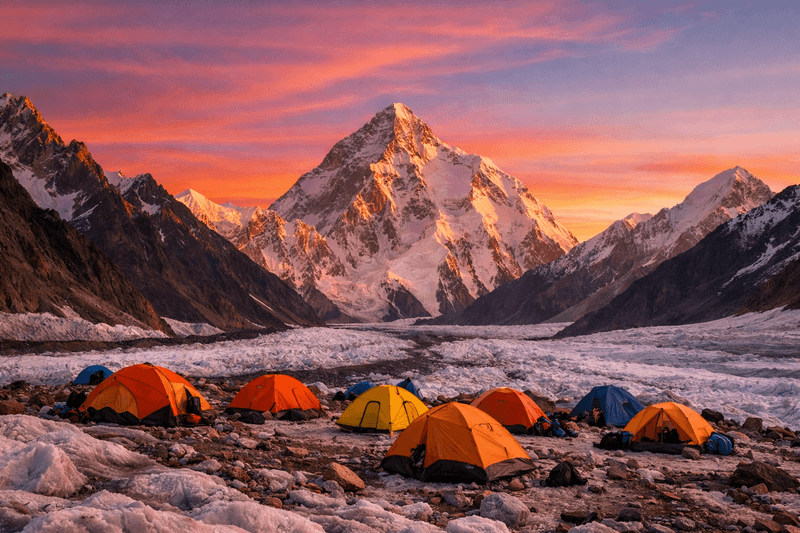
Field expectation: On the Baltoro, “camping” does not mean a recreational campsite beside a road. It is an expedition system designed to function for weeks without a permanent settlement.
The route decides the accommodation
Factor | Camping trek | Lodge or guesthouse trek |
|---|---|---|
Route access | Can operate beyond settlements | Requires buildings and service along the route |
Sleeping | Tents and sleeping system | Basic private or shared room |
Food | Expedition kitchen and carried supplies | Fixed kitchen with local resupply |
Baggage | Porters or animals where terrain allows | Porter, vehicle or personal carry depending on route |
Toilets | Camp or established basic facilities | Indoor or outside lodge facility |
Power | Limited solar or batteries | May have grid, generator or solar; never assume |
Flexibility | Camp movement can adjust within safe/legal sites | Night must end near operating accommodation |
Weather recovery | Tent and group shelter | Building provides more wind and precipitation protection |
Where lodge trekking works in Gilgit-Baltistan
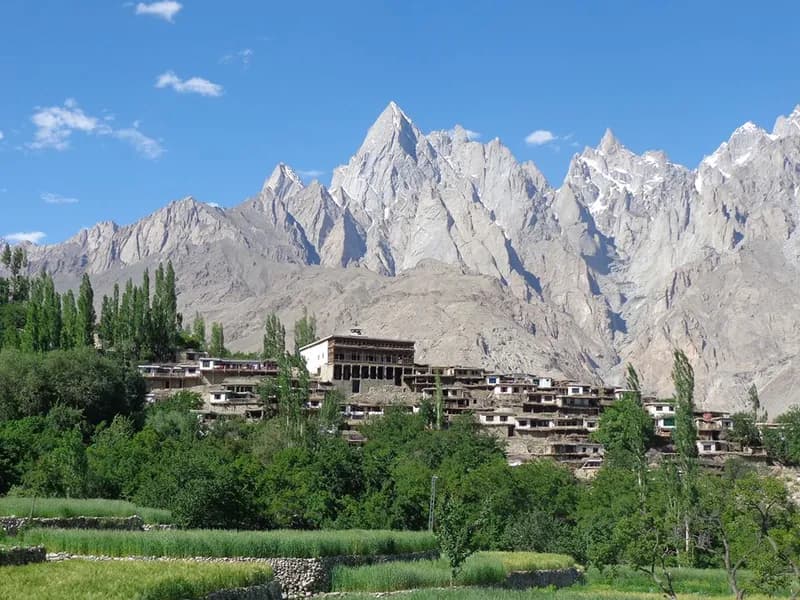
Guesthouses and small hotels serve Skardu, Shigar, Khaplu, Hunza, Nagar and many settled valleys. A trip can combine day hikes with village accommodation, reducing the number of moving camp stages. This suits cultural journeys, shorter walking programmes and travellers who prefer a bed and more washing access.
Standards vary. “Lodge” can mean a simple family guesthouse with shared bathroom, not a Himalayan-style teahouse network or an alpine hut. Heating, hot water, mobile coverage, card payment and charging should all be confirmed rather than assumed.
Staying locally can direct spending to a household and reduce transported camp equipment. The effect is strongest when rooms, food and staff are purchased at fair rates and waste and fuel use are managed responsibly.
Why the Baltoro is a camping trek
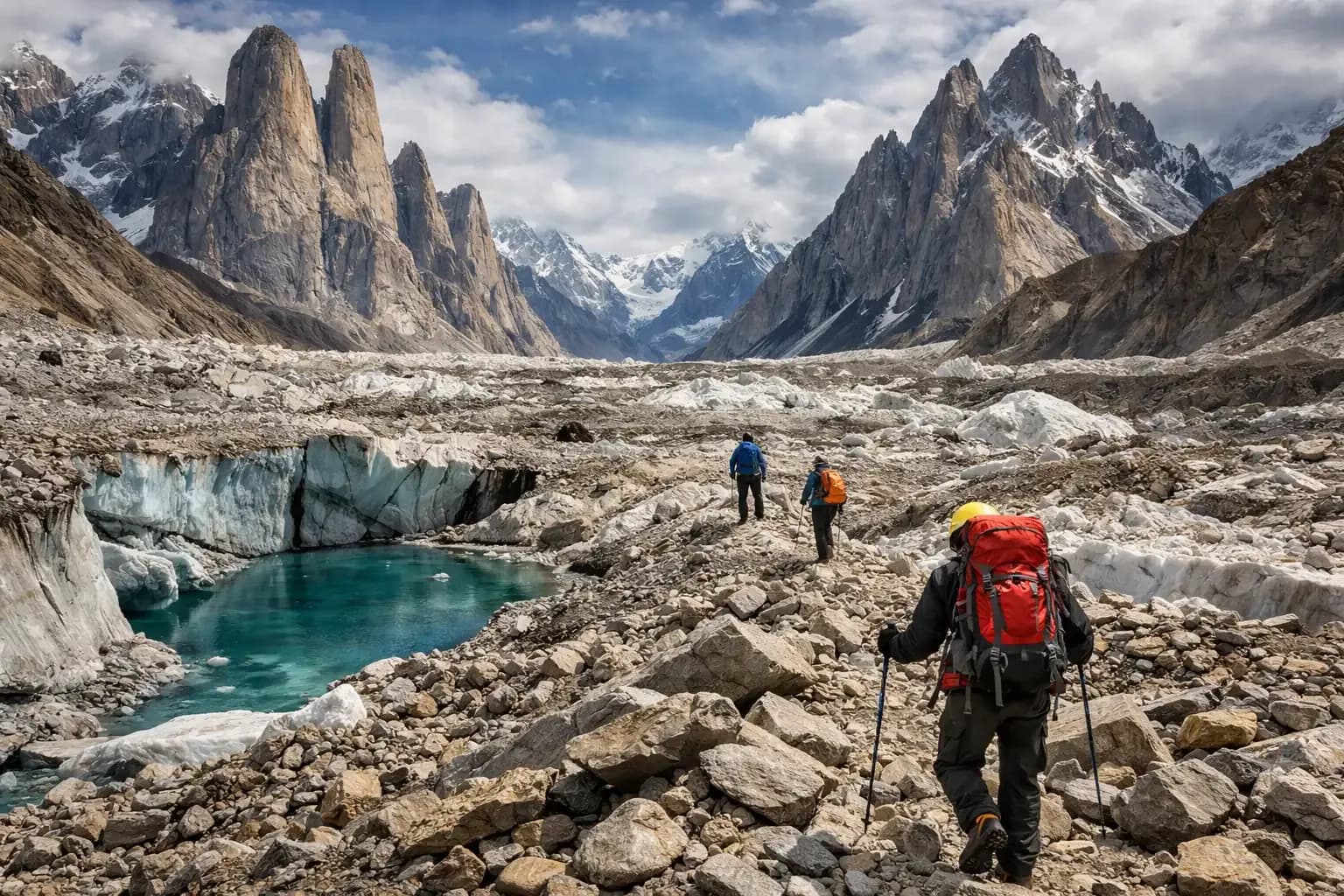
Askole is the last permanent settlement on the classic approach. Beyond it, camps such as Jhola, Paiju, Urdukas, Goro and Concordia are expedition sites rather than villages. There is no chain of lodges with bedrooms, menus and retail resupply.
The team carries:
- Sleeping tents and repair materials
- Kitchen and dining shelter
- Food and emergency reserve
- Fuel and cooking equipment
- Medical and communication systems
- Toilet and waste supplies
- Participant duffels within the allowance
- Staff equipment and shelter
Pack animals can work on selected stages; porters move loads where animals cannot. Load planning begins in Skardu and is checked again in Askole.
Daily life on a tented trek
Participants usually wake, pack their sleeping equipment, eat breakfast, fill water and start with the guide. Staff dismantle camp and organise loads. During the day, the walking group carries personal essentials while the main duffel travels within the support system.
At the next camp, change into dry layers, drink, inspect feet and organise the tent. The dining or kitchen tent may still be in transit. Patience is part of the system; demanding an item from a load that has not arrived does not move it faster.
Keep in the daypack
- Waterproof jacket and trousers
- Warm layer, hat and gloves
- Water and treatment backup as directed
- Sun protection and glacier glasses
- Personal medicine and small first aid
- Headlamp, snacks and toilet items
- Passport copy and emergency contacts
The sleeping bag and expedition insulation should be waterproofed inside the duffel, even if the duffel itself is described as waterproof.
Sleeping comfort
A lodge offers a solid floor and walls, but mattresses, bedding and noise vary. Carry a sleeping-bag liner or sleep system specified by the itinerary. In simple rooms, indoor temperatures can still fall low.
A good expedition tent protects against wind and precipitation but cannot create a level campsite where none exists. Moraine camps may be stony or uneven. An insulated mat is as important as the sleeping bag because cold conducts from the ground.
Tent habits improve rest:
- Keep wet boots near the entrance.
- Brush off snow and dirt before entering.
- Ventilate to reduce condensation.
- Store water upright and protect filters from freezing.
- Keep batteries and electronics warm.
- Use earplugs for wind and camp noise.
- Pack most items before breakfast.
Food and resupply
Lodges can prepare meals from local supplies and may offer some menu choice. Availability decreases in remote valleys and outside the main season. Dietary needs should be confirmed in advance; gluten-free, allergy-safe or specialist foods cannot be assumed.
Expedition kitchens plan the full route. Fresh produce is used earlier, while durable rice, pasta, potatoes, pulses, soups, eggs and packaged items become more important later. High altitude can reduce appetite, so familiar snacks are useful.
Camping food is constrained by weight, fuel and safe storage. Lodge food is constrained by local transport, season and kitchen capacity. Both benefit from early disclosure of allergies and medical diets.
Toilets, washing and hygiene
Lodges may have indoor plumbing, outside toilets or limited water. A flush toilet does not guarantee a sewer; water and waste systems can be fragile. Use paper and disposal methods as the host instructs.
Camp facilities range from established basic toilets to temporary expedition arrangements. Washing is limited by water, fuel, cold and privacy. Hand hygiene before eating, foot care and clean drinking systems matter more than trying to reproduce a hotel routine.
Never put wipes, menstrual products, batteries or packaging in a toilet pit. Carry them in sealed personal waste bags. Use small amounts of biodegradable soap away from streams and collection points.
Power and communication
Some lodges have grid, micro-hydro, generator or solar power. Availability and voltage can vary, and charging may be limited or paid. Bring a power bank and do not monopolise a shared outlet.
Remote camps rely on solar and stored batteries. Satellite devices and radios are operational tools. A guest’s camera charging is secondary to weather, medical and communication needs. Keep families informed that missed messages are normal.
Weather and recovery
Lodges provide better shelter for drying and waiting, although heating may be modest. Tents place greater importance on disciplined clothing and moisture management. On the Baltoro, direct sun can be hot and upper camps cold in the same week.
Camping also increases weather exposure during daily setup and breakdown. A delayed storm can affect porters and kitchen staff as well as guests. Stay within baggage limits and keep the camp area orderly so staff can secure equipment quickly.
Environmental trade-offs
Camping carries more equipment and can damage ground or create waste if poorly managed. Using established sites, returning non-biodegradable waste and protecting water are essential. Fuel planning should avoid pressure on scarce local wood.
Lodges concentrate water, sewage, heating fuel and rubbish. A building is not automatically low-impact. Responsible hosts manage these systems, while guests reduce long showers, disposable bottles and unnecessary heating demands.
The most sustainable style is the one suited to the route and operated well. A tented expedition cannot be replaced by a non-existent lodge, and an unnecessary moving camp near good local accommodation may miss community benefit.
Cost differences
Lodge trips can reduce tent and porter costs, but accommodation and meal prices apply each night. Private rooms, heating, hot water and charging may be extra. Vehicles may also be used between valley walks.
Camping requires staff, tents, kitchen, food, fuel and load transport. Fixed costs make small private groups expensive per person. The price should include staff insurance, equipment and waste management rather than externalising them.
Compare complete inclusions: airport and road transfers, hotels, meals, baggage weight, porter service, technical equipment and contingency nights.
Who should choose lodge trekking?
Choose lodge or guesthouse routes if you want cultural contact in settled valleys, day hikes, more physical shelter and a shorter entry into mountain travel. They can suit families and first-time visitors when altitude and walking difficulty are appropriate.
Who should choose camping?
Choose camping when the desired route leaves settled valleys or when the journey itself requires a moving base. You should be comfortable with basic hygiene, limited privacy and repeated tent nights. Test your sleeping system before departure.
Packing checklist by style
Both styles
- Broken-in footwear and daypack
- Full layers and waterproofs
- Personal medicine and hygiene supplies
- Power bank and offline documents
- Earplugs, headlamp and water capacity
Camping additions
- Cold-rated sleeping bag and liners
- Insulated mats as specified
- Waterproof duffel organisation
- Sealable personal waste bags
- Tent repair familiarity and disciplined packing
Lodge additions
- Light sleep liner if advised
- Slip-on indoor footwear
- Small cash for local extras
- Plug adapter and shared-charging etiquette
- Modest clothing for village stays
Internal planning links
The K2 Base Camp Trek is a full camping expedition, while our Baltistan Cultural Tour and Gilgit-Baltistan Grand Tour use settled-valley accommodation. Read life on the Baltoro, life in Askole and responsible trekking.
Frequently asked questions
Are there lodges on the K2 Base Camp trek?
No continuous lodge network exists beyond Askole. Organised teams normally use tented camps and carry their kitchen, food, fuel and group equipment.
Is camping colder than a lodge?
Usually, but simple lodges can also be unheated. A suitable sleeping system and clothing remain important in both.
Can I shower on a camping trek?
Washing opportunities depend on camp, weather, water and fuel. Plan for careful basic hygiene rather than regular full showers.
Is lodge trekking cheaper?
It can be on suitable routes because less camp equipment moves, but room, meal, transport and service standards vary. Compare complete itineraries rather than accommodation alone.
Which style is more sustainable?
Neither automatically. Good camping controls waste, water and staff loads; good lodges manage sewage, fuel and rubbish while supporting local households.
Can a trip combine both styles?
Yes. Many Karakoram itineraries use hotels or guesthouses in Islamabad, Skardu and villages before switching to tents beyond the roadhead.
End of field note
Continue your research.
Browse all notes