In this field note15 sections +Close −
- 01The practical boundary
- 02Trekking in the Karakoram
- 03Mountaineering in the Karakoram
- 04Equipment changes
- 05Skills and decision-making
- 06Fitness comparison
- 07Permits, visa and legal objective
- 08Insurance differences
- 09Guides and participant responsibility
- 10Hazard and consequence
- 11A sensible progression
- 12Choosing your next journey
- 13Readiness checklist
- 14Internal planning links
- 15Frequently asked questions
Trekking and mountaineering can take place in the same valley and at similar elevations, but they are not the same activity. A K2 Base Camp trek reaches high glacial terrain without attempting a summit. A climber may leave a nearby base camp and enter steep snow, ice, rock, crevasses and fixed-line systems where a fall or equipment error has immediate consequences.
The boundary is not a single altitude. Pakistan has administrative definitions for trekking and regulated climbing, while operators also assess the technical reality of the route. Gondogoro La, for example, is included in a trekking itinerary but can require mountaineering equipment and fixed-rope movement. A low rock tower can be more technical than a much higher trek.
Understanding the distinction helps travellers select the correct permit, insurance, equipment, preparation and support.
Progression principle: A trek can build expedition habits, altitude knowledge and endurance. It does not automatically teach rope work, crampon skill or hazard judgement. Those must be learned and practised separately.
The practical boundary
Factor | Trekking | Mountaineering |
|---|---|---|
Primary movement | Walking on trail, moraine and non-technical glacier terrain | Climbing snow, ice, rock or mixed terrain |
Fall consequence | Usually managed through pacing and foot placement | Often requires ropes, anchors and protection |
Technical equipment | Poles and route-specific glacier kit | Harness, helmet, crampons, axe, rope and protection systems |
Objective | Pass, base camp or route completion | Summit or technical ascent |
Permit | Trekking permission where regulated | Peak-specific mountaineering permission |
Participant role | Follow guide and manage personal trekking systems | Perform technical systems and make climbing decisions |
Rescue | Assisted movement and ground evacuation | Self-rescue and technical retreat may be essential |
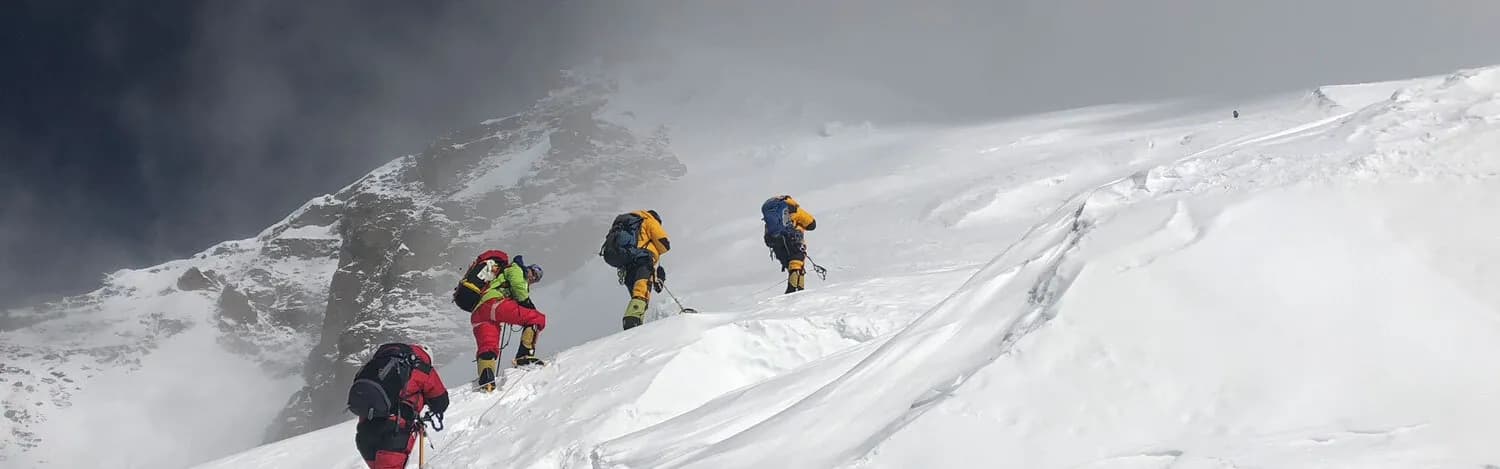
The categories overlap. A high-pass trek may use ropes and crampons; an easy snow peak may have moderate climbing. Always judge the named itinerary rather than relying only on its marketing label.
Trekking in the Karakoram
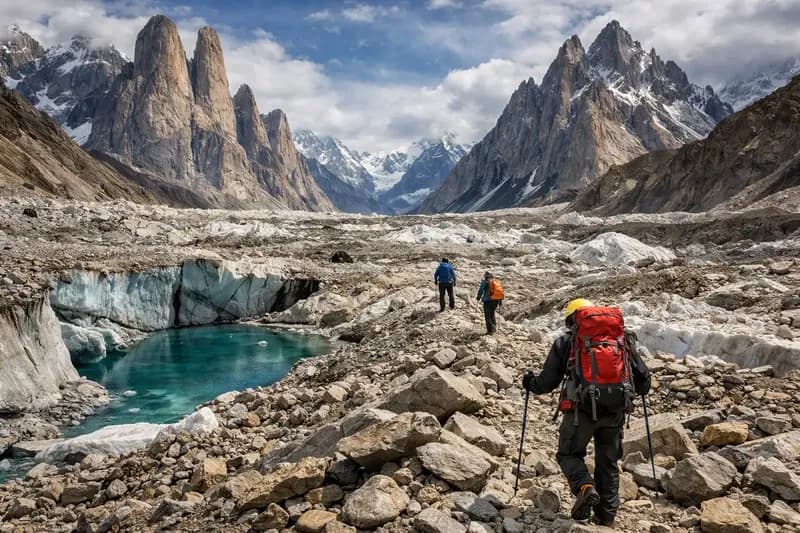
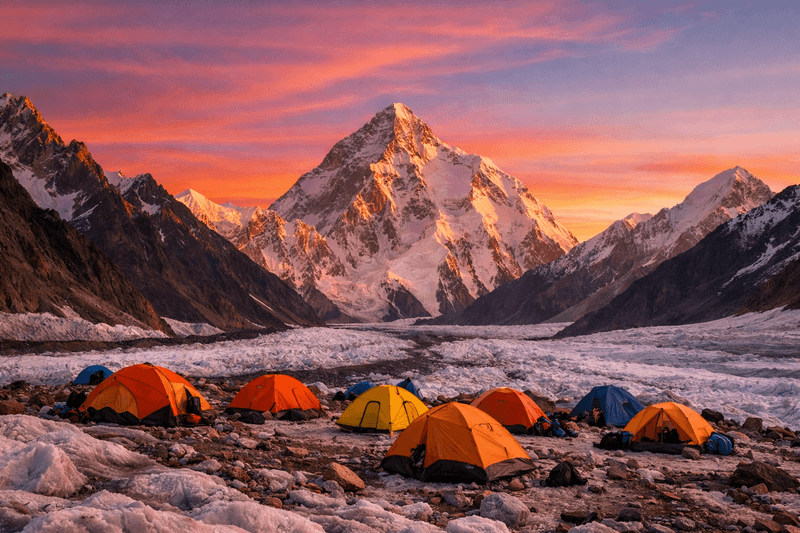
Karakoram trekking involves sustained travel through remote terrain. On the Baltoro, much of the surface is loose moraine over active glacier. Biafo and Snow Lake can involve exposed or snow-covered glacier. Camps are tented, resupply limited and evacuation complex.
The trekker’s main technical responsibilities are pacing, balance, foot care, layering, hydration, camp organisation and honest symptom reporting. On some routes, the guide may teach basic harness, crampon and fixed-rope procedures for a pass.
Trekking is not risk-free. Altitude illness, rockfall, river crossings, slips, weather, cold injury and gastrointestinal illness all occur. The difference is that the route does not normally require continuous climbing technique to make progress.
Mountaineering in the Karakoram
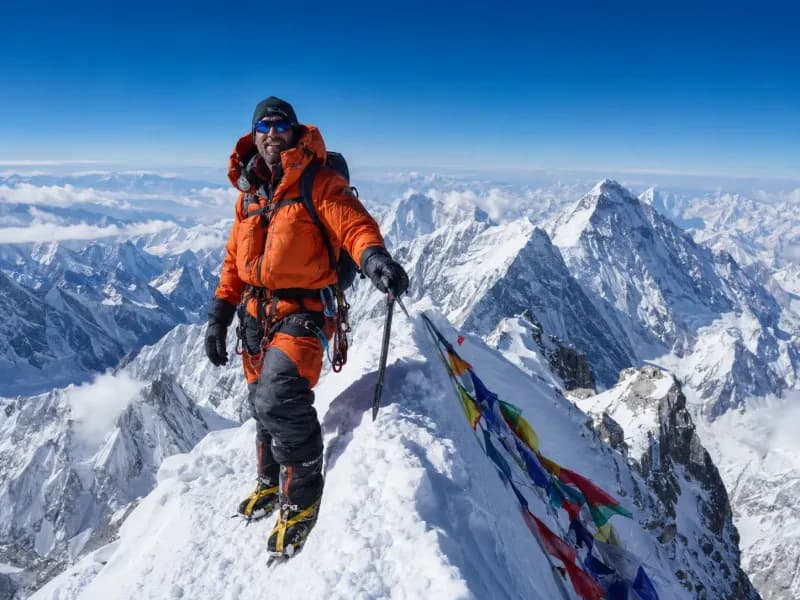
Mountaineering adds terrain where the team manages fall risk and objective hazards with specialised skill. Depending on the peak, that can include glacier roping, crevasse rescue, pitched rock or ice climbing, fixed-line ascent, aid climbing, high camps and supplemental oxygen.
The climber must remain functional when cold, tired and hypoxic. Basic tasks—clipping a rope, fitting crampons, lighting a stove, changing an oxygen cylinder—become slow at altitude. A guide can lead and support, but cannot perform every personal action for a climber spread across a large route.
Objective hazards such as avalanche, serac fall and rockfall cannot be removed. Mountaineering decisions manage duration and location of exposure; they do not convert the mountain into a controlled environment.
Equipment changes
Trekking core
- Broken-in boots suitable for the terrain
- Trekking poles
- Daypack and waterproof duffel system
- Layered clothing, insulation and full waterproofs
- Sun hat, glacier glasses where required and skin protection
- Cold-rated sleep system
- Water capacity, headlamp and personal first aid
Mountaineering additions
- Helmet and climbing harness
- Route-compatible crampons and ice axe
- Ropes, ascenders, carabiners and technical hardware
- Protection, anchors or aid equipment for the route
- High-altitude boots and greater insulation where required
- High-camp sleep, stove and shelter systems
- Oxygen equipment when selected
- Repair and self-rescue materials
Equipment ownership does not equal competence. A crampon fitted for the first time at base camp can damage a boot or release on steep ground. Every critical system should be tested before Pakistan.
Skills and decision-making
A trekker needs to follow the guide, maintain a sustainable pace, care for feet and manage symptoms. A mountaineer also needs route and rope awareness, safe transitions, retreat systems and the ability to judge personal limits.
Essential mountaineering skills vary by route
- Efficient crampon movement on ascent and descent
- Self-arrest and axe use where appropriate
- Fixed-rope ascent, changeovers and descent
- Glacier roping and crevasse rescue
- Anchor construction and belaying
- Navigation in poor visibility
- Tent and stove use in high wind and cold
- Equipment repair and emergency shelter
These are practical skills. Certificates are useful only when backed by recent, repeated performance.
Fitness comparison
Treks require a strong aerobic base and the durability to walk on consecutive days with a daypack. Mountaineering adds heavier loads, upper-body pulling, steep crampon work, technical concentration and less predictable rest.
Both benefit from long easy endurance, uphill specificity, leg strength and back-to-back days. Mountaineers need more task-specific training: fixed-line sessions, pack carries, climbing in gloves and controlled descent after long efforts.
Neither fitness level prevents altitude illness. The CDC guidance on high-altitude travel notes that training does not determine susceptibility. It improves work capacity; acclimatisation and ascent rate address hypoxia.
Permits, visa and legal objective
A Pakistan entry visa, LOI, trekking permit and mountaineering permit serve different purposes. A trekking participant cannot decide at K2 Base Camp to attempt a nearby peak. The operator must apply for the correct objective and manage government formalities before the expedition.
Peak permits can require climbing résumés, route information, royalties, environment fees, liaison or guide documents, staff insurance and rescue undertakings. Regulated treks also require participant details and operator coordination.
Use the official Pakistan Online Visa System and current Gilgit-Baltistan tourism regulations. Do not rely on old forum advice about open zones or fee exemptions.
Insurance differences
Many policies distinguish hiking, high-altitude trekking, scrambling, mountaineering and climbing with ropes. The route’s name may not appear in the wording, so the traveller must describe the actual activity.
For a trek, confirm Pakistan, maximum altitude, remote trekking, search, rescue, medical evacuation and repatriation. For mountaineering, add the named peak, climbing equipment, ropes, fixed lines, snow, ice and intended oxygen style where requested.
A policy does not make helicopter rescue guaranteed. Weather, aircraft, altitude, landing terrain, daylight and official authorisation still control a flight.
Guides and participant responsibility
On a trek, one guide can often keep the group together, control pace and monitor symptoms closely. On a large mountain, climbers spread between camps and move at different speeds. Guide ratios and high-altitude staff allocation become critical.
Ask whether support is:
- A trekking guide leading the route
- A climbing guide sharing technical terrain
- A high-altitude porter carrying and establishing camps
- An expedition leader coordinating several climbers
- Base-camp service with independent climbing above
These roles carry different qualifications and responsibilities. “Guided” is not sufficiently precise for a mountaineering contract.
Hazard and consequence
Trekking hazards are often managed by route choice, pace, timing, clothing and turning around. Mountaineering uses those same tools plus rope systems and technical protection. The remaining hazard is usually higher.
A small trekking error can still become serious because help is far away. A mountaineering error may be immediately catastrophic. This is why route selection must leave a skill margin. Climbing at the very edge of ability at sea level is poor preparation for doing so at 6,000 or 8,000 metres.
A sensible progression
There is no mandatory ladder, but a strong pathway may look like this:
- Multi-day hiking and camping with reliable personal systems
- High-altitude trek such as K2 Base Camp
- Formal snow, ice, rope and crevasse training
- Guided alpine peaks at moderate altitude
- Independent or shared-responsibility 5,000–6,000-metre climbs
- Technical 6,000–7,000-metre expeditions
- Carefully selected 8,000-metre objective
Progress is based on responsibility, not just summit height. Repeat stages until skills remain reliable in poor weather and after long days.
Choosing your next journey
Choose trekking if you want remote landscape, cultural connection and high-altitude challenge without an ascent requiring sustained climbing technique. Choose mountaineering if the technical process is itself the objective and you have completed the necessary training and progression.
If you feel between the two, a technical pass such as Gondogoro La or a suitable trekking peak can reveal which skills need work—but only with the correct permit, operator and instruction.
Readiness checklist
Trekking readiness
- I can hike for consecutive days on rough terrain.
- My boots, pack and layering are tested.
- I understand basic altitude symptoms.
- I accept tented camps and limited facilities.
- My insurance covers the route and altitude.
Mountaineering readiness
- My route-specific technical skills are recent.
- I can ascend and descend ropes independently.
- I have practised crevasse rescue and retreat.
- My previous altitude record fits the objective.
- I can manage personal shelter, food and equipment at high camp.
- I will turn around without treating the summit as owed.
Internal planning links
Compare the K2 Base Camp Trek, Spantik Expedition and K2 Expedition as very different progression points. Read Gondogoro La vs K2 Base Camp, trekking difficulty and expedition fitness.
Frequently asked questions
Is trekking easier than mountaineering?
It is generally less technical, but a remote high-altitude trek can still be physically demanding and risky. Difficulty depends on duration, terrain, altitude, weather and support.
At what altitude does trekking become mountaineering?
There is no universal altitude boundary for the practical activity. Terrain, equipment, fall risk and objective matter. Pakistan’s administrative definitions and permit rules should also be checked for the named route.
Is K2 Base Camp mountaineering?
The standard journey is a trek and does not attempt K2. It involves remote glacier and moraine travel but not the technical ascent of the mountain.
Does Gondogoro La count as mountaineering?
It is commonly part of a trekking itinerary, but the pass can require crampons, harness, helmet, fixed ropes and mountaineering-style movement.
Can a fit trekker climb a 6,000-metre peak?
Fitness is only one requirement. The climber also needs route-specific snow, ice, rope, glacier and decision skills plus appropriate altitude experience.
Do mountaineers need different insurance?
Usually. Many trekking policies exclude ropes, technical equipment or peak ascents. Obtain written cover for the named mountain, altitude and climbing style.
End of field note
Continue your research.
Browse all notes