ToursBaltistan Region

Baltistan Cultural Tour

A 10-day journey through the ancient forts, Buddhist rock carvings, and Silk Road heritage of Baltistan — Skardu, Shigar, Khaplu, and Deosai at 4,114 m.

Baltistan Region — 4,114 m

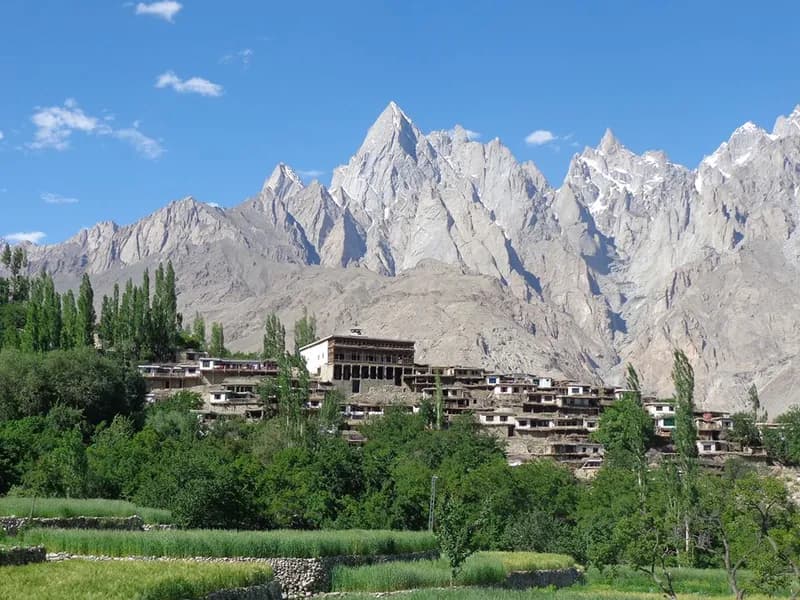
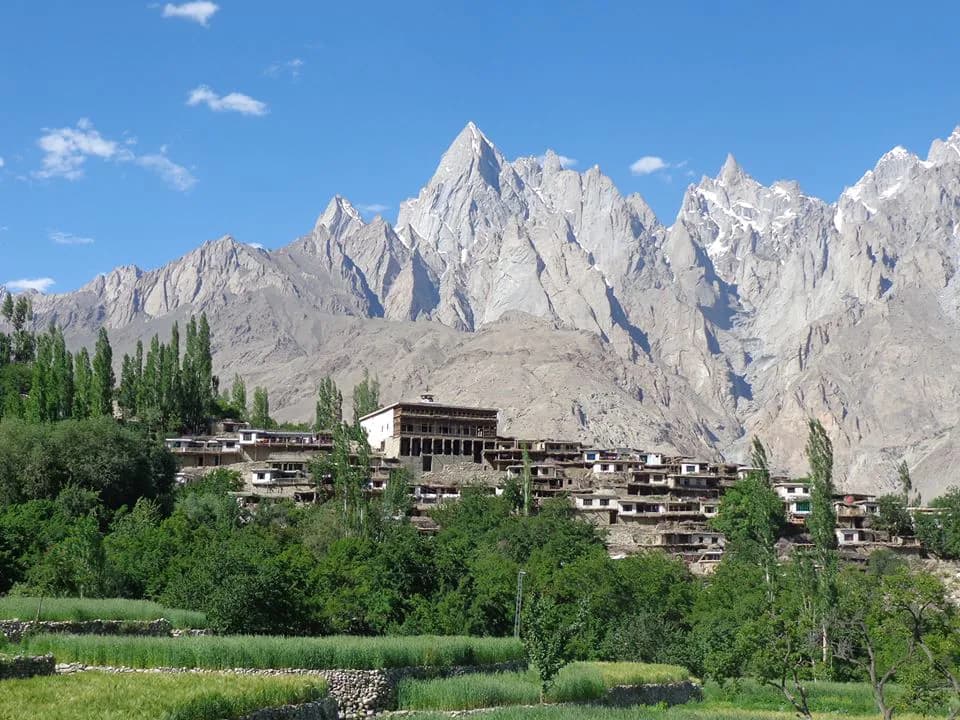
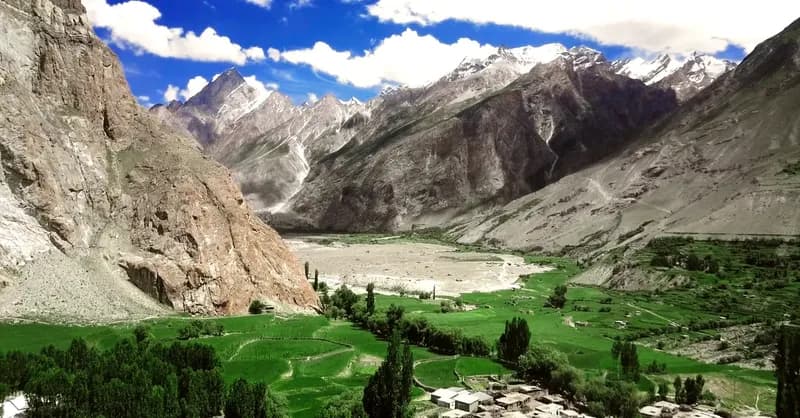
Machulu village and cultivated valley landscape in Baltistan
Karakoram · Pakistan
Duration
10 days
Max Altitude
4,114 m
Difficulty
Easy
Group Size
4 – 12 people
Season
Spring / Summer / Autumn
Journey Code
NE_BCT

Adventure Overview

The Ancient Kingdoms of Baltistan

Baltistan occupies the eastern valleys of Gilgit-Baltistan, a region of deep river gorges and high plateaux that once lay at the intersection of Central Asian, Tibetan, Buddhist, and Islamic civilisations. The Baltistan Cultural Tour explores this layered history through its physical remains: 17th-century forts built by the Maqpon and Amacha dynasties, Buddhist rock carvings from the Silk Road era, polo grounds where the game is still played with original rules, and the terraced apricot-garden villages of Shigar and Khaplu that provisioned caravan trade for centuries.

This is a comfortable, unhurried 10-day tour with hotel-based accommodation throughout. Walking distances at cultural sites are short. The physical highlight is a full-day excursion to Deosai National Park (4,114 m) — the second-highest plateau in the world, habitat of the endangered Himalayan brown bear and a landscape of extraordinary high-altitude beauty.

Cultural Highlights

  • Kharpocho Fort, Skardu — 16th-century 'King of Forts' above the Indus–Shigar confluence
  • Manthal Rock Carvings (Sacred Rocks of Hunza) — 3rd–8th century Buddhist inscriptions and stupas on the ancient Silk Road
  • Shigar Fort Palace — 17th-century Amacha royal residence, now a Serena/Aga Khan heritage hotel
  • Khaplu Palace — restored Yabgo-dynasty 'White Palace', another Aga Khan heritage property in the Ghanche district
  • Deosai National Park (4,114 m) — Sheosar Lake, Himalayan brown bears, alpine flora
  • Kachura Lakes — Lower (Shangri-La) and Upper Kachura
  • Traditional Balti polo, music, and handicraft markets in Skardu

Suitable For

Who This Trip Is For

The Baltistan Cultural Tour is designed for travellers with an interest in mountain history, Islamic and Buddhist heritage, Silk Road civilisations, and traditional Karakoram culture. No physical training is required. The tour is appropriate for first-time visitors to Pakistan, families, older travellers, photographers, and historians — and for anyone who wants to understand the cultural depth of the Karakoram beyond its mountain routes.

It also serves as an excellent foundation for future trekkers: seeing the Baltistan valleys, the Skardu plateau, and the Deosai landscape by vehicle gives a context for the glacier routes that begin here. Many clients follow the Baltistan Cultural Tour with the Biafo Glacier Trek or the K2 Base Camp trek in a subsequent season.

Departures & Pricing

Plan Your Departure

Expedition Price

On request

Pricing depends on group size, route support, permits, and preferred departure window.

Listed Dates

Flex

Seats Open

Ask

Departure Dates

Plan a custom departure

Departure Window

Flexible

Flexible dates by request

Share your preferred arrival window and our team will confirm route timing, permits, and local crew availability.

Custom departure windows are confirmed with route timing, permits, and crew availability.

Itinerary

Day-by-Day Route Plan

Route Span

Days 1-10

Opening Stage

Day 1: Arrive Islamabad

Final Stage

Day 10: Skardu to Islamabad — Departure

  1. Day01Arrive IslamabadDaily route segment

    Arrive at Islamabad International Airport. Transfer to hotel. Evening briefing on the history of Baltistan, the Silk Road context, and the tour itinerary. Welcome dinner. Overnight Islamabad.

    After immigration and baggage collection, a Namla Expeditions representative meets the group in the arrivals area and coordinates the hotel transfer. At check-in, the team confirms delayed baggage, emergency contacts, insurance details, dietary information already supplied, and the next morning’s schedule. The first full briefing introduces the Baltistan Cultural Tour route, transport and weather contingencies, luggage separation, communications, and outstanding equipment questions. The remainder of the day is intentionally unstructured for rest, hydration, and recovery after international travel.

  2. Day02Islamabad to SkarduDaily route segment2,438 m

    Fly from Islamabad to Skardu Airport (approximately 1 hour over the Karakoram foothills and the Indus Valley). Mountain-weather delays are possible — build buffer into international connections. Transfer to hotel in Skardu (2,438 m). Afternoon walk in Skardu town. Overnight Skardu.

    The operations team checks the latest airline and weather information before leaving the hotel and coordinates the airport transfer, tickets, and expedition baggage. Mountain flights remain weather-dependent; if a cancellation occurs, Namla Expeditions explains the available road contingency and revises later stages without compressing essential acclimatisation or safety time. After landing, the group collects all luggage before transferring to the hotel. A short arrival briefing covers meals, local timing, equipment access, and the next day’s plan.

  3. Day03Skardu — Kharpocho Fort and Satpara LakeDaily route segment2,636 m

    Visit Kharpocho Fort ('King of Forts') — built in the 16th century by the Maqpon sultan Ali Sher Khan Anchan at the confluence of the Indus and Shigar rivers. The fort's position on a dramatically isolated rock spur offers commanding views across the Skardu Valley and the Karakoram ranges beyond. It remains one of the finest surviving examples of Balti military architecture.

    Drive to Satpara Lake (2,636 m) — a natural alpine lake below the Satpara Dam, with deep-blue water reflecting the surrounding rocky hillsides. Walk along the lakeshore. Evening in Skardu bazaar: gems, Balti embroidery, and dried apricots. Overnight Skardu.

  4. Day04Manthal Rock Carvings and Skardu AreaDaily route segment

    Visit the Manthal Rock Carvings (Sacred Rocks of Baltistan) — an extensive open-air site on the ancient Silk Road route through the upper Indus Valley. Hundreds of carved boulders bear Buddhist inscriptions in Kharosthi and Brahmi scripts, stupa and dharma-wheel motifs, ibex hunting scenes, and caravanserai records from travellers on the Lhasa–Kashgar–Srinagar trade routes, dating from the 3rd to 8th centuries CE.

    Continue to the Satpara Dam viewpoint and reservoir. Afternoon free in Skardu. Overnight Skardu.

  5. Day05Shigar Valley — Shigar Fort PalaceDaily route segment

    Drive east to the Shigar Valley (1 hour from Skardu). Shigar Fort Palace was the seat of the Amacha dynasty — the royal family that ruled the Shigar Valley from the 17th century until Pakistani independence. The fort's carved wooden pillars, tiered balconies, and the inner royal courtyard are among the finest surviving examples of traditional Balti palace architecture. Meticulously restored by the Aga Khan Cultural Service Pakistan, it is now managed as a Serena heritage hotel.

    Walk through Shigar town: the Friday Mosque (one of the oldest in Baltistan), the old bazaar lanes, and the terraced orchards of apricot and cherry trees that fill the valley walls with colour in spring. Overnight Shigar Fort Palace (included) or Skardu hotel.

  6. Day06Shigar Gorge and Return to SkarduDaily route segment

    Morning exploration of the upper Shigar Valley and Shigar Gorge. The gorge is reached by rough jeep track and offers dramatic views of the valley walls and the peaks above. Visit Arandu village at the valley end — a traditional Balti settlement accessible only by 4WD.

    Return to Skardu by early afternoon. Free time for the local market and the Skardu polo ground — a long, flat field on the Skardu plain where traditional Balti polo is played in season (April–October) using horses from the mountain villages. Overnight Skardu.

  7. Day07Skardu to KhapluDaily route segment2,800 m

    Drive east from Skardu along the Shyok River to Khaplu (3–4 hours, 2,800 m) — the capital of the Ghanche district and the seat of the ancient Yabgo dynasty. The road follows the deep Shyok Valley with views of the Saltoro and Kondus ranges.

    Visit Khaplu Palace (the White Palace) — the 19th-century royal residence of the Yabgo of Khaplu, another landmark Aga Khan Trust restoration now managed as a Serena heritage property. Explore Khaplu town's traditional polo ground and old bazaar. Overnight Khaplu (Khaplu Palace or standard guesthouse).

  8. Day08Deosai National Park (4,114 m)Daily route segment4,114 m

    Full-day excursion to the Deosai National Park — the second-highest plateau in the world at an average elevation of 4,114 m, accessible from either Skardu or Khaplu (3–4 hours each way). In July and August the plateau is carpeted with alpine wildflowers; in September it begins to freeze.

    Visit Sheosar Lake (4,142 m) — a pristine glacial lake set in a wide open basin, one of the highest lakes in Pakistan. Watch for Himalayan brown bears (Ursus arctos isabellinus) — Deosai is the last significant habitat of this endangered subspecies in Pakistan, with a population of approximately 50–80 bears. Also present: golden marmots, red foxes, Tibetan wolves, and diverse raptors. Return to Skardu. Overnight Skardu.

  9. Day09Skardu — Kachura Lakes and FarewellDaily route segment

    Drive to Lower Kachura Lake — the Shangri-La Resort lake, a calm alpine lake set among rocks and pines. Continue to Upper Kachura Lake (Kachura Skardu Lake), set higher among rocky hillsides with a more dramatic character.

    Afternoon free in Skardu for final shopping — the local market stocks Balti embroidered fabric, carved walnut-wood items, and semi-precious stones (aquamarine, tourmaline, topaz) from the Gilgit-Baltistan mineral belt. Farewell dinner. Overnight Skardu.

  10. Day10Skardu to Islamabad — DepartureCompletion day

    Fly from Skardu to Islamabad (1 hour) or drive the Karakoram Highway. Mountain-weather delays are possible on the return flight — build buffer into international connections. Transfer to Islamabad International Airport for departure.

    The operations team checks the latest airline and weather information before leaving the hotel and coordinates the airport transfer, tickets, and expedition baggage. Mountain flights remain weather-dependent; if a cancellation occurs, Namla Expeditions explains the available road contingency and revises later stages without compressing essential acclimatisation or safety time. After landing, the group collects all luggage before transferring to the hotel. A short arrival briefing covers meals, local timing, equipment access, and the next day’s plan.

Field Planning

Prepare for the Journey

Fitness

Preparation & Fitness

Difficulty Rating: Easy

Easy indicates vehicle-based travel with short cultural walks. The highest point is the Deosai plateau (4,114 m), reached by vehicle. Visitors arriving directly from low altitude may experience mild AMS symptoms at Deosai. Standard advice: drink water, avoid overexertion, descend if symptomatic. No special fitness preparation is required. Comfortable walking shoes are adequate for all site visits.

What to Pack

  • Comfortable walking shoes or light trainers (trekking boots not required)
  • Warm layer for evenings and high-altitude stops — Deosai can be cold even in summer
  • Sun protection — SPF 50+ sunscreen, sunglasses, and a sun hat
  • Light rain layer (especially May–August)
  • Camera — the cultural sites and landscapes provide exceptional photographic material
  • Modest clothing for mosque and fort visits (covered shoulders, no shorts)
Safety

Safety & Logistics

Road Transport

All road transport uses maintained 4WD vehicles operated by locally experienced mountain drivers. The Shyok Valley road to Khaplu and the Deosai access road are rough in sections; 4WD is required. Our team monitors road conditions daily and adjusts routing when rockfall or landslide risk is elevated.

Domestic Flights

Flights between Islamabad and Skardu are operated on small turboprop aircraft and are strictly weather-dependent. Delays of 1–3 days are possible in poor weather. We build contingency into the itinerary and advise on international connection buffer requirements. Travel insurance with trip-delay cover is strongly recommended.

Medical

The tour guide carries a basic first aid kit. At Deosai (4,114 m), participants with pre-existing cardiac or respiratory conditions should consult a physician before travel. Skardu has a functioning hospital for basic medical care; serious emergencies require evacuation to Islamabad or Rawalpindi.

Permits

Permits & Local Operations

Permits and Entry Fees

No special trekking permits are required for this itinerary. Individual site entry fees — Kharpocho Fort, Shigar Fort Palace (museum entry), Khaplu Palace, and Deosai National Park — are included in the tour price. We handle all bookings and payments in advance. Standard Pakistani tourist visas are sufficient for all sites.

Transport

The tour uses private 4WD vehicles throughout. Domestic flights (Islamabad–Skardu at the start and Skardu–Islamabad at the end) are included in the package and arranged by Namla Expeditions. Mountain flights are subject to weather and may be delayed; we monitor forecasts and manage any rebooking logistics. The drive between Skardu and Khaplu (3–4 hours) follows the Shyok River road.

Accommodation

All nights are in hotels or heritage guesthouses (twin-share). The Shigar Fort Palace night is the accommodation highlight — a 17th-century restored heritage property managed by Serena Hotels (Aga Khan group). In Khaplu, options include the restored Khaplu Palace (Serena) or a standard guesthouse. In Skardu, 3-star equivalent hotels. Single supplement is available on request.

What's Covered

Inclusions & Exclusions

Included

  • Return domestic flights — Islamabad to Skardu (outbound) and Skardu to Islamabad (return)
  • All ground transport in private 4WD vehicles throughout
  • Hotel accommodation — 9 nights, twin-share (including 1 night Shigar Fort Palace)
  • Daily breakfast and specified group dinners
  • Licensed English-speaking cultural guide throughout
  • All entrance fees — Kharpocho Fort, Manthal Rock Carvings, Shigar Fort Palace museum, Khaplu Palace, Deosai National Park
  • Welcome dinner in Islamabad
  • Farewell dinner in Skardu

Not Included

  • International flights to/from Islamabad
  • Pakistan e-visa fee
  • Personal lunches throughout (except where specified)
  • Personal shopping, souvenirs, and tips
  • Travel insurance (strongly recommended)
  • Single supplement (available on request)
  • Optional Khaplu Palace upgrade (Serena, premium rate)
  • Alcoholic beverages
  • Costs from domestic flight weather delays or cancellations beyond our control

Common Questions

Frequently Asked Questions

Is this tour suitable for families and older travellers?

Yes. The Baltistan Cultural Tour involves no technical trekking. All cultural sites are accessible by vehicle with short walks of 15–45 minutes. The Deosai excursion (4,114 m) can be shortened or omitted for those sensitive to altitude. Minimum recommended age is 8 years old. Older travellers should consult a physician regarding altitude exposure at Deosai if they have cardiac or respiratory conditions.

What is the best season?

May–June brings blossoms and apricot orchards in full colour — the most visually striking time. July–August offers warm, stable weather and the best Deosai conditions (wildflowers, marmots, bears). September–October has autumn colours and fewer tourists. Skardu is accessible year-round by air, but roads to Khaplu and Deosai may close in winter.

Can I stay at Shigar Fort Palace and Khaplu Palace?

Shigar Fort Palace (Serena Hotels) is included in the standard tour package for one night. Khaplu Palace (Serena Hotels, Khaplu) can be included as an upgrade — contact us to confirm availability and pricing. Both are exceptional heritage properties managed by the Aga Khan Development Network and represent some of the finest accommodation available anywhere in the Karakoram region.

How is Baltistan different from Hunza?

Baltistan has its own distinct language — Balti, a Tibetan dialect — and a deeper Buddhist historical layer than Gilgit or Hunza. The valley character differs too: broader, more extensively cultivated, and with a slightly different mountain backdrop. The ancient forts of Baltistan are larger and more numerous than those in Hunza. The two regions complement each other well; many clients combine the Baltistan Cultural Tour with the Gilgit-Baltistan Grand Tour for a more complete picture of the province.

What is the significance of the Manthal Rock Carvings?

The Manthal site (also called the Sacred Rocks of Hunza, though geographically in Baltistan) is one of the most important collections of Silk Road petroglyphs in the world. The carvings were made over several centuries by Buddhist pilgrims, merchants, and missionaries travelling the ancient trade routes between India, Tibet, and Central Asia. The inscriptions include prayers, route markers, portraits of Buddhist teachers, and simple caravanserai records — a vivid record of this corridor's role in pre-Islamic South and Central Asian history.

From the Field Notes

Machulu village and cultivated valley landscape in Baltistan

Start Your Journey

Plan Baltistan Cultural Tour with our local team

Reach our team directly. No booking system, no automated responses — a direct line to the people who run these routes.

Price on request