In this field note16 sections +Close −
- 01The operating difference
- 02Summer in the lower valleys
- 03Summer on the Baltoro and high peaks
- 04Early autumn in the valleys
- 05Autumn on high treks
- 06Autumn rock climbing
- 07Major peak expeditions
- 08Snow and glacier surface
- 09Daylight and schedule
- 10Crowds and solitude
- 11Cost and service availability
- 12Choosing by objective
- 13Packing changes
- 14Decision checklist
- 15Internal planning links
- 16Frequently asked questions
Summer is the main season for the central Karakoram because roads, porter systems, high camps and glacier routes are most consistently workable. Autumn brings clearer-feeling air, fewer visitors and strong colour in settled valleys, but also shorter days, colder camps, reduced staff availability and a growing chance of snow on passes and shaded terrain.
The right choice depends on the objective. A Baltistan cultural tour can be excellent in autumn. A late K2 Base Camp trek needs a more conservative cold and daylight plan. An 8,000-metre climbing expedition is primarily a summer operation, not an autumn sightseeing schedule extended upward.
From Skardu, we separate valley season from high-glacier season. Pleasant afternoons in town do not describe Concordia, Gondogoro La or a 7,000-metre camp.
Season rule: Autumn is not simply summer with fewer people. It is a transition toward winter, and every week changes daylight, temperature, services and snow probability.
The operating difference
Factor | Summer | Autumn |
|---|---|---|
Best fit | High treks, 7,000–8,000m expeditions, glacier access | Valley tours, selected treks, rock objectives by aspect |
Daylight | Long | Shortening quickly |
Temperature | Hot lower valleys, cold high camps | Cool valleys, much colder high camps |
Snow on passes | Possible | Increasingly likely |
Rivers | Higher during strong melt or rain periods | Often lower later, but storms still matter |
Staff and camps | Full seasonal operation | Services reduce as teams finish |
Visitor numbers | Highest in main windows | Lower |
Road risk | Flood, rain and landslide disruption | Early snow, freeze–thaw and late-season closures |
These are tendencies, not forecasts. A summer storm can bring snow to Concordia, and a calm autumn week can be excellent. Plans need present conditions and contingency time.
Summer in the lower valleys
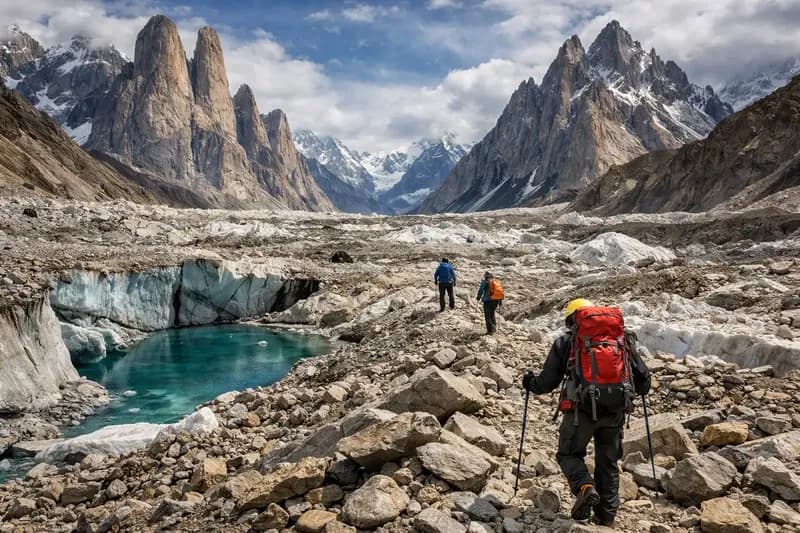
Skardu, Shigar and the Braldu approach can be hot in direct sun. Early starts, water capacity, sun clothing and measured pace matter. Dust and heat make the first stages feel very different from the snowy mountain images used to describe the trip.
River levels and side streams respond to snowmelt, glacier melt and precipitation. Afternoon water can be higher. Roads are also vulnerable to landslides, erosion and flood damage. Summer access is generally most practical, not guaranteed.
Agriculture and expedition employment are both active. Askole and Hushe can be busy with loads and staff. This improves the available operating network but requires respectful behaviour around homes, fields and water.
Summer on the Baltoro and high peaks
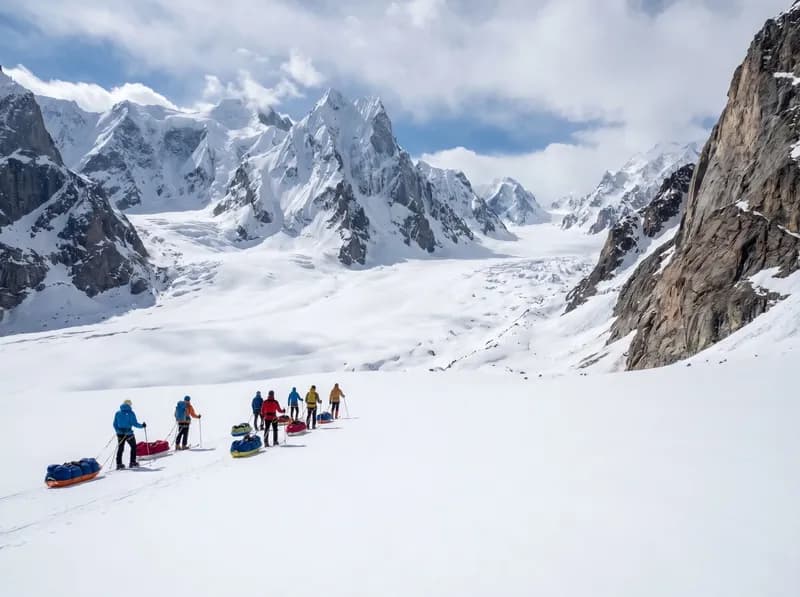
Long daylight supports multi-hour glacier stages and gives high teams more time for route work. Base camps, porter systems and government processes are aligned with the main season. Fixed ropes and high camps on major peaks are generally established during this window according to conditions.
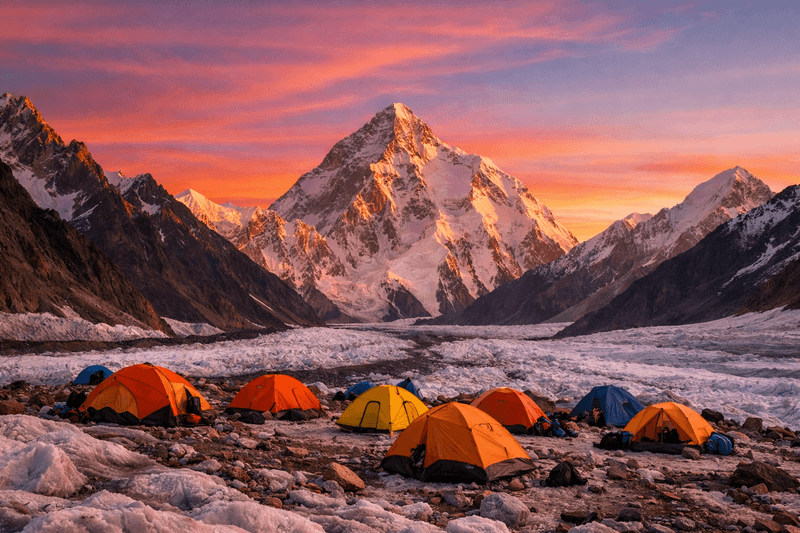
Summer does not remove cold. Concordia can receive snow, strong wind and freezing nights. Above base camp, severe winter-like conditions can occur at any time. Climbers and trekkers still need full storm and insulation systems.
The Karakoram receives less influence from the main South Asian monsoon than many Himalayan areas, but it is not rain-free. Moisture, western disturbances and local convection can produce prolonged poor weather.
Early autumn in the valleys
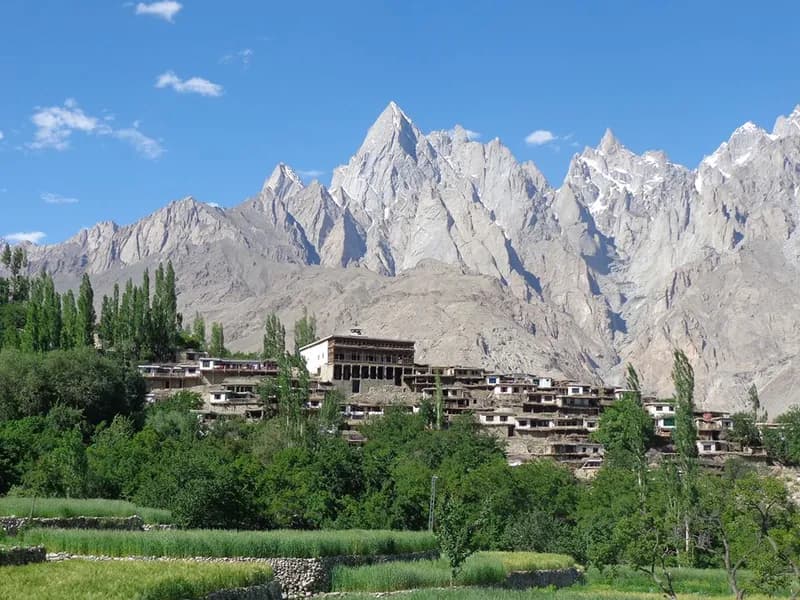
As nights cool, visibility can feel crisp and vegetation begins to change. Cultural and road-based tours benefit from quieter sites and harvest activity. Walking at moderate elevations can be comfortable during the day.
The social context matters. Autumn is harvest and preparation time, not a quiet tourism set. Guides, drivers and hosts may balance expedition work with household responsibilities. Services need to be booked rather than assumed available after the busiest months.
Domestic flights remain weather-dependent, and road disruption can occur. Cooler temperatures do not eliminate landslides or construction delays.
Autumn on high treks
Late-season Baltoro trekking can offer quiet camps and clear mountain views, but the margin narrows. Daylight is shorter, shade is colder, water freezes more readily and fresh snow may cover moraine or obscure crevasses. Camp staff need more fuel and cold protection.
The return schedule must not depend on long summer walking hours. A stage that was comfortable in July can finish in darkness later. Batteries drain faster, boots dry more slowly and a sick trekker has fewer nearby teams.
Gondogoro La is especially condition-dependent. Snow, ice, fixed-line state, avalanche exposure and the availability of local pass teams determine whether a crossing is reasonable. Autumn colour in Hushe does not make the pass safe.
Autumn rock climbing
Late summer and early autumn can work well on selected sunny granite aspects as seepage and snowfields reduce. Shaded faces can become icy and cold. Historical Trango reports describe this exact contrast: good warm rock on sun-facing walls while unsunned terrain was heavily iced.
The route’s aspect and descent matter more than a regional “autumn climbing” label. Shorter daylight affects wall strategy and bivouac temperatures. Teams need a larger cold margin and should not assume water remains liquid at camps or on ledges.
Major peak expeditions
K2, Broad Peak and the Gasherbrums are primarily planned for the summer climbing season. Government fee schedules may include off-season concessions, but a lower royalty is not evidence of safe or practical conditions.
Outside the main season, teams face colder temperatures, shorter days, less shared route preparation, reduced base-camp infrastructure and fewer rescue or porter resources nearby. Winter or late-autumn climbing is a specialist undertaking for expert independent teams, not a discounted version of a normal expedition.
Permit, staff and insurance requirements remain. The support model must reflect the more severe season.
Snow and glacier surface
Summer heat exposes ice, weakens snow bridges and increases meltwater. Moraine can become unstable as underlying ice changes. Autumn cooling may firm surfaces but new snow can conceal holes and loose rocks.
A thin white cover over boulders can be more awkward than bare moraine. On glaciers, fresh snow hides route clues without necessarily creating strong bridges. Guides assess the current surface rather than assuming colder is safer.
Daylight and schedule
Daylight loss is one of the most predictable autumn changes. It affects camp breakdown, porter movement, pass timing and rescue margin. The team should carry headlamps on every stage, but a headlamp is not a substitute for a schedule that fits the season.
Autumn itineraries may need shorter stages or earlier starts. Contingency days remain important because one snow event can take longer to clear in cold shaded areas.
International travellers should also keep margin after the trek. A late road exit followed immediately by an international flight is fragile in any season and especially so near winter.
Crowds and solitude
Summer camps can be sociable and active. Shared presence provides recent route information and some operational redundancy, though it also creates waste, toilet pressure and fixed-line traffic.
Autumn solitude is appealing but has consequences. Fewer cooks, porters, vehicles and neighbouring teams may be available. An evacuation or equipment failure has less informal support. The expedition must carry what it needs rather than relying on an occupied camp.
Cost and service availability
Autumn is not automatically cheaper. Hotels may offer different rates, but a small late-season expedition can cost more per person because vehicles, cooks and porter transport are spread across fewer guests. Extra cold-weather fuel and contingency also add cost.
Ask whether the quoted service includes late-season staff equipment, camp clearance, changed roadhead transport and unused contingency days. A low advertised rate can omit exactly the resources needed outside the main window.
Choosing by objective
Objective | Better general window | Why |
|---|---|---|
K2 Base Camp | Summer to carefully selected late-season dates | Established camps, longer days and best support availability |
Gondogoro La | Main summer window, current conditions permitting | Technical snow and pass logistics need maximum margin |
8,000m peak | Summer | Route, high camps, staff and weather alignment |
Sunny granite wall | Late summer to early autumn can work | Potential drier rock; aspect remains decisive |
Baltistan cultural tour | Spring, summer or autumn by interest | Settled-valley access and seasonal life |
Autumn photography | Settled valleys and moderate hikes | Colour and lower visitor numbers without high-glacier commitment |
Packing changes
Autumn travellers need greater insulation, warmer sleeping systems, more battery protection and gloves that work during long cold starts. Do not simply add one down jacket; review boots, mats, water freezing, face protection and camp footwear.
Summer travellers need strong heat and sun management on lower approaches while retaining full high-camp protection. Both seasons require waterproofs and flexible layers.
Decision checklist
- Is my chosen route normally operational in these dates?
- Does the itinerary account for actual daylight?
- Are staff, camps and transport confirmed for the full period?
- Is my sleep and clothing system suitable for high-camp temperatures?
- Does the route include a pass that may close after snowfall?
- Are contingency days and extra fuel included?
- Does insurance cover the complete seasonal activity?
- Am I choosing autumn for the valley experience, or forcing a summer objective late?
Internal planning links
Compare the main-season K2 Base Camp Trek with an autumn-focused Baltistan Cultural Tour or Gilgit-Baltistan Grand Tour. Continue with climate change in the Karakoram, camping vs lodge trekking and trekking difficulty.
Frequently asked questions
Is autumn a good time for K2 Base Camp?
Selected early-autumn departures can work, but camps are colder, days shorter and snowfall more likely. The itinerary, support and equipment must be designed for the dates.
Is summer always crowded?
It is the busiest period on major routes, but the Karakoram remains remote. Camp pressure varies by week, route and climbing activity.
Can I climb K2 in autumn?
Late-season or winter K2 is an expert specialist undertaking, not a normal commercial-season alternative. Most expeditions operate in summer when route and support systems are established.
Is autumn drier than summer?
It can provide clear periods and drier rock on some aspects, but storms and snow remain possible. No month guarantees dry weather.
Are autumn expeditions cheaper?
Not necessarily. Reduced shared infrastructure, extra cold requirements and a small team can offset lower hotel or permit costs.
Which season has better photography?
Summer has active expedition scenes and long light at high camps. Autumn adds colour and clearer-feeling air in settled valleys. The best choice depends on subject and altitude.
End of field note
Continue your research.
Browse all notes