ToursGilgit-Baltistan Region

Gilgit-Baltistan Grand Tour

A 14-day circuit of Gilgit-Baltistan's greatest highlights: Hunza Valley, Attabad Lake, Khunjerab Pass (4,693 m), Skardu, Shigar Fort Palace, and Deosai National Park.

Gilgit-Baltistan Region — 4,693 m

Karakoram · Pakistan
Duration
14 days
Max Altitude
4,693 m
Difficulty
Moderate
Group Size
4 – 12 people
Season
Spring / Summer / Autumn
Journey Code
NE_GBGT

Adventure Overview

Gilgit-Baltistan from End to End

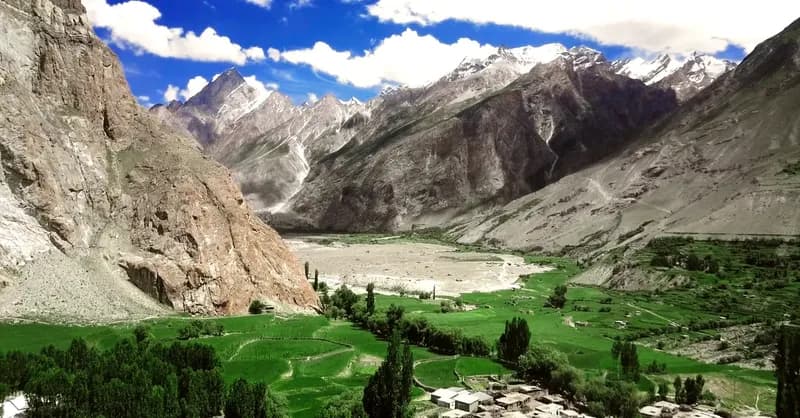
The Gilgit-Baltistan Grand Tour covers the full breadth of Pakistan's northernmost province — from the ancient tower-forts of Hunza to the high-altitude steppe of Deosai. Over 14 days the route moves through some of the most dramatic landscapes in Asia: the turquoise corridor of the Karakoram Highway, the carved stone forts of the old Silk Road kingdoms, the glacier-fed lakes of Skardu, and the vast plateau of Deosai at over 4,000 metres.

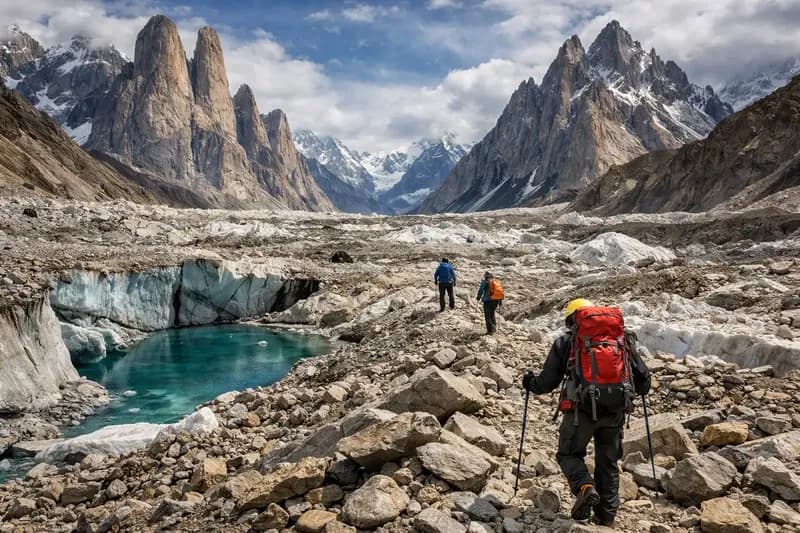
The tour is hotel-based throughout, combining comfortable accommodation — including a night at the historic Shigar Fort Palace (Aga Khan heritage property) — with unhurried exploration of valley towns, mountain viewpoints, and cultural landmarks. Short day hikes of 1–3 hours supplement the vehicle transfers; no technical skill or special fitness is required.

Highlights

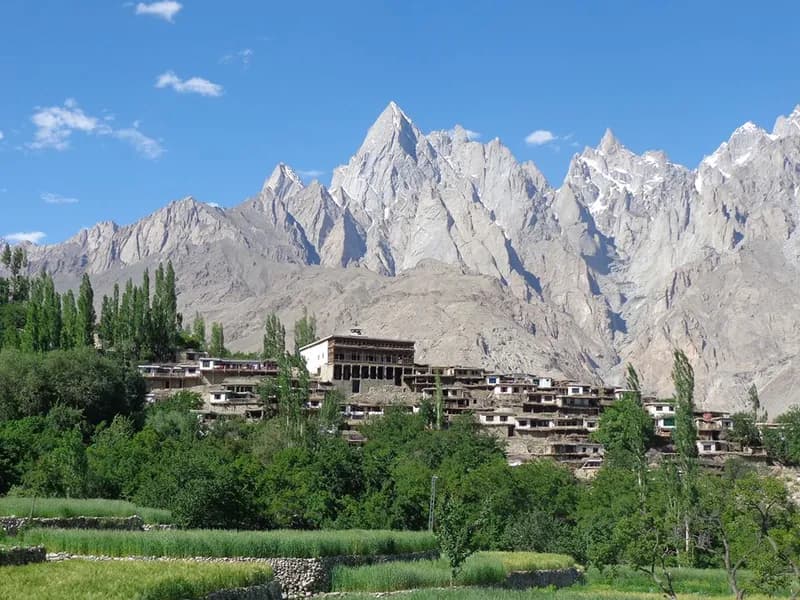
  • Baltit Fort and Altit Fort, Karimabad — Hunza's twin royal residences, restored by the Aga Khan Trust for Culture
  • Eagle's Nest viewpoint, Duikar — panoramic view of the Hunza Valley, Rakaposhi (7,788 m), and the central Karakoram
  • Hussaini Suspension Bridge — one of the world's most dramatic pedestrian crossings over the Hunza River
  • Passu Cones (Tupopdan) — the iconic spires of rock above the Karakoram Highway in the Gojal Valley
  • Attabad Lake — 22 km of brilliant turquoise water, formed by the 2010 landslide
  • Khunjerab Pass (4,693 m) — the world's highest paved international border crossing, on the Pakistan–China frontier
  • Kharpocho Fort, Skardu — 16th-century fortification above the Indus River
  • Shigar Fort Palace (17th century) — restored Amacha-dynasty royal residence, now a Serena heritage hotel
  • Deosai National Park (4,114 m) — the second-highest plateau in the world; habitat of the Himalayan brown bear

Suitable For

Who This Trip Is For

The Gilgit-Baltistan Grand Tour is designed for travellers who want to experience the full range of the region's landscape and culture without the physical demands of a multi-day trek. It suits first-time visitors to Pakistan, cultural travellers, photographers, families, older travellers, and anyone who has read about the Hunza Valley and the Silk Road and wants to see it at ground level.

No physical training is required. Comfortable walking shoes are sufficient for all cultural site visits. The tour is also an excellent orientation for future trekkers — seeing the broader geography of Gilgit-Baltistan by vehicle before attempting a glacier route on foot provides invaluable context.

Departures & Pricing

Plan Your Departure

Expedition Price

On request

Pricing depends on group size, route support, permits, and preferred departure window.

Listed Dates

Flex

Seats Open

Ask

Departure Dates

Plan a custom departure

Departure Window

Flexible

Flexible dates by request

Share your preferred arrival window and our team will confirm route timing, permits, and local crew availability.

Custom departure windows are confirmed with route timing, permits, and crew availability.

Itinerary

Day-by-Day Route Plan

Route Span

Days 1-14

Opening Stage

Day 1: Arrive Islamabad

Final Stage

Day 14: Skardu to Islamabad — Departure

  1. Day01Arrive IslamabadDaily route segment

    Arrive at Islamabad International Airport. Transfer to hotel. Evening briefing on the tour itinerary, cultural background on Gilgit-Baltistan, and documentation check. Welcome dinner with the guide team. Overnight Islamabad.

    After immigration and baggage collection, a Namla Expeditions representative meets the group in the arrivals area and coordinates the hotel transfer. At check-in, the team confirms delayed baggage, emergency contacts, insurance details, dietary information already supplied, and the next morning’s schedule. The first full briefing introduces the Gilgit-Baltistan Grand Tour route, transport and weather contingencies, luggage separation, communications, and outstanding equipment questions. The remainder of the day is intentionally unstructured for rest, hydration, and recovery after international travel.

  2. Day02Islamabad to GilgitDaily route segment

    Fly from Islamabad to Gilgit Airport (approximately 1 hour). Mountain-weather delays are common — allow flexibility in your schedule. On arrival, transfer to hotel. Afternoon orientation walk along the Gilgit River and through the old bazaar. Overnight Gilgit.

    The operations team checks the latest airline and weather information before leaving the hotel and coordinates the airport transfer, tickets, and expedition baggage. Mountain flights remain weather-dependent; if a cancellation occurs, Namla Expeditions explains the available road contingency and revises later stages without compressing essential acclimatisation or safety time. After landing, the group collects all luggage before transferring to the hotel. A short arrival briefing covers meals, local timing, equipment access, and the next day’s plan.

  3. Day03Gilgit City TourDaily route segment

    Explore Gilgit: the administrative capital of Gilgit-Baltistan and a historic crossroads of Karakoram, Himalayan, and Hindu Kush cultures.

    Visit the Kargah Buddha — a 7th-century CE rock carving of a standing Buddha figure on the cliffs above the Gilgit River, one of the earliest Buddhist monuments in the region. Browse the Saddar bazaar. See the Gilgit polo ground, where the modern game of polo is said to have its origins in the mountain kingdoms of Gilgit and Chitral. Afternoon free. Overnight Gilgit.

  4. Day04Gilgit to Karimabad — Baltit and Altit FortsDaily route segment2,438 m

    Drive north on the Karakoram Highway to Karimabad in the Hunza Valley (2–3 hours, 2,438 m). Karimabad was the seat of the Mir of Hunza until the abolition of the principality in 1974.

    Visit Baltit Fort — a 900-year-old royal residence perched above the Hunza Valley, meticulously restored by the Aga Khan Trust for Culture and open as a museum. Continue to Altit Fort (older than Baltit; the original seat of the Hunza rulers) in the village of Altit below Karimabad, with a walk through the traditional village lanes. Views of Rakaposhi (7,788 m) and the central Karakoram. Overnight Karimabad.

  5. Day05Eagle's Nest and Gojal ValleyDaily route segment7,788 m

    Morning drive up to Duikar (Eagle's Nest viewpoint) above Karimabad — a 45-minute walk or short drive above the treeline to one of the finest panoramic viewpoints in Hunza: the Hunza Valley, Rakaposhi (7,788 m), Ultar Sar (7,388 m), and the deep Karakoram ridgelines stretching toward Batura Sar.

    Drive north into the Gojal Valley. Stop at the Hussaini Suspension Bridge — one of the world's most famous pedestrian crossings, a narrow roped-and-plank bridge swaying over the Hunza River between Hussaini and Zarabad villages. Continue to Passu (2,900 m): the Passu Cones (Tupopdan), a row of dramatic rock spires above the KKH, and Passu Glacier. Overnight Passu.

  6. Day06Attabad Lake and Upper GojalDaily route segment2,700 m

    Take a boat across Attabad Lake — 22 km of brilliant turquoise water dammed by a massive 2010 landslide that buried the original KKH and several villages beneath it. The lake is one of the most striking natural features on the Karakoram Highway.

    Explore Gulmit village (Gojal), one of the Silk Road caravanserai stops on the route between Kashgar and South Asia. Drive to Sost (2,700 m), the last Pakistani town before the Khunjerab Pass and the Chinese border. Overnight Sost.

  7. Day07Khunjerab Pass (4,693 m)Daily route segment4,693 m

    Full-day excursion to the Khunjerab Pass — the world's highest paved international border crossing at 4,693 m, on the Pakistan–China (Xinjiang) frontier. The drive through the Khunjerab National Park (approximately 1.5–2 hours from Sost) passes through high-altitude meadows and valleys that are home to Marco Polo sheep, Himalayan ibex, snow leopard (rarely seen), and large marmot colonies.

    Walk to the border marker on the Pakistani side. The pass is flanked by wide snow-covered plains at altitude. Return to Passu for overnight.

  8. Day08Passu to Karimabad — Return SouthDaily route segment

    Drive south along the KKH back through the Gojal and Hunza valleys. Stop at Eagle's Nest or the Hunza River bridge viewpoint as conditions permit. Afternoon in Karimabad — free time for the local market (dried apricots, embroidered fabrics, gemstones) and the old village lanes. Overnight Karimabad.

    The group leaves after breakfast with personal bags and expedition loads secured in the assigned vehicles. Namla Expeditions drivers and field staff assess road, river, traffic, and weather conditions throughout the journey; stops are made for permits, meals, photography, and comfort only where parking is safe. Travel time can change after landslides or road works, so the day remains flexible. On arrival, rooms or tents are allocated, luggage is checked, and the guide gives a short briefing before dinner and rest.

  9. Day09Karimabad to SkarduDaily route segment2,438 m

    Drive from Karimabad to Gilgit (2–3 hours), then continue east along the Gilgit and Indus rivers to Skardu (approximately 5–6 hours) — or take the 30-minute mountain flight from Gilgit to Skardu (weather permitting). Skardu (2,438 m) is the capital of Baltistan and the gateway to the Karakoram expedition zone. Overnight Skardu hotel.

    The operations team checks the latest airline and weather information before leaving the hotel and coordinates the airport transfer, tickets, and expedition baggage. Mountain flights remain weather-dependent; if a cancellation occurs, Namla Expeditions explains the available road contingency and revises later stages without compressing essential acclimatisation or safety time. After landing, the group collects all luggage before transferring to the hotel. A short arrival briefing covers meals, local timing, equipment access, and the next day’s plan.

  10. Day10Skardu — Kharpocho Fort and Satpara LakeDaily route segment2,636 m

    Visit Kharpocho Fort ('King of Forts') — a 16th-century fortification built by the Maqpon sultan Ali Sher Khan Anchan, perched on a dramatic rock spur above the confluence of the Indus and Shigar rivers with panoramic views of the Skardu Valley.

    Drive to Satpara Lake (2,636 m), a natural deep-blue alpine lake below the Satpara Dam. Walk along the lakeshore. Evening in Skardu: browse the local market for handicrafts, gems, and Balti dried fruit. Overnight Skardu.

  11. Day11Shigar Valley — Shigar Fort PalaceDaily route segment

    Drive east to the Shigar Valley (1 hour from Skardu). Visit Shigar Fort Palace — a 17th-century royal residence of the Amacha dynasty, one of the oldest surviving wooden structures in the Karakoram. Meticulously restored by the Aga Khan Cultural Service Pakistan and now managed as a Serena heritage hotel. The fort's carved wooden balconies, inner courtyard, and royal audience rooms are extraordinary.

    Walk through Shigar town: the Friday Mosque (one of the oldest in Baltistan), the old bazaar lanes, and the terraced apricot and cherry orchards that cascade down the valley walls. Overnight Shigar Fort Palace or Skardu hotel.

  12. Day12Deosai National Park (4,114 m)Daily route segment4,114 m

    Full-day excursion to Deosai National Park — the second-highest plateau in the world at an average elevation of 4,114 m. Known as the 'Roof of Pakistan' or the 'Land of Giants', Deosai covers over 3,000 sq km of high-altitude steppe, alpine meadows, and glacial streams.

    Visit Sheosar Lake (4,142 m) at the heart of the park — a pristine high-altitude lake ringed by rolling hills. The park is one of the last strongholds of the endangered Himalayan brown bear (Ursus arctos isabellinus); sightings are possible, especially in late summer. Also present: Tibetan wolves, golden marmots, red foxes, and diverse alpine flora in bloom (June–August). Return to Skardu. Overnight Skardu.

  13. Day13Skardu — Kachura LakesDaily route segment

    Drive to Lower Kachura Lake (Shangri-La Resort) — a serene alpine lake set among rocks and pines, immortalised in James Hilton's description of Shangri-La and the iconic Shangri-La Resort. Continue to Upper Kachura Lake (Kachura Skardu Lake), set higher among rocky hillsides with views of the surrounding ranges.

    Free afternoon in Skardu for last-minute shopping — the local market stocks Balti embroidered textiles, carved walnut-wood items, and semi-precious stones (aquamarine, tourmaline, topaz) from the Gilgit-Baltistan mineral belt. Farewell dinner. Overnight Skardu.

  14. Day14Skardu to Islamabad — DepartureCompletion day

    Fly from Skardu to Islamabad (1 hour) or drive the Karakoram Highway. Mountain-weather delays are possible on the flight — build buffer into international connections. Transfer to Islamabad International Airport for departure.

    The operations team checks the latest airline and weather information before leaving the hotel and coordinates the airport transfer, tickets, and expedition baggage. Mountain flights remain weather-dependent; if a cancellation occurs, Namla Expeditions explains the available road contingency and revises later stages without compressing essential acclimatisation or safety time. After landing, the group collects all luggage before transferring to the hotel. A short arrival briefing covers meals, local timing, equipment access, and the next day’s plan.

Field Planning

Prepare for the Journey

Fitness

Preparation & Fitness

Difficulty Rating: Moderate

Moderate indicates vehicle-based travel with short walks of 1–3 hours at most sites. The highest point is the Khunjerab Pass (4,693 m), reached by vehicle. Some visitors experience mild altitude effects at Khunjerab or Deosai (4,114 m); the standard advice applies — stay hydrated, move slowly, and descend if symptomatic. No special fitness preparation is required.

What to Pack

  • Comfortable walking shoes or light trail runners (trekking boots not required)
  • Layering for variable mountain weather — warm fleece or down jacket for evenings and high-altitude stops
  • Sun protection — SPF 50+ sunscreen, sunglasses, sun hat
  • Rain layer (especially May–September)
  • Camera and extra storage — the photographic opportunities are exceptional throughout
Safety

Safety & Logistics

Road Safety

The Karakoram Highway (KKH) and connecting valley roads require experienced drivers — all our vehicles are operated by locally based, experienced mountain drivers who know the road conditions in all seasons. The KKH is subject to landslides, rockfall, and river washouts; our team monitors conditions daily and adjusts routing when necessary.

Domestic Flights

Flights to/from Gilgit and Skardu operate on small turboprop aircraft and are strictly weather-dependent. Mountain cloud can delay flights for 1–3 days in the worst cases. We build contingency plans into the itinerary and advise on international connection buffers. No refunds are available for weather delays; travel insurance is strongly recommended.

Medical and Emergency

The tour guide carries a basic first aid kit. At the Khunjerab Pass (4,693 m) and Deosai (4,114 m), participants with cardiac or respiratory conditions should consult a physician before travelling to these altitudes. Hospitals in Gilgit and Skardu can handle basic medical needs. For serious emergencies, evacuation to Islamabad is required.

Permits

Permits & Local Operations

Permits and Entry Fees

No special trekking permits are required for this itinerary. Standard tourist visas are sufficient for all sites visited. Individual site entry fees — Baltit Fort, Altit Fort, Kharpocho Fort, Khunjerab National Park, and Deosai National Park — are included in the tour price. We handle all bookings and payments in advance.

Transport

The tour uses private 4WD vehicles throughout. Domestic flights (Islamabad–Gilgit at the start and Skardu–Islamabad at the end) are included in the package and arranged by Namla Expeditions. Mountain flights are subject to weather; we monitor forecasts and manage any rebooking logistics. All road transfers are in comfortable private vehicles with experienced local drivers.

Accommodation

All nights are in hotels or heritage guesthouses (twin-share). Properties range from standard 3-star hotels in Gilgit, Karimabad, and Skardu, to the Shigar Fort Palace (Serena Hotels, Aga Khan group) which is included as a highlight stay. In Passu and Gojal, accommodation is in the best available guesthouses (basic but clean). Single supplement is available on request.

What's Covered

Inclusions & Exclusions

Included

  • Domestic flights — Islamabad to Gilgit (outbound) and Skardu to Islamabad (return)
  • All ground transport in private 4WD vehicles throughout
  • Hotel accommodation throughout — 13 nights, twin-share (including 1 night Shigar Fort Palace)
  • Daily breakfast and specified group dinners
  • Licensed English-speaking cultural and mountain guide throughout
  • All entrance fees — Baltit Fort, Altit Fort, Kharpocho Fort, Khunjerab National Park, Deosai National Park
  • Attabad Lake boat crossing
  • Welcome dinner in Islamabad
  • Farewell dinner in Skardu

Not Included

  • International flights to/from Islamabad
  • Pakistan e-visa fee
  • Personal lunches throughout (except where specified)
  • Personal shopping, souvenirs, and tips
  • Travel insurance (strongly recommended)
  • Single supplement (available on request)
  • Alcoholic beverages
  • Costs from domestic flight weather delays or cancellations beyond our control

Common Questions

Frequently Asked Questions

Is any trekking required on this tour?

The Gilgit-Baltistan Grand Tour is primarily vehicle-based. Short walks of 1–3 hours are involved at most cultural sites and viewpoints. The steepest walk is the optional ascent to Eagle's Nest above Duikar (approximately 45 minutes, 150 m elevation gain). No special fitness, equipment, or trekking experience is required.

When is the best time for this tour?

May–June brings blossoms and greenery throughout the valleys, with apricot and cherry orchards in full colour — visually the most beautiful time.

July–August is peak summer: warm, stable, and the best conditions for Deosai. September–October has autumn colours, fewer tourists, and excellent photographic light. The Khunjerab Pass is open from April to November; it closes in winter due to snow.

Can this tour be combined with a trek?

Yes. The Grand Tour pairs naturally with the K2 Base Camp & Gondogoro La Trek, the Biafo Glacier Trek, or the Snow Lake & Hispar La traverse. Contact us to design a combined itinerary — most clients extend their time in Skardu before or after the tour.

What standard of accommodation is provided?

Hotels are 3-star equivalent or the best available in each location. Shigar Fort Palace (Serena Hotels, Aga Khan group) is a 5-star heritage property and is the accommodation highlight of the tour. In Passu and Sost, accommodation is in the best available guesthouses — basic but comfortable. Single supplement is available on request.

How is the Khunjerab Pass visit handled?

The pass is reached from Sost by vehicle in approximately 1.5–2 hours. Visitors can walk to the marked Pakistan–China border post on the Pakistani side. Crossing into China requires a valid Chinese visa — we do not arrange Chinese visa support. The Khunjerab National Park entry fee is included. The best wildlife sightings (marmots, ibex) are on the road through the park, not at the pass itself.

What should I know about photographing cultural and heritage sites?

The Aga Khan Heritage Properties (Baltit Fort, Altit Fort, Shigar Fort Palace) permit photography in public areas and most rooms; some private spaces may require permission from the on-site manager. The Kharpocho Fort is openly accessible. Always ask permission before photographing local people — in Gilgit-Baltistan this is generally welcomed when done respectfully.

From the Field Notes

Start Your Journey

Plan Gilgit-Baltistan Grand Tour with our local team

Reach our team directly. No booking system, no automated responses — a direct line to the people who run these routes.

Price on request