In this field note12 sections +Close −
- 01What a Karakoram ski expedition is really like
- 02Choosing the right objective
- 03Season and snow cannot be reduced to one date
- 04Avalanche safety in a data-sparse range
- 05Glacier travel and navigation
- 06Access from Islamabad to the snow
- 07Camps, food and cold management
- 08Rescue and medical reality
- 09Equipment priorities
- 10Preparation checklist
- 11Internal planning links
- 12Frequently asked questions
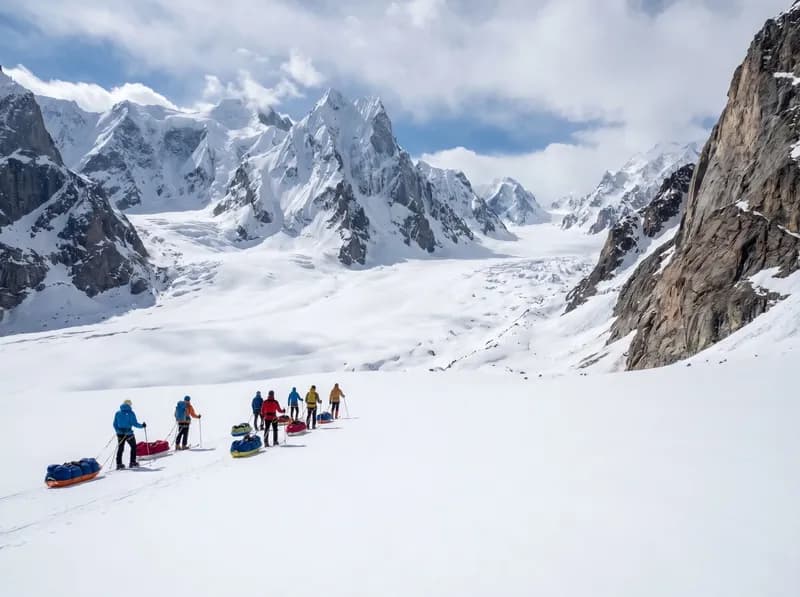
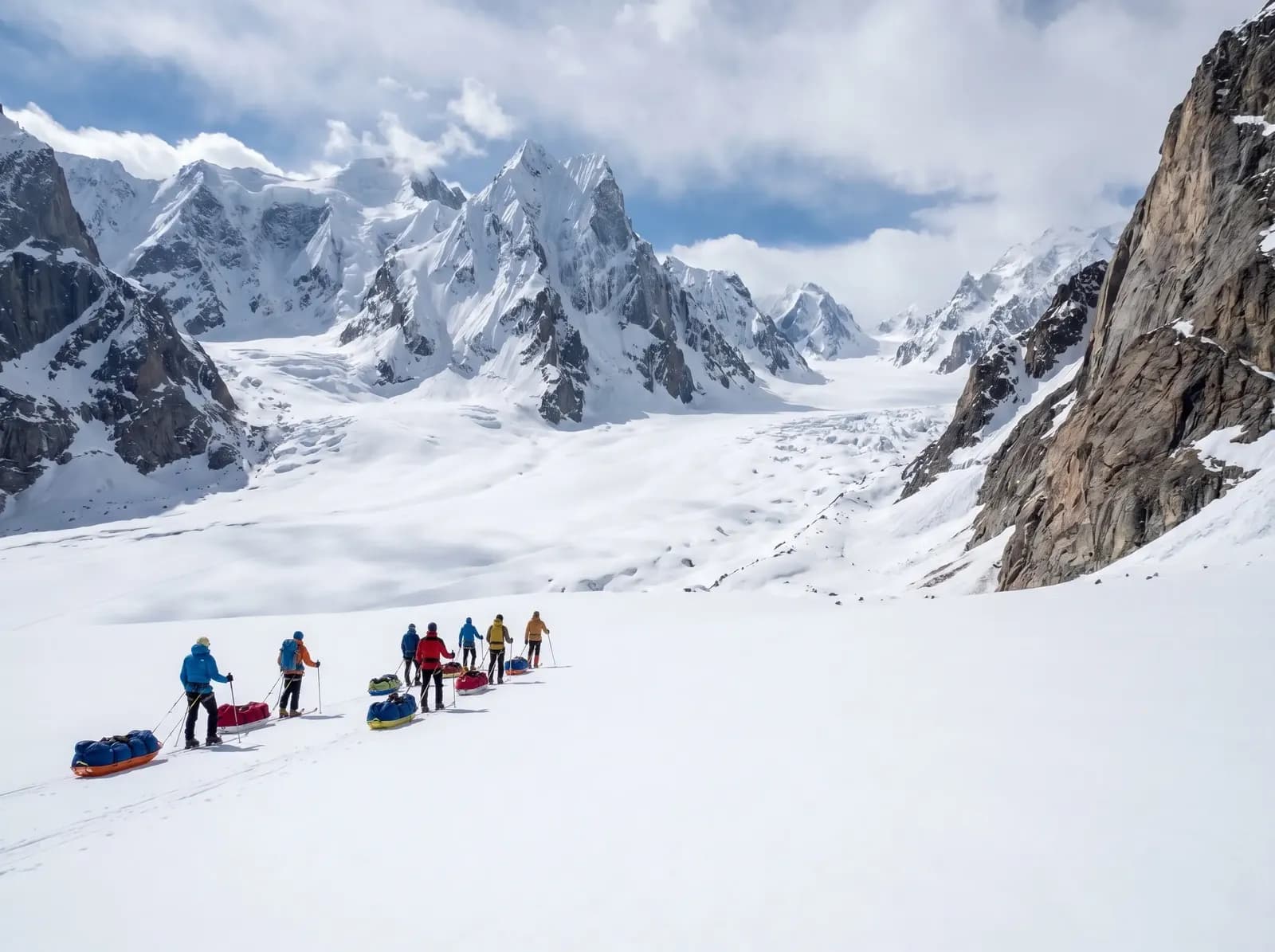
A ski expedition in Gilgit-Baltistan is not a resort holiday with a longer transfer. The defining features are remoteness, human-powered travel, expedition camping and an uncertain mountain environment. On some objectives, skis are the most efficient way to cross a broad accumulation basin. On others, the team carries skis for long sections before reaching continuous snow.
From Skardu, the plan may involve winter roads, village access, porters, pack animals where conditions allow, glacier travel, caches and a fully supported base or moving camp. The skiing can be excellent, but it is only one part of the expedition. Participants must be comfortable contributing to a conservative team system when snow, visibility or access is different from the plan.
Local guide’s test: If the trip would still interest you after three days of carrying skis, digging platforms and waiting for visibility, you probably understand the expedition better than someone booking only for powder photographs.
What a Karakoram ski expedition is really like
There are no lifts in the remote valleys used for the journeys discussed here. Elevation is gained on skins, on foot, with crampons or through a combination of methods. Descents may involve powder, wind slab, breakable crust, hard snow, refrozen tracks, glacier ice and short sections where skiing is not appropriate.
Expedition type | Typical base | Main character | Suitable participant |
|---|---|---|---|
Valley ski touring | Lodge or village with day objectives | Repeated tours with lighter packs | Strong ski tourer new to expedition camping |
Base-camp ski mountaineering | Fixed tented camp | Technical peaks or couloirs from one base | Experienced ski mountaineer |
Glacier traverse | Moving camps | Crevasse navigation and load movement | Efficient tourer with glacier skills |
Snow Lake expedition | Biafo and high glacial basin | Long access, expedition loads and high camps | Very fit, self-sufficient team skier |
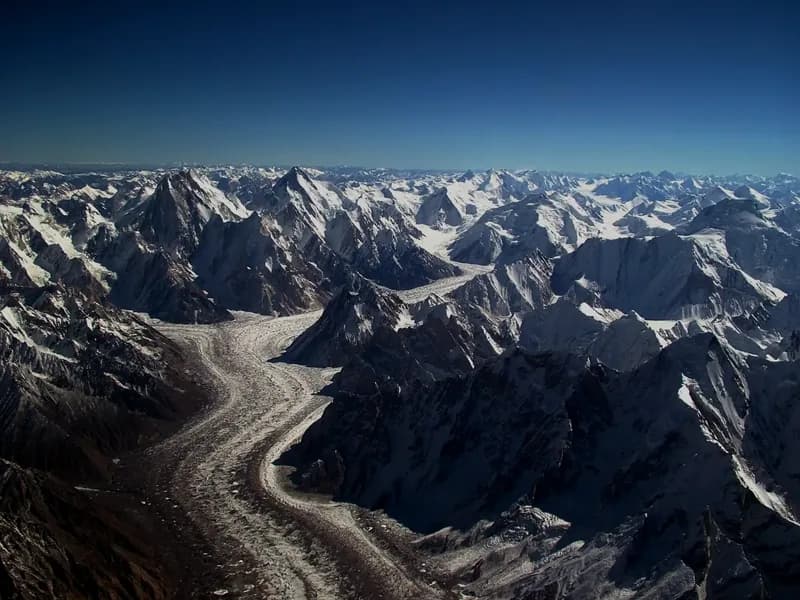
Gilgit-Baltistan contains many possible objectives, but maps do not show snow quality, access permission, seasonal settlements, porter availability or current hazards. A route that looks close to Skardu may still require complex winter transport and several load carries.
Choosing the right objective
The best objective matches the group’s least-developed essential skill, not the strongest member’s ambition. We review touring history, steep-skiing experience, avalanche education, glacier rescue, altitude exposure, camping and the ability to travel for consecutive days with weight.
Questions we ask before proposing a route
- What is the steepest terrain each person can ski with control in poor snow?
- Has everyone used skins, ski crampons and boot crampons efficiently?
- Can the group perform companion rescue with its own transceivers, shovels and probes?
- Who can build an anchor and execute crevasse rescue?
- Has each person camped below freezing for several nights?
- How does the group respond when an objective is cancelled?
- Is the priority a traverse, summits, quality descents or cultural time in a valley?
A route can be technically moderate yet highly committing because of distance from assistance. Conversely, a village-based tour can access steep avalanche terrain quickly. “Remote” and “difficult” are related but not identical.
Season and snow cannot be reduced to one date
Broadly, winter offers colder snow and shorter days in accessible valleys, while spring brings a deeper settled base, longer daylight and better potential for high glacial travel. The exact operating window depends on elevation, aspect, winter snowfall, road access, river crossings and the objective.
Storm snow is only one part of the snowpack. Wind redistributes it aggressively above treeline. Strong sun affects south-facing slopes, while shaded terrain can preserve weak layers. Spring warming can improve refrozen travel early in the day and create wet-snow problems later.
Read our detailed best time for ski expeditions guide before choosing dates. A responsible operator discusses a window and backup objectives rather than promising a snow type months in advance.
Avalanche safety in a data-sparse range
Many Karakoram objectives do not have a public daily avalanche bulletin or dense weather-station network. That increases the value of disciplined observation; it does not justify guesswork. The team builds a picture from snowfall, wind, temperature, recent avalanche activity, test observations, terrain and local reports.
Everyone must carry a transceiver, shovel and probe in avalanche terrain and know how to use them. Equipment is not a substitute for terrain choices. On a moving expedition, rescue capacity is affected by fatigue, altitude, cold and the distance between team members.
Daily snow and terrain routine
- Review overnight weather, new snow, wind and temperature.
- Confirm the day’s objective, decision points and turnaround time.
- Perform a transceiver function check.
- Observe cracking, collapsing, drifting and recent avalanches during travel.
- Space the team to manage exposure and maintain communication.
- Reassess at aspect, elevation and snowpack changes.
- Choose descent lines that match the weakest skier’s control.
Avalanche training completed years ago but never practised is not enough. Teams should rehearse companion rescue and group communication before departure.
Glacier travel and navigation
High ski objectives often involve crevassed glaciers. Continuous white snow can make openings harder to see, especially in flat light. The guide decides when the team ropes, increases spacing or changes direction. Skis spread weight but do not make a snow bridge reliable.
Participants should arrive able to manage rope travel with skis, transitions, harness, prusiks and rescue equipment. Route finding combines map, GPS, visual features and field judgement. Batteries and screens fail in cold, so navigation cannot depend on one phone.
Access from Islamabad to the snow
International teams normally assemble in Islamabad, then reach Skardu by domestic flight or road. Mountain flights are weather-dependent. Winter and spring road travel can be affected by snow, rockfall and landslides. We keep buffer time and avoid connecting a critical international flight directly to a planned mountain exit.
From Skardu, transport becomes objective-specific. Some valleys remain vehicle-accessible; others require chains, 4x4 vehicles or a changed roadhead. Beyond the last road, group equipment moves with porters and, when terrain and season allow, pack animals. Skiers still carry their personal emergency and touring equipment.
Camps, food and cold management
A ski expedition burns energy in cold conditions, yet altitude can suppress appetite. Meals must be transportable, fuel-efficient and familiar enough that people keep eating. Participants should bring preferred high-energy snacks while declaring allergies early.
Moisture management is constant. A wet base layer, damp liner or frozen boot can compromise the next day. Keep snow out of the sleeping tent, ventilate carefully, dry items when sun appears and protect down equipment inside waterproof liners. Solar charging works only when weather, angle and temperature cooperate; batteries remain an operational resource.
Personal camp habits
- Pack most items before breakfast.
- Keep skins, boot liners and electronics from freezing overnight.
- Separate damp clothing from the sleeping bag.
- Refill and treat water as soon as the kitchen schedule allows.
- Check feet for blisters and cold injury every evening.
- Store sharp crampons and ski edges away from tents.
- Report cough, headache, unusual fatigue or loss of coordination early.
Rescue and medical reality
Helicopter rescue is never guaranteed. Weather, aircraft availability, altitude, landing terrain, daylight, official coordination and financial authorisation all affect a flight. A team needs communication, first-aid equipment and a ground plan for assisted movement or descent.
Insurance must name Pakistan, the maximum altitude and the actual activity. Some policies cover ski touring but exclude ski mountaineering, glacier travel, ropes or slopes above a specified angle. Ask for the relevant clauses and keep the assistance number offline.
Fitness does not prevent altitude illness. The ascent profile, sleeping altitude and individual response matter. The CDC high-altitude guidance emphasises gradual acclimatisation and states that people with worsening symptoms should descend.
Equipment priorities
The final list depends on the objective, but a remote ski team normally needs:
- Touring skis, compatible skins and ski crampons
- Touring boots that are already broken in
- Adjustable poles with useful powder baskets
- Transceiver, metal shovel and probe for every person
- Harness, helmet, boot crampons, ice axe and glacier-rescue equipment
- Layered clothing, full storm protection and expedition insulation
- Repair kit for bindings, boots, skins and poles
- Navigation, lighting and protected spare power
- Cold-rated sleep system and waterproof storage
- Personal medication and expedition insurance documents
Ultralight equipment is not automatically expedition-suitable. Repairability and reliable function in cold often matter more than saving a few grams.
Preparation checklist
Six months before
- Build weekly uphill endurance and leg strength.
- Schedule avalanche and crevasse-rescue refreshers.
- Test boots on long consecutive tours.
- Document ski, glacier and altitude experience honestly.
- Confirm visa, permit and insurance process with the operator.
One month before
- Complete a full equipment inspection.
- Practise transitions wearing gloves.
- Pack spares specific to your binding and boot.
- Send medical, dietary and emergency information.
- Leave margin in international and domestic travel dates.
Internal planning links
Review the Snow Lake Ski Expedition for a full glacial objective and the Snow Lake and Hispar La Trek for the summer route context. Continue with ski touring versus mountaineering, expedition fitness and our Pakistan visa and LOI guide.
Frequently asked questions
Do I need to be an expert skier for Gilgit-Baltistan?
For remote expeditions, yes: you should be a strong, controlled off-piste skier in variable snow and an efficient uphill tourer. Some shorter valley programmes can be designed for less experienced tourers after an honest skills review.
Is powder guaranteed?
No. Snow may be powder, wind-affected, crusted, hard, wet or glacial. A successful expedition depends on safe travel and good decisions, not a guaranteed snow type.
When is the best season?
It depends on the objective. Winter suits some accessible valleys; spring is usually more practical for deeper, higher and more remote glacial journeys. Current snow and access must always be checked.
Are avalanche bulletins available?
Coverage is limited compared with major European and North American regions. Teams need strong field observation, conservative terrain selection and guides experienced in the specific range.
Can I rent touring equipment in Skardu?
Do not build a remote expedition around last-minute rental. Bring personally fitted boots and compatible, tested equipment. Any local provision should be confirmed by item and size well in advance.
Is helicopter rescue guaranteed on a ski expedition?
No. A flight depends on weather, aircraft, altitude, landing conditions, authorisation and daylight. Suitable insurance and a ground evacuation plan are essential.
End of field note
Continue your research.
Browse all notes