SkiingAskole Region

Snow Lake Ski Expedition

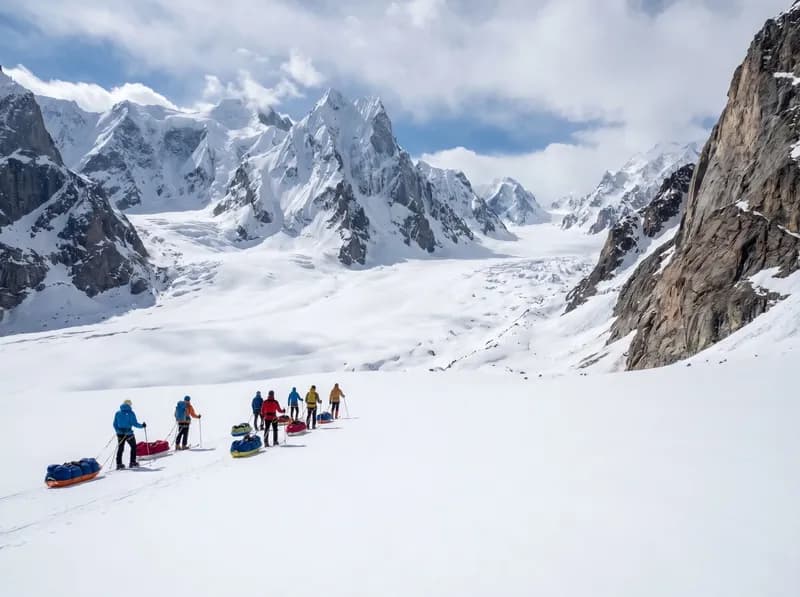
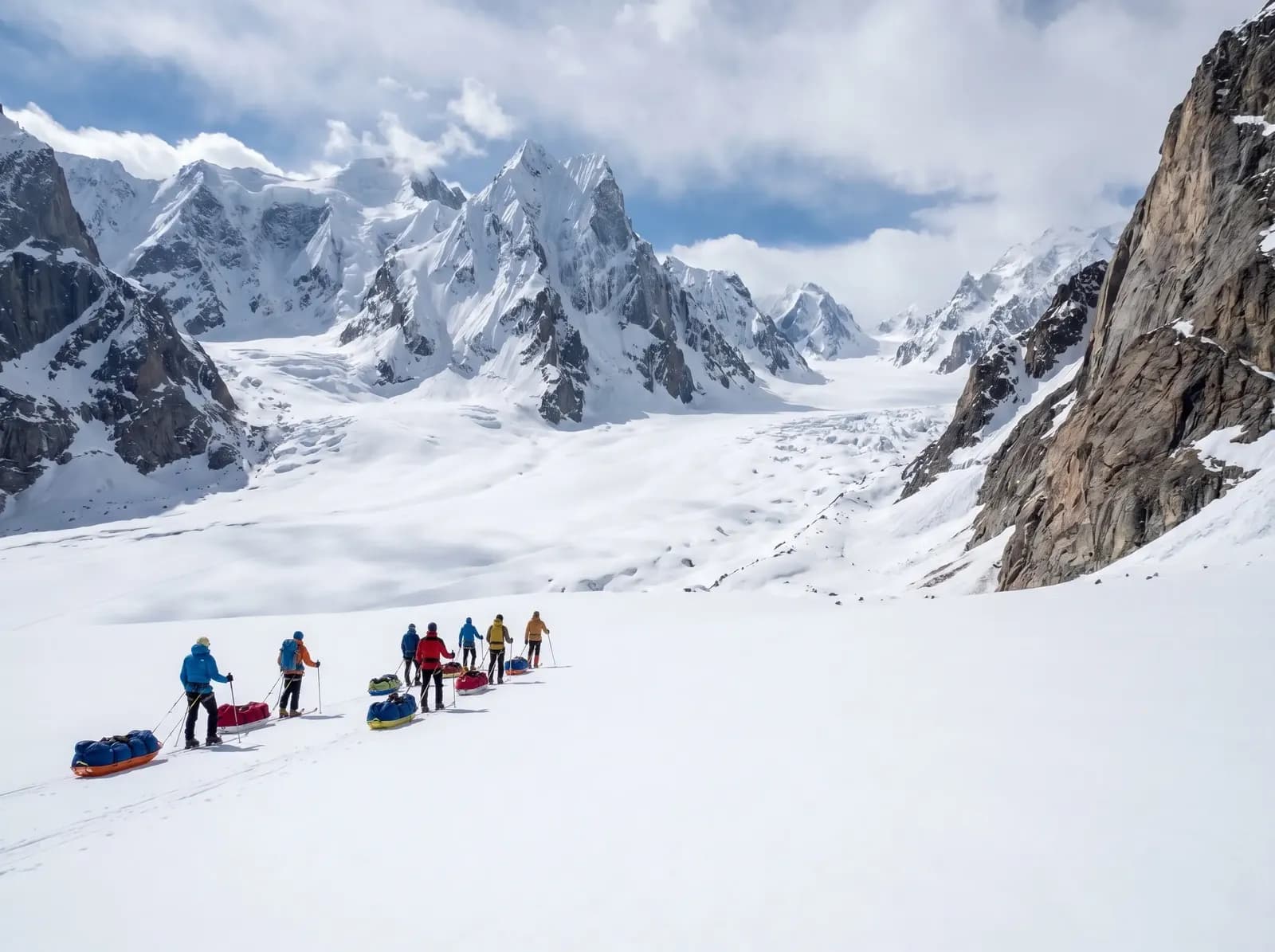
Ski the 4,800 m plateau of Lukpe Lawo on the upper Biafo Glacier — one of the world's highest and most remote ski destinations, reached after a seven-day glacier approach from Askole.

Askole Region — 5,000 m

Skii in karakorum
Karakoram · Pakistan
Duration
22 days
Max Altitude
5,000 m
Difficulty
Hard
Group Size
4 – 8 people
Season
Spring
Journey Code
NE_SLSE

Adventure Overview

Skiing at the Roof of the Karakoram

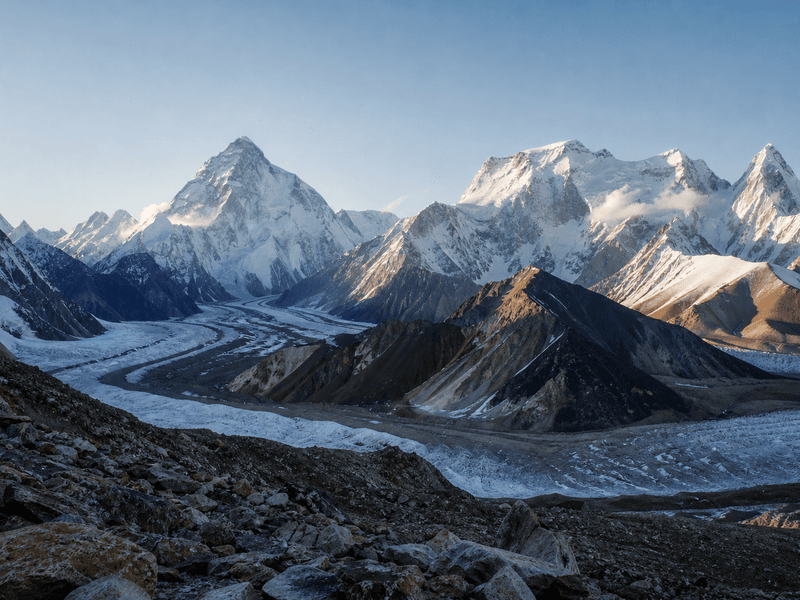
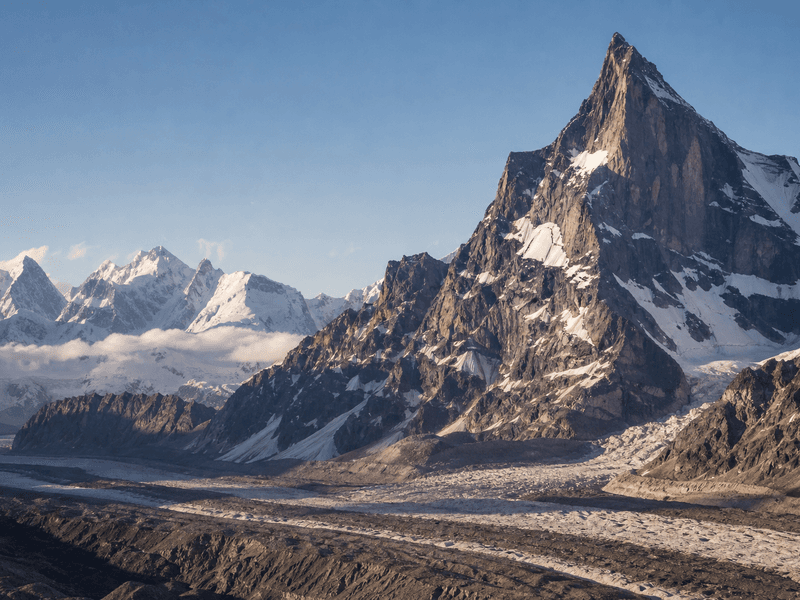
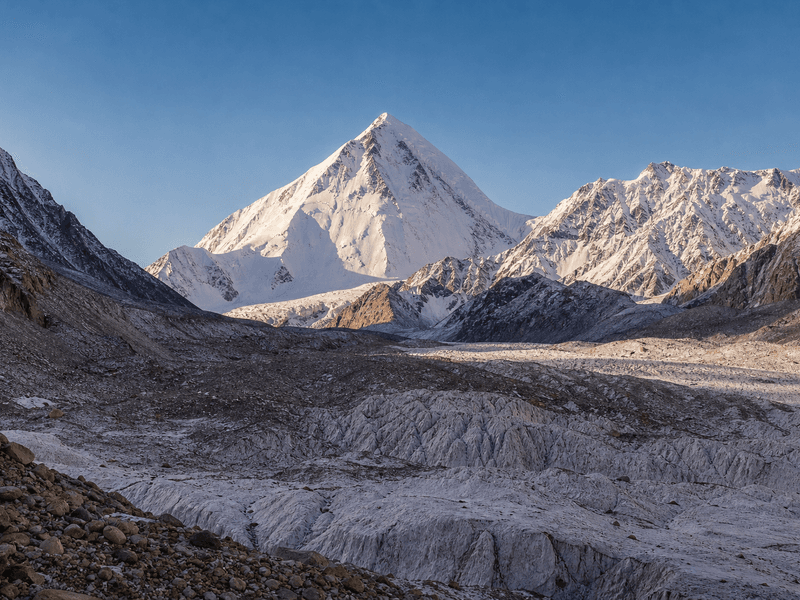
Snow Lake — Lukpe Lawo — is a sub-polar ice plateau at 4,800 m on the upper Biafo Glacier, ringed by unnamed 6,000 m peaks and accessible only after a seven-day approach from the roadhead at Askole. In late spring, when the winter snowpack is fully consolidated and the days are long, the plateau transforms into one of the world's highest and most remote ski venues.

The Snow Lake Ski Expedition combines a multi-day glacier approach with four to five days of ski mountaineering on the snowfield and the slopes above it — including terrain reaching toward the Hispar La at 5,151 m. This is not a resort or heli-ski operation. It is a fully self-supported expedition in which participants carry skis and skins to a remote ice plateau and ski terrain that almost no one has ever skied before.

The Ski Terrain

The Snow Lake plateau provides extensive, open ski touring terrain at 4,800 m. The slopes above the plateau — rising toward the Hispar La and the surrounding cols — offer descents of 200–400 vertical metres on high-quality spring snow. All terrain is avalanche-assessed before departure and route-managed by our lead guide; participants carry avalanche safety equipment at all times above the snowline.

The lower Biafo Glacier approach (Baintha to Mango, approximately 4,200 m) still carries usable spring snowpack in May, allowing ski travel on the upper approach sections. Below Baintha the approach is on foot across moraine — skis are porter-carried on the lower sections.

Season

Late May to mid-June is the optimal window. The Karakoram spring snowpack is at its most consolidated during this period, avalanche activity follows predictable diurnal patterns, and the days are long. By late June the upper glacier is softening rapidly and daytime stability deteriorates. This expedition does not operate in summer or autumn.

Field Film

Journey Video

Suitable For

Who This Trip Is For

This expedition is designed for backcountry and ski-touring skiers who are ready to commit their skiing skills to one of the world's most remote and extraordinary venues. You must be a competent off-piste skier, physically capable of skinning for 5–7 hours a day at altitude, and trained in avalanche safety. Mountaineering or expedition experience at altitude is a strong advantage but not a strict prerequisite if your skiing ability and fitness are high.

The Snow Lake Ski Expedition is not suitable for recreational skiers, beginners, or those without prior backcountry experience. If you have skied extensively in the Alps, Rockies, or Himalayas and want to experience a terrain objective that almost no skier has visited, this is your expedition.

Route Notes

Additional Trip Detail

Highlights

Route Highlights

A ski-focused Karakoram journey built around the Snow Lake and Biafo glacier environment, with flexible objectives based on snowpack, weather, and team ability.

  • Remote glacier-based ski touring with porter-supported access from Askole.
  • Potential ski days around Snow Lake and nearby glacier basins when conditions are suitable.
  • Designed for experienced backcountry skiers comfortable in expedition-style camps.

Terrain

Terrain and Route Notes

Ski terrain can include glacier approaches, rolling snowfields, wind-affected surfaces, crevasse zones, and cold high camps. The route plan must remain flexible because snow and glacier conditions change quickly.

Camp Life

Accommodation and Meals

The ski expedition uses winter-capable tented camps, cooked meals, hot drinks, and careful fuel planning. Weather days are expected and should be built into the schedule.

Support

Guides, Porters, and Local Support

Local support includes Askole logistics, porter coordination, camp movement, cooking staff, and route decisions made with the guide team according to snow, crevasse, and weather conditions.

Skiing

Ski Program Notes

This is not a resort-style ski trip. Daily plans are based on snow stability, visibility, glacier coverage, and the team's ability to move safely in remote terrain.

Departures & Pricing

Plan Your Departure

Expedition Price

On request

Pricing depends on group size, route support, permits, and preferred departure window.

Listed Dates

Flex

Seats Open

Ask

Departure Dates

Plan a custom departure

Departure Window

Flexible

Flexible dates by request

Share your preferred arrival window and our team will confirm route timing, permits, and local crew availability.

Custom departure windows are confirmed with route timing, permits, and crew availability.

Itinerary

Day-by-Day Route Plan

Route Span

Days 1-22

Opening Stage

Day 1: Arrive Islamabad

Final Stage

Day 22: Skardu to Islamabad — Departure

  1. Day01Arrive IslamabadDaily route segment

    Arrive at Islamabad International Airport. Transfer to hotel. Evening team briefing: route and ski objectives overview, gear and permit documentation check, avalanche safety protocol review, and introduction to guide team. Overnight Islamabad.

    After immigration and baggage collection, a Namla Expeditions representative meets the group in the arrivals area and coordinates the hotel transfer. At check-in, the team confirms delayed baggage, emergency contacts, insurance details, dietary information already supplied, and the next morning’s schedule. The first full briefing introduces the Snow Lake Ski Expedition route, transport and weather contingencies, luggage separation, communications, and outstanding equipment questions. The remainder of the day is intentionally unstructured for rest, hydration, and recovery after international travel.

  2. Day02Islamabad to SkarduDaily route segment

    Fly to Skardu (1 hour) or drive the Karakoram Highway (approx. 20 hours; not recommended as a single day). Mountain-weather delays are common — build buffer for international connections. Final equipment checks, ski-boot fitting, and porter briefings in Skardu. Overnight Skardu hotel.

    The operations team checks the latest airline and weather information before leaving the hotel and coordinates the airport transfer, tickets, and expedition baggage. Mountain flights remain weather-dependent; if a cancellation occurs, Namla Expeditions explains the available road contingency and revises later stages without compressing essential acclimatisation or safety time. After landing, the group collects all luggage before transferring to the hotel. A short arrival briefing covers meals, local timing, equipment access, and the next day’s plan.

  3. Day03Skardu — Equipment and Preparation DayDaily route segment

    Full preparation day in Skardu. Final ski equipment check and fitting, porter load distribution (skis and ski boots are bulky and require specific load configurations), permit collection, and avalanche safety team briefing. Weather assessment for the approach window. Overnight Skardu.

    This is a working preparation stage for the Snow Lake Ski Expedition, not simply a free day. The Namla Expeditions team reviews passport and permit details, insurance and emergency contacts, personal equipment, group loads, food, fuel, communications, medical kits, and transport timing. Participants lay out critical clothing and technical items so missing or unsuitable equipment can be identified before leaving town. Staff then separate road, porter, base-camp, and personal baggage, followed by an evening briefing on weather, wake-up time, and the next route segment.

  4. Day04Skardu to AskoleDaily route segment3,040 m

    Drive from Skardu to Askole by 4WD jeep along the Braldu Valley road. Approximately 7–8 hours on a rough, unpaved road passing Shigar, Chokpo, and Dasso before the road ends at Askole (3,040 m). Overnight Askole (guesthouse or camp).

    The group leaves after breakfast with personal bags and expedition loads secured in the assigned vehicles. Namla Expeditions drivers and field staff assess road, river, traffic, and weather conditions throughout the journey; stops are made for permits, meals, photography, and comfort only where parking is safe. Travel time can change after landslides or road works, so the day remains flexible. On arrival, rooms or tents are allocated, luggage is checked, and the guide gives a short briefing before dinner and rest.

  5. Day05Askole to Korophon — TrekDaily route segment3,100 m

    Glacier approach begins. Follow the right bank of the Braldu River through terraced fields and into the canyon above Askole. Suspension bridge crossings. Skis are porter-carried; approach is on foot throughout the lower Braldu. Camp at Korophon (3,100 m). Walking time: 3–4 hours.

    After breakfast, the camp crew packs the shared equipment and the porter team receives the day’s allocated loads while participants carry their personal daypacks. The lead guide sets a sustainable pace over the terrain described above, with planned stops for water, food, layer changes, and regrouping before exposed, loose, or glaciated sections. On reaching camp, the team checks in with the guide, changes into dry layers, hydrates, and inspects feet and equipment. Dinner is followed by a weather, health, and route briefing for the next stage.

  6. Day06Korophon to Joula — TrekDaily route segment3,200 m

    Continue up the Braldu Valley along moraine terraces. Second suspension bridge crossing near Joula. The valley narrows approaching the Biafo Glacier snout. Skis continue porter-carried. Camp at Joula (3,200 m). Walking time: 5–6 hours.

    After breakfast, the camp crew packs the shared equipment and the porter team receives the day’s allocated loads while participants carry their personal daypacks. The lead guide sets a sustainable pace over the terrain described above, with planned stops for water, food, layer changes, and regrouping before exposed, loose, or glaciated sections. On reaching camp, the team checks in with the guide, changes into dry layers, hydrates, and inspects feet and equipment. Dinner is followed by a weather, health, and route briefing for the next stage.

  7. Day07Joula to Baintha — Enter GlacierDaily route segment3,750 m

    Climb onto the lateral moraine then onto the lower Biafo Glacier. Baintha (3,750 m) is the last grassy camp and the point at which spring snowpack on the glacier begins to build. Skis assessed: if the snow surface is continuous above Baintha, skins go on tomorrow. Walking time: 6–7 hours.

    After breakfast, the camp crew packs the shared equipment and the porter team receives the day’s allocated loads while participants carry their personal daypacks. The lead guide sets a sustainable pace over the terrain described above, with planned stops for water, food, layer changes, and regrouping before exposed, loose, or glaciated sections. On reaching camp, the team checks in with the guide, changes into dry layers, hydrates, and inspects feet and equipment. Dinner is followed by a weather, health, and route briefing for the next stage.

  8. Day08Baintha to Mango — First Ski SectionsDaily route segment4,000 m

    Depending on snow conditions, ski travel begins on the upper sections above 4,000 m. The lower moraine sections are crossed on foot. The Biafo's mid-section in late May carries a consolidated snowpack over the glacier surface. Camp at Mango (4,200 m). Ski or walk: 5–6 hours.

    After breakfast, the camp crew packs the shared equipment and the porter team receives the day’s allocated loads while participants carry their personal daypacks. The lead guide sets a sustainable pace over the terrain described above, with planned stops for water, food, layer changes, and regrouping before exposed, loose, or glaciated sections. On reaching camp, the team checks in with the guide, changes into dry layers, hydrates, and inspects feet and equipment. Dinner is followed by a weather, health, and route briefing for the next stage.

  9. Day09Mango to Snake Camp — SkiDaily route segment7,285 m

    Full ski travel day on a good snowpack. The glacier narrows as the surrounding peaks grow in scale. Baintha Brakk — The Ogre (7,285 m) — commands the view to the north. Camp at Snake Camp (4,380 m). Ski time: 5 hours.

    Before moving, the guide reviews the forecast, visibility, snow surface, avalanche and crevasse concerns, planned spacing, regrouping points, and the response to a fall or equipment problem. Participants check boots, bindings, skins, poles, layers, glacier equipment, and the rescue kit required by the confirmed programme. The group travels at a pace that protects acclimatisation and keeps visual or radio contact, with transitions made in safer terrain. At camp, equipment is dried and repaired, observations are recorded, and the following stage is adjusted to conditions.

  10. Day10Snake Camp to Upper Biafo — SkiDaily route segment4,550 m

    Approach the wide upper basin where the Sim Gang Glacier joins the Biafo. Open, untracked ski terrain in excellent spring conditions. Camp at Upper Biafo (4,550 m). Ski time: 5–6 hours.

    Before moving, the guide reviews the forecast, visibility, snow surface, avalanche and crevasse concerns, planned spacing, regrouping points, and the response to a fall or equipment problem. Participants check boots, bindings, skins, poles, layers, glacier equipment, and the rescue kit required by the confirmed programme. The group travels at a pace that protects acclimatisation and keeps visual or radio contact, with transitions made in safer terrain. At camp, equipment is dried and repaired, observations are recorded, and the following stage is adjusted to conditions.

  11. Day11Acclimatisation — Upper BiafoDaily route segment4,550 m

    Rest and acclimatisation day at Upper Biafo (4,550 m). Essential adjustment before ascending to Snow Lake at 4,800 m. Short ski tour of the immediate basin. Guides assess snowpack stability and identify ski lines on the approach to Snow Lake. Weather window assessment.

    A rest or acclimatisation day is managed actively and may change with weather and team condition. Priorities are sleep, regular meals, hydration, foot care, drying clothing, charging essential devices, and repairing equipment. When appropriate, the guide leads a short, unhurried acclimatisation walk before returning to the same sleeping altitude. Each participant reports headache, nausea, unusual fatigue, sleep problems, or other concerns privately and promptly. Staff reorganise loads and supplies, and the evening briefing confirms whether the planned route can continue safely.

  12. Day12Upper Biafo to Snow Lake Base CampDaily route segment4,800 m

    Ski up the broadening glacier into the vast plateau of Lukpe Lawo — Snow Lake (4,800 m). Establish base camp on the plateau. The view across Snow Lake in spring — a white expanse under a deep-blue sky, ringed by unnamed 6,000 m peaks — is the reward for the approach. Ski time: 4–5 hours.

    The team first agrees a stable camp layout that separates sleeping, cooking, dining, storage, sanitation, communications, and waste areas. Namla Expeditions staff pitch and secure the shared tents, organise water and food routines, inventory arriving cargo, and test radios, satellite equipment, charging systems, and emergency resources included in the confirmed package. Participants inspect personal climbing equipment and identify anything damaged or missing. A detailed orientation then covers camp movement, hygiene, communications schedules, route access, weather updates, and emergency responsibilities.

  13. Day13Ski Day 1 — Snow Lake PlateauDaily route segment4,800 m

    First dedicated ski day on the Snow Lake plateau (4,800 m). Explore the open terrain, assess the snow surface, and identify the best lines on the slopes above the plateau. Terrain here is gentle to moderate — long traverses and broad ski runs on the open snowfield with no other tracks in sight. All participants carry avalanche safety equipment.

    Before moving, the guide reviews the forecast, visibility, snow surface, avalanche and crevasse concerns, planned spacing, regrouping points, and the response to a fall or equipment problem. Participants check boots, bindings, skins, poles, layers, glacier equipment, and the rescue kit required by the confirmed programme. The group travels at a pace that protects acclimatisation and keeps visual or radio contact, with transitions made in safer terrain. At camp, equipment is dried and repaired, observations are recorded, and the following stage is adjusted to conditions.

  14. Day14Ski Day 2 — Upper Slopes toward Hispar LaDaily route segment

    Push higher. Skin up the slopes above Snow Lake toward the Hispar La approach (5,000+ m). The terrain steepens as you gain altitude; the descent back to Snow Lake offers 200–400 vertical metres of untracked spring snow. Avalanche conditions monitored by guide throughout. Return to base camp.

    Before moving, the guide reviews the forecast, visibility, snow surface, avalanche and crevasse concerns, planned spacing, regrouping points, and the response to a fall or equipment problem. Participants check boots, bindings, skins, poles, layers, glacier equipment, and the rescue kit required by the confirmed programme. The group travels at a pace that protects acclimatisation and keeps visual or radio contact, with transitions made in safer terrain. At camp, equipment is dried and repaired, observations are recorded, and the following stage is adjusted to conditions.

  15. Day15Ski Day 3 / Weather BufferDaily route segment

    Weather and conditions buffer day. If stable, a third ski objective is completed — either a repeat of the Hispar La approach slopes or exploration of the eastern reaches of the Snow Lake plateau. If weather is poor, this is a rest day before the return descent.

    Before moving, the guide reviews the forecast, visibility, snow surface, avalanche and crevasse concerns, planned spacing, regrouping points, and the response to a fall or equipment problem. Participants check boots, bindings, skins, poles, layers, glacier equipment, and the rescue kit required by the confirmed programme. The group travels at a pace that protects acclimatisation and keeps visual or radio contact, with transitions made in safer terrain. At camp, equipment is dried and repaired, observations are recorded, and the following stage is adjusted to conditions.

  16. Day16Ski Day 4 — Final Snow Lake DescentsDaily route segment

    Final ski day on Snow Lake. Focus on the best descents identified during the preceding days. Spring snow in the afternoon can soften into excellent carving conditions. Camp break-down begins in the evening for tomorrow's return departure.

    Before moving, the guide reviews the forecast, visibility, snow surface, avalanche and crevasse concerns, planned spacing, regrouping points, and the response to a fall or equipment problem. Participants check boots, bindings, skins, poles, layers, glacier equipment, and the rescue kit required by the confirmed programme. The group travels at a pace that protects acclimatisation and keeps visual or radio contact, with transitions made in safer terrain. At camp, equipment is dried and repaired, observations are recorded, and the following stage is adjusted to conditions.

  17. Day17Return — Snow Lake to Upper BiafoDaily route segment4,550 m

    Begin the return journey. Ski down from Snow Lake to Upper Biafo (4,550 m). The descent is faster than the skin-up approach. Camp at Upper Biafo. Ski time: 2–3 hours.

    Before moving, the guide reviews the forecast, visibility, snow surface, avalanche and crevasse concerns, planned spacing, regrouping points, and the response to a fall or equipment problem. Participants check boots, bindings, skins, poles, layers, glacier equipment, and the rescue kit required by the confirmed programme. The group travels at a pace that protects acclimatisation and keeps visual or radio contact, with transitions made in safer terrain. At camp, equipment is dried and repaired, observations are recorded, and the following stage is adjusted to conditions.

  18. Day18Return — Upper Biafo to MangoDaily route segment4,200 m

    Continue ski descent of the Biafo Glacier. The terrain is already familiar and conditions are typically fast in the morning hours. Skis may be packed and porter-carried on the lower sections where the snowpack thins. Camp at Mango (4,200 m). Ski/walk: 5–6 hours.

    After breakfast, the camp crew packs the shared equipment and the porter team receives the day’s allocated loads while participants carry their personal daypacks. The lead guide sets a sustainable pace over the terrain described above, with planned stops for water, food, layer changes, and regrouping before exposed, loose, or glaciated sections. On reaching camp, the team checks in with the guide, changes into dry layers, hydrates, and inspects feet and equipment. Dinner is followed by a weather, health, and route briefing for the next stage.

  19. Day19Return — Mango to BainthaDaily route segment3,750 m

    Final ski descent to Baintha (3,750 m) where the snowpack ends at the glacier margin. Skis are packed and will be porter-carried for the remaining approach to Askole. Camp at Baintha. Walk/ski: 5 hours.

    After breakfast, the camp crew packs the shared equipment and the porter team receives the day’s allocated loads while participants carry their personal daypacks. The lead guide sets a sustainable pace over the terrain described above, with planned stops for water, food, layer changes, and regrouping before exposed, loose, or glaciated sections. On reaching camp, the team checks in with the guide, changes into dry layers, hydrates, and inspects feet and equipment. Dinner is followed by a weather, health, and route briefing for the next stage.

  20. Day20Return — Baintha to AskoleDaily route segment3,040 m

    Trek from Baintha via the moraine and suspension bridges back to Askole village (3,040 m). The trekking route reverses the outward approach. Overnight Askole (guesthouse or camp). Walking time: 7–8 hours (combined Baintha–Joula–Askole).

    After breakfast, the camp crew packs the shared equipment and the porter team receives the day’s allocated loads while participants carry their personal daypacks. The lead guide sets a sustainable pace over the terrain described above, with planned stops for water, food, layer changes, and regrouping before exposed, loose, or glaciated sections. On reaching camp, the team checks in with the guide, changes into dry layers, hydrates, and inspects feet and equipment. Dinner is followed by a weather, health, and route briefing for the next stage.

  21. Day21Askole to SkarduDaily route segment

    Drive back to Skardu by 4WD jeep along the Braldu Valley road. Approximately 7–8 hours. Overnight Skardu hotel — hot shower and a proper bed after the glacier.

    The group leaves after breakfast with personal bags and expedition loads secured in the assigned vehicles. Namla Expeditions drivers and field staff assess road, river, traffic, and weather conditions throughout the journey; stops are made for permits, meals, photography, and comfort only where parking is safe. Travel time can change after landslides or road works, so the day remains flexible. On arrival, rooms or tents are allocated, luggage is checked, and the guide gives a short briefing before dinner and rest.

  22. Day22Skardu to Islamabad — DepartureCompletion day

    Fly from Skardu to Islamabad (1 hour) or drive the Karakoram Highway. Mountain-weather delays are possible; build buffer into your international connection. Depart Islamabad International Airport.

    The operations team checks the latest airline and weather information before leaving the hotel and coordinates the airport transfer, tickets, and expedition baggage. Mountain flights remain weather-dependent; if a cancellation occurs, Namla Expeditions explains the available road contingency and revises later stages without compressing essential acclimatisation or safety time. After landing, the group collects all luggage before transferring to the hotel. A short arrival briefing covers meals, local timing, equipment access, and the next day’s plan.

Field Planning

Prepare for the Journey

Fitness

Preparation & Fitness

Difficulty Rating: Hard

This expedition combines a 7-day Biafo Glacier approach at altitude with 4–5 days of ski mountaineering at 4,800–5,000 m. The approach is physically comparable to the Biafo Glacier Trek (Hard). The ski terrain above Snow Lake involves moderate-to-steep slopes (30–45°) at altitude, requiring confident ski technique and mandatory avalanche safety awareness.

Begin 3–4 months before departure:

  • Ski-specific fitness — sustained uphill skinning with 10+ kg pack, 4+ hours
  • Aerobic capacity — running, cycling, or Nordic skiing 4 times per week
  • Strength training — legs, core, and posterior chain
  • Prior backcountry skiing at altitude above 3,000 m within 12 months
  • Avalanche safety course (AIARE Level 1 or equivalent) if not already certified

Required Personal Equipment

  • Touring skis with appropriate bindings
  • Climbing skins (full-width recommended)
  • Touring ski boots
  • Ski poles
  • Personal avalanche transceiver (beacon) — mandatory
  • Personal avalanche probe (240 cm minimum) — mandatory
  • Personal avalanche shovel — mandatory
  • Sleeping bag rated to −20°C minimum
  • Full ski mountaineering layering system — base, mid, hardshell, insulated jacket
  • Ski mountaineering helmet
  • Glacier goggles with UV400 lenses and side shields
  • Sun protection — SPF 50+ for face and exposed skin

Acclimatization

Altitude & Pacing

The programme uses gradual movement into the glacier system before committing to higher ski objectives. Skiers need strong endurance and previous multi-day backcountry or ski-mountaineering experience.

Equipment

Clothing & Equipment

Bring touring skis or splitboard, skins, ski crampons, avalanche transceiver, shovel, probe, harness, crevasse rescue kit, glacier eyewear, expedition sleeping system, and very warm layered clothing.

Safety

Safety & Logistics

Avalanche Management

The lead guide holds avalanche professional certification and conducts daily snowpack assessments including hand hardness tests, extended column tests, and terrain analysis. All ski objectives are chosen to minimise exposure to high-consequence avalanche terrain. Early-morning starts (before solar warming) are standard for objectives above 35°. All participants are equipped with personal avalanche safety equipment, and a companion rescue protocol is briefed at the start of each ski day.

Medical Preparedness

All Namla Expeditions guides hold Wilderness First Aid certification and carry HACE/HAPE emergency medications (Dexamethasone, Nifedipine) and a portable altitude chamber (Gamow bag). The team carries a satellite communicator at all times. Emergency evacuation coordinates are filed with PTDC and local rescue services before departure.

Crevasse Protocol

On crevassed sections of the upper Biafo and the Snow Lake approaches, participants travel roped as directed by the guide. Crevasse rescue equipment (prussik loops, pulleys) is carried by the guide team. Rope travel protocol is briefed before the first glacier travel day.

Permits

The Biafo Glacier Skiing/Trekking Area Permit and NOC are processed through PTDC and the Gilgit-Baltistan Tourism Department. We require passport copies and NTS forms at least 3 weeks before departure.

Permits

Permits & Local Operations

Permits

All required permits are arranged by Namla Expeditions: the Biafo Glacier Trekking and Skiing Area Permit (Gilgit-Baltistan Tourism), and the No Objection Certificate (NOC) from the relevant government department. We require full passport copies and NTS forms at least 3 weeks before departure. Processing typically takes 5–7 working days.

Approach Logistics

The expedition begins in Askole (3,040 m), reached by 4WD jeep from Skardu along the rough Braldu Valley road (approximately 7–8 hours). The approach follows the Biafo Glacier over seven days. Skis and touring equipment are porter-carried on the lower approach sections below the permanent snowline (approximately 4,000–4,200 m). Above the snowline, participants ski with skins on the ascent.

Porters

For a group of 4–6 participants, expect 18–24 porters. Porter loads include ski equipment, expedition camping gear, and kitchen supplies. All porter wages, insurance, footwear, and weather-protective clothing are provided per GBTA regulations. Loads are capped at 25 kg.

Equipment Note

Touring ski equipment — skis, skins, poles, and boots — must be brought by participants; standard boot sizes are available from Namla Expeditions on request. Each participant must carry a personal avalanche transceiver (beacon), probe, and shovel at all times above the snowline. Group avalanche safety equipment (additional probe, shovel, and probe wand sets) is provided by Namla Expeditions.

Accommodation

All expedition nights are in four-season tents with sleeping mats. Trekkers supply their own sleeping bag (rated −20°C minimum for spring conditions at Snow Lake). Nights in Islamabad and Skardu are in hotels (twin-share).

What's Covered

Inclusions & Exclusions

Included

  • All ground transport — Islamabad–Skardu–Askole and return to Islamabad
  • Four-season expedition tents, sleeping mats, kitchen tent, and dining tent
  • All meals throughout — breakfast, packed lunch, dinner, hot drinks, and snacks
  • Licensed head guide with ski mountaineering and high-altitude glacier experience
  • Assistant guide with avalanche safety certification
  • Experienced cook and kitchen assistant
  • All porters for gear, ski equipment, food, and kitchen (lower approach)
  • Porter insurance, GBTA-compliant wages, boots, and weather-protective clothing
  • Group avalanche safety equipment (probes, shovels, probe wand sets)
  • Group crampons and ice axes (glacier approach)
  • All trekking/skiing permits, Biafo area entry fees, and NOC
  • Group first aid kit including HACE/HAPE emergency medications (Dexamethasone, Nifedipine)
  • Satellite communicator and emergency evacuation plan filed with PTDC
  • Welcome dinner in Skardu and pre-departure equipment and safety briefing
  • Hotel accommodation in Islamabad and Skardu (twin-share)

Not Included

  • International flights to/from Islamabad
  • Pakistan e-visa fee
  • Domestic flight Islamabad–Skardu (if taken — approx. USD 80 each way)
  • Travel insurance with helicopter evacuation cover — mandatory, not included
  • Personal touring ski equipment — skis, skins, boots, poles
  • Personal avalanche transceiver/beacon — mandatory, not included
  • Personal avalanche probe and shovel (group sets provided, personal kit recommended)
  • Personal sleeping bag (−20°C minimum for spring Snow Lake conditions)
  • Tips for guides, cook, and porters — customary and gratefully received
  • Personal snacks and drinks beyond provided meals
  • Costs from flight cancellations, weather delays, or road closures
  • Personal medical or evacuation expenses

Common Questions

Frequently Asked Questions

What skiing ability is required?

Participants must be competent backcountry/ski-touring skiers, comfortable on moderate off-piste terrain (35–45° slopes) and in variable spring snow conditions. Resort-only skiers are not suited to this expedition. Avalanche safety training (AIARE Level 1 or equivalent) is required; we can arrange a refresher course in Skardu. Skinning with a loaded pack at altitude is physically demanding — strong aerobic fitness is essential.

Do I need to bring my own skis?

Yes. Participants must bring their own touring ski setup — skis, skins, bindings, touring-compatible boots, and poles. Boot sizes from EU 38–47 may be available from Namla Expeditions on advance request, but we cannot guarantee a match; bringing your own equipment is strongly recommended. Standard resort skis are not appropriate for this expedition.

Is avalanche safety equipment required?

Yes. Each participant must carry a personal avalanche transceiver (beacon), probe (240 cm minimum), and shovel throughout the expedition above the snowline. This is non-negotiable. Group shovels and probes are also carried by guides. Participants without a transceiver will not be permitted above Baintha.

What is the season window and why?

Late May to mid-June is the only suitable window. The spring snowpack on the upper Biafo is at its most consolidated and avalanche conditions are manageable during this period. By mid-June the upper glacier warms and the snowpack degrades rapidly. Summer and autumn offer no suitable ski conditions on the Biafo at these altitudes.

How many porters carry the ski equipment?

Ski equipment is porter-carried on the lower approach below the snowline (Askole to approximately 4,000 m). Skis and boots are distributed across multiple porter loads of under 25 kg per GBTA regulations. Above the snowline, participants carry their own skis and poles while skinning. Our porter logistics team has experience handling ski equipment on Karakoram glacier approaches.

What are the main risks on this expedition?

Primary risks are: (1) Avalanche — managed by slope selection, timing (early-morning starts), snowpack assessment, and mandatory avalanche safety equipment; (2) Acute Mountain Sickness — managed through the acclimatisation day at Upper Biafo and guide monitoring; (3) Crevasse — managed by roped travel on identified hazardous sections; (4) Weather — the Karakoram spring season can deliver rapid deterioration; buffer days are built into the itinerary. Travel insurance with helicopter evacuation is mandatory.

From the Field Notes

From the same region

Related Journeys

Skii in karakorum

Start Your Journey

Plan Snow Lake Ski Expedition with our local team

Reach our team directly. No booking system, no automated responses — a direct line to the people who run these routes.

Price on request