In this field note15 sections +Close −
- 01Quick comparison
- 02The shared journey ends at base camp
- 03Normal-route climbing on K2
- 04Normal-route climbing on Broad Peak
- 05Technical difficulty versus total difficulty
- 06Objective hazards
- 07Acclimatisation and rotation strategy
- 08Supplemental oxygen and support style
- 09Time and cost drivers
- 10Experience standard
- 11Fitness and preparation
- 12Choosing between the two
- 13Decision checklist
- 14Internal planning links
- 15Frequently asked questions
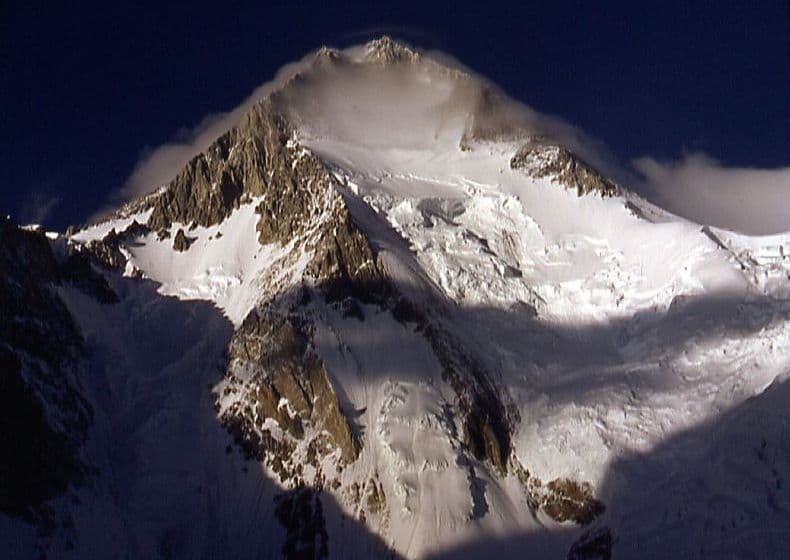
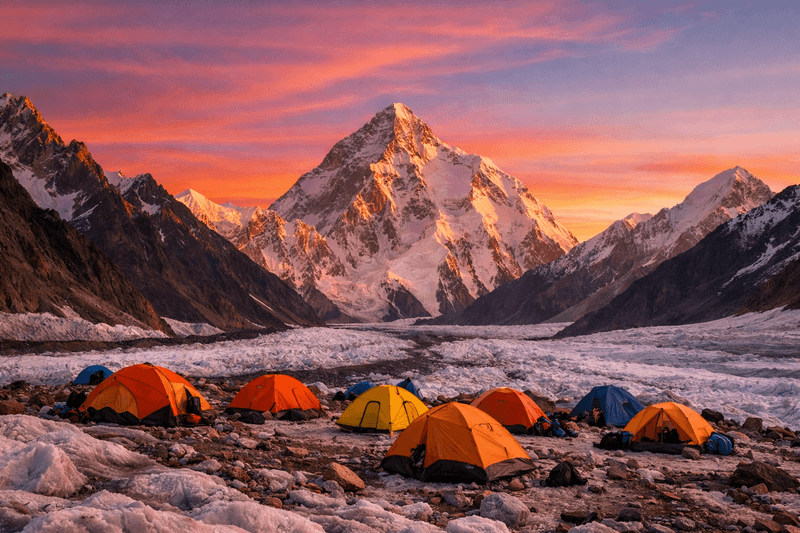
K2 and Broad Peak stand close together above the upper Baltoro, share much of the same approach and are often considered in the same planning conversation. That can create the misleading idea that Broad Peak is a smaller version of K2. It is not.
Both are 8,000-metre expeditions with severe altitude, avalanche exposure, crevasses, extreme cold, uncertain weather and limited rescue. The normal route on K2 is generally more technical and sustained. Broad Peak has a longer summit ridge and can tempt climbers to underestimate the work remaining after reaching the fore-summit area.
From an operator’s perspective in Skardu, the better objective is the one that fits the climber’s recent résumé, speed, judgement and tolerance for risk—not the more impressive name.
Expedition leader’s advice: Broad Peak can be a logical first Karakoram 8,000er for a properly experienced climber. It is never a training climb to be entered without 7,000-metre competence, independent systems and a mature turnaround habit.
Quick comparison
Factor | K2 | Broad Peak |
|---|---|---|
Elevation | 8,611 m | About 8,051 m |
Common route | Abruzzi Spur | West Ridge / normal route |
Technical character | Sustained steep snow, ice, mixed and fixed-line climbing | Snow and ice climbing with long high ridge travel |
Major signature hazard | Bottleneck and serac exposure, plus sustained route hazards | Long summit ridge, cornices and false-finish risk |
Typical reputation | One of the world’s most technically serious 8,000ers | Less technical than K2 but still a major 8,000er |
Shared approach | Askole, Baltoro, Concordia area | Askole, Baltoro, Concordia area |
Suitable candidate | Highly experienced 8,000-metre alpinist | Strong high-altitude climber ready for an 8,000er |
Published elevations vary slightly by source and survey. Those small differences do not change expedition planning; route condition and the climber’s performance matter far more.
The shared journey ends at base camp
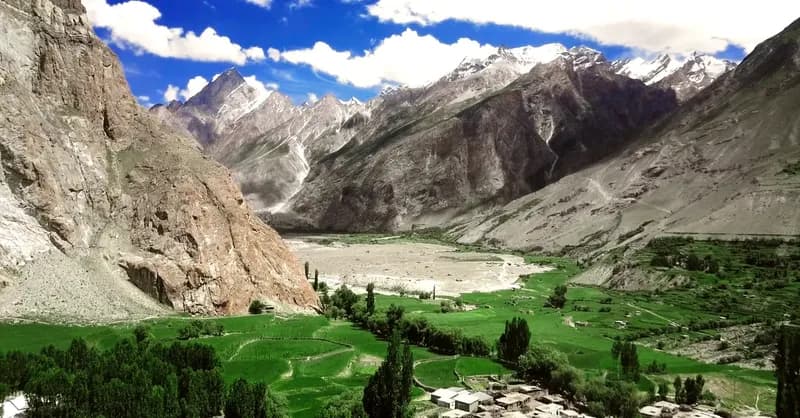
Both teams travel from Islamabad to Skardu and then by road through Shigar toward Askole. They trek through the Braldu and Baltoro corridor, normally passing established camps toward Concordia. Porters carry food, tents, fuel and group equipment.
Near the upper glacier, operations divide. Broad Peak and K2 have separate base-camp systems and route logistics. Although the peaks are visible from the same area, staff, communications, load carries, oxygen caches and weather decisions must be assigned to each objective.
Combining both peaks is not achieved by paying for one approach and deciding later. Dual permits, royalties, supplies, oxygen, staff time and schedule must be built into the expedition from the start.
Normal-route climbing on K2
The Abruzzi Spur is the most commonly attempted line on K2. It involves sustained steep terrain, fixed ropes, exposed traverses, rock and mixed sections, high camps and the Bottleneck beneath a large serac. Route condition varies between seasons; snow cover can simplify one section and increase avalanche risk elsewhere.
The House Chimney and Black Pyramid are recognised technical sections, but focusing only on named features is dangerous. Climbers need reliable movement on fixed lines, crampon efficiency, self-management at high camps and enough reserve to descend the complete route after a summit attempt.
K2’s altitude amplifies every delay. Changing an oxygen regulator, clearing a rope or overtaking a slow climber costs time and heat. Traffic can concentrate on fixed lines during a short weather window. The expedition needs strict turnaround rules even when the summit appears close.
For a route-by-route overview, see our complete guide to the K2 expedition.
Normal-route climbing on Broad Peak
Broad Peak’s normal route is usually described as less technically difficult than the Abruzzi Spur, but it remains steep high-altitude snow and ice climbing with crevasses, avalanche exposure and severe cold. Climbers use fixed ropes on key sections and establish high camps according to conditions.
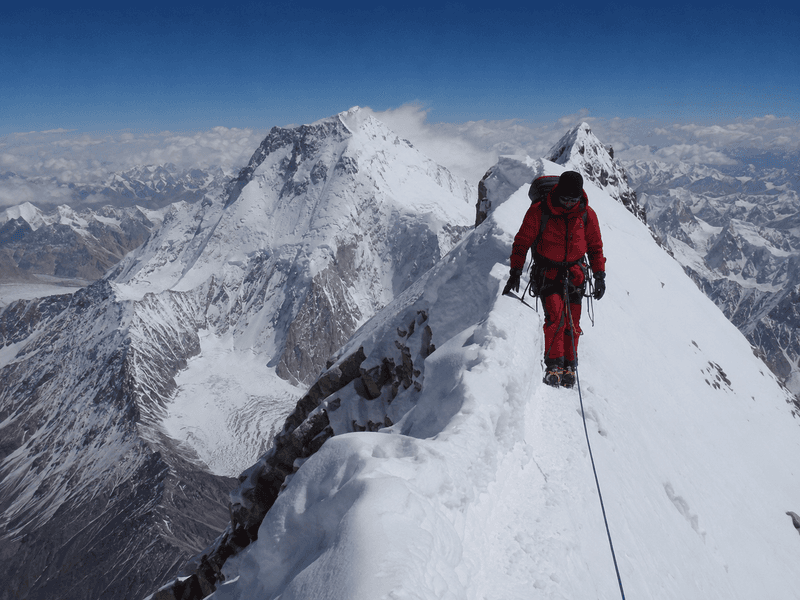
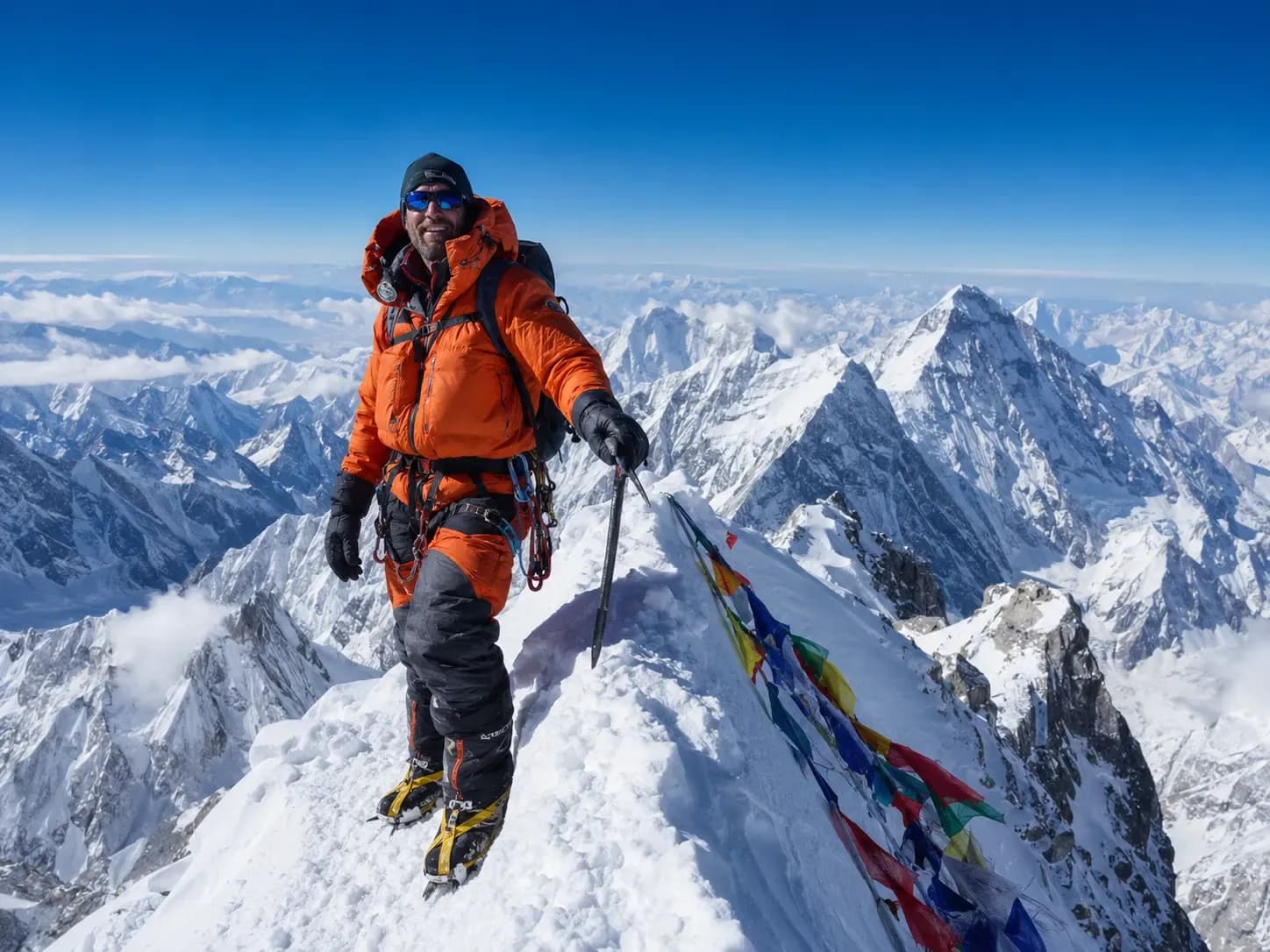
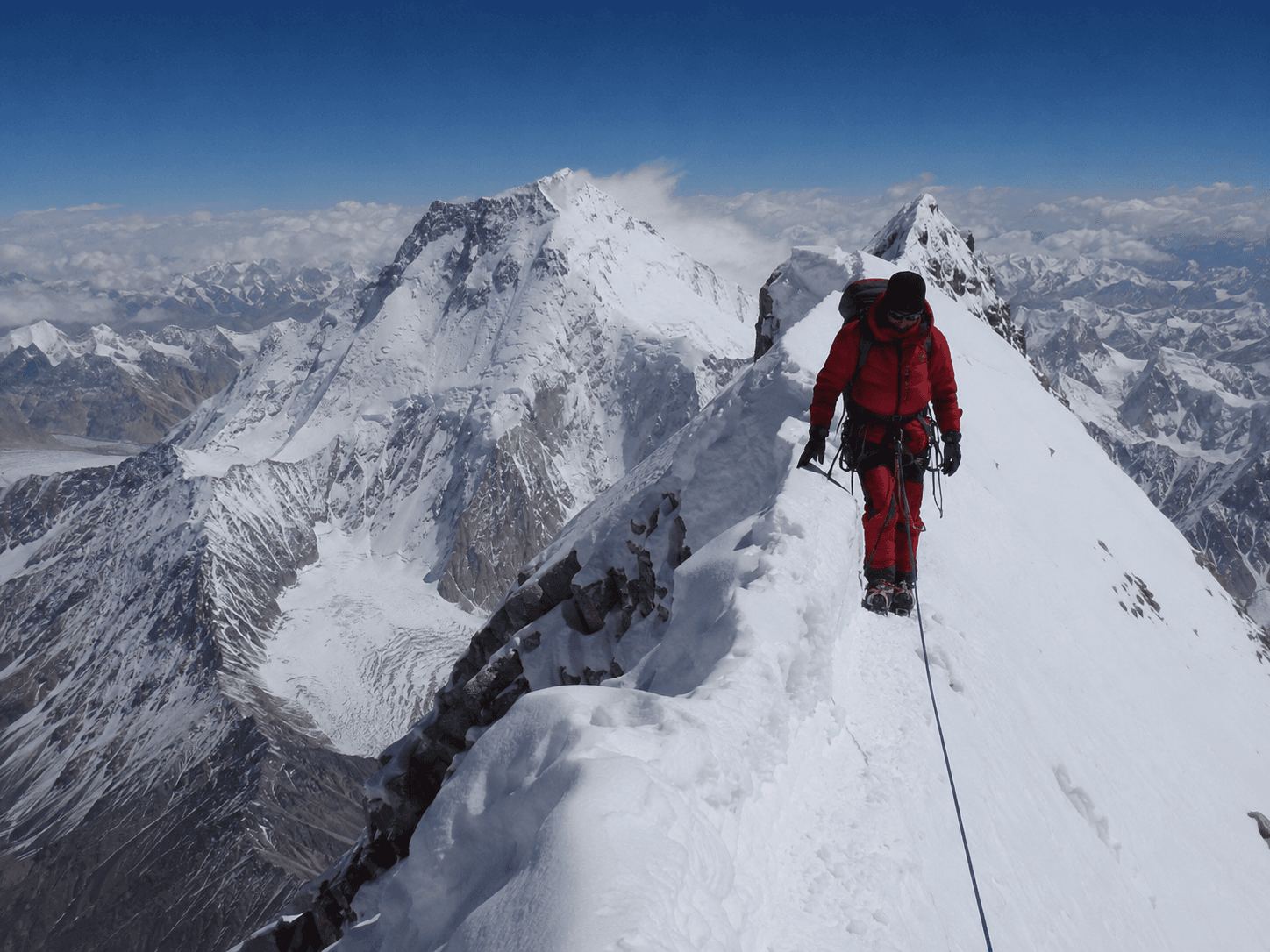
The summit day is famous for its length. Reaching the col or fore-summit area does not mean the main summit has been reached. The traverse along the high ridge can be corniced, slow and exposed to wind. Poor visibility makes orientation and distance judgement harder.
This is where Broad Peak punishes a casual turnaround plan. A climber can expend too much time reaching a high point, then continue along the ridge without enough oxygen, daylight or strength for descent. The agreed summit definition and turnaround time must be clear before leaving camp.
Technical difficulty versus total difficulty
K2 is the more technical objective on the normal routes. That does not make every Broad Peak day easy or every K2 day difficult in the same way. Total expedition difficulty includes:
- Maximum altitude and time spent in the death zone
- Steepness, surface and fixed-line condition
- Objective hazard that cannot be fully controlled
- Length of summit day and descent
- Camp construction and load carries
- Weather-window frequency
- Crowding and rope traffic
- Personal recovery and acclimatisation
- Consequences of retreat
A faster climber with excellent snow judgement may suit Broad Peak better than a technically strong rock climber who moves slowly at altitude. K2 requires both technical competence and proven high-altitude performance.
Objective hazards
K2
Serac exposure above the Bottleneck is the best-known hazard, but avalanches, falling ice and rock, crevasses, storms and fixed-line failure exist throughout the route. No guiding system can remove objective hazard. The decision is about exposure management, not elimination.
Broad Peak
Avalanche terrain, crevasses and corniced ridge travel are major concerns. The long summit ridge exposes tired climbers to weather and navigation error. Deep snow can turn moderate ground into an exhausting, very slow effort.
On both mountains, a decision based on the calendar—“today is our summit date”—is inferior to one based on current route, weather, team and descent margin.
Acclimatisation and rotation strategy
Teams normally use rotations to establish camps, carry equipment and sleep progressively higher. The exact sequence depends on weather and response. More rotations are not automatically better; excessive climbing can produce fatigue without useful adaptation.
Broad Peak has sometimes been used to acclimatise for K2, but attempting or summiting an 8,000-metre mountain is not a gentle warm-up. The strategy adds a second permit, objective hazard, fatigue and recovery uncertainty. It is appropriate only for carefully selected and resourced climbers.
Pre-acclimatisation systems can support a plan but do not prove that a person will perform safely on the mountain. The field schedule still requires observation and flexibility.
Supplemental oxygen and support style
Climbers attempt both peaks with and without supplemental oxygen. The choice affects cylinder numbers, flow planning, carries, mask and regulator redundancy, staff assignments and emergency margin. “No O2” should describe a well-considered climbing style, not a social identity that prevents a rescue decision.
Full-service support may include high-altitude staff, oxygen, tents, fixed-line coordination, cooking and weather services. Base-camp service provides lower-mountain logistics while the climber operates more independently above. Every inclusion must be written. “Guided” on an 8,000er does not mean a guide can physically control all hazards or short-rope a client to safety.
Time and cost drivers
K2 generally requires more route equipment, technical support, time and high-altitude resources. Government royalties also differ by peak and current fee schedule. Broad Peak is often less expensive, but price should not determine whether a climber is qualified.
Cost components include:
- Peak permit, royalty and environment fees
- Local operator and liaison formalities
- Islamabad and Skardu logistics
- Askole–Baltoro porter transport
- Base-camp tents, food, fuel and staff
- High camps, fixed rope and technical equipment
- Oxygen and high-altitude porter support where selected
- Weather, communications and medical systems
- Staff insurance and rescue provisions
- Contingency and waste management
Compare itemised services, not headline prices. A cheaper package that excludes oxygen carries, high-camp tents or staff insurance is not the same product.
Experience standard
A Broad Peak candidate should generally have
- Independent crampon, fixed-line and glacier competence
- Multiple high-altitude expeditions with successful acclimatisation
- At least one substantial 7,000-metre objective or equivalent experience
- Ability to manage personal equipment, hydration and oxygen systems
- Demonstrated conservative decisions on long summit days
A K2 candidate should additionally demonstrate
- Previous 8,000-metre performance in a comparable style
- Strong movement on steep snow, ice, mixed and fixed lines
- Efficient transitions and equipment repair at altitude
- Experience with sustained objective hazard and complex retreat
- Enough technical reserve to assist rather than become dependent
There is no automatic résumé formula. Recency, style, conditions and judgement matter. An old guided summit with minimal independent responsibility may be less relevant than a recent technical 7,000er.
Fitness and preparation
Both objectives require a large aerobic base, uphill endurance, strength and the ability to recover over many weeks. K2 adds a higher technical workload. Train fixed-line ascent and descent, crampon movement, pack carrying and glove-on equipment management.
The final months should include consecutive long days rather than one weekly heroic session. Arrive rested; last-minute overtraining increases injury risk. Dental, medical and equipment problems are easier to solve before Pakistan than at base camp.
Choosing between the two
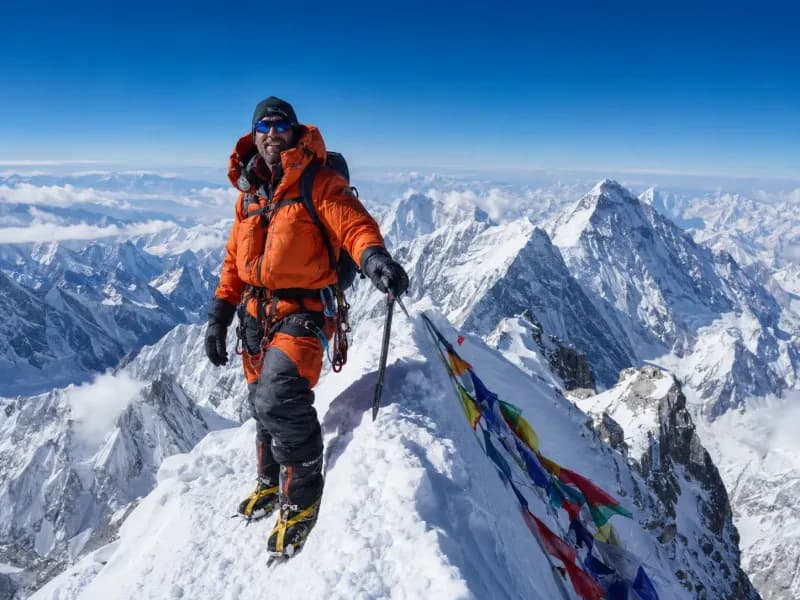
Choose Broad Peak when you have strong 7,000-metre experience, efficient snow and fixed-line skills, and want a serious first or next 8,000-metre objective with a long summit day. Choose K2 only when your recent record already demonstrates 8,000-metre resilience and high technical competence.
Do not choose K2 because Broad Peak feels insufficiently prestigious. Do not choose Broad Peak because it is described as easy. Both demand a willingness to return without a summit.
Decision checklist
- Have I performed well above 7,000 metres in the intended style?
- Can I climb and descend fixed lines independently with gloves and a pack?
- Does my technical résumé match the normal route?
- Have I completed long summit days and descended safely while exhausted?
- Is supplemental oxygen and staff support clearly specified?
- Does insurance cover the named peak and maximum altitude?
- Can my schedule absorb weather and recovery days?
- Will I turn around at the agreed time even in view of the summit?
Internal planning links
Compare the K2 Expedition and Broad Peak Expedition, or see both peaks from the K2 Base Camp Trek. Read the complete K2 guide, guided versus private expedition and expedition fitness guide.
Frequently asked questions
Is Broad Peak easier than K2?
The normal route on Broad Peak is generally less technical than K2’s Abruzzi Spur. It is still an 8,000-metre expedition with avalanche, crevasse, cold, altitude and long-ridge hazards.
Should Broad Peak be my first 8,000er?
It can be appropriate for a climber with strong, recent 7,000-metre experience and independent snow, glacier and fixed-line skills. It is not suitable as a first high-altitude expedition.
Can I climb K2 and Broad Peak in one season?
Some elite and well-resourced climbers plan both, but it requires dual permits, greater logistics, excellent acclimatisation, recovery and suitable weather. A two-peak permit does not make the physical plan realistic.
Which summit day is longer?
Broad Peak’s summit day is notably long because of the high ridge and distance to the main summit. K2’s summit push is technically more sustained. Actual times depend on camp, snow, traffic and the climber.
Is supplemental oxygen required?
It is a personal and operational choice rather than a universal legal requirement. Most commercial climbers use it. The decision must be declared early because it changes equipment, staffing and emergency planning.
Which expedition costs more?
K2 generally costs more because of royalties, duration, technical logistics and high-altitude support. Always compare itemised inclusions and current government fees.
End of field note
Continue your research.
Browse all notes