In this field note15 sections +Close −
- 01The essential difference
- 02The standard K2 Base Camp route
- 03How Gondogoro La changes the itinerary
- 04What fixed ropes do—and do not—do
- 05Objective hazards on the pass
- 06Why the crossing can be cancelled
- 07Difficulty comparison
- 08Training for each route
- 09Equipment differences
- 10Acclimatisation and health decision
- 11Rescue and insurance
- 12Which route should you choose?
- 13Pre-booking checklist
- 14Internal planning links
- 15Frequently asked questions
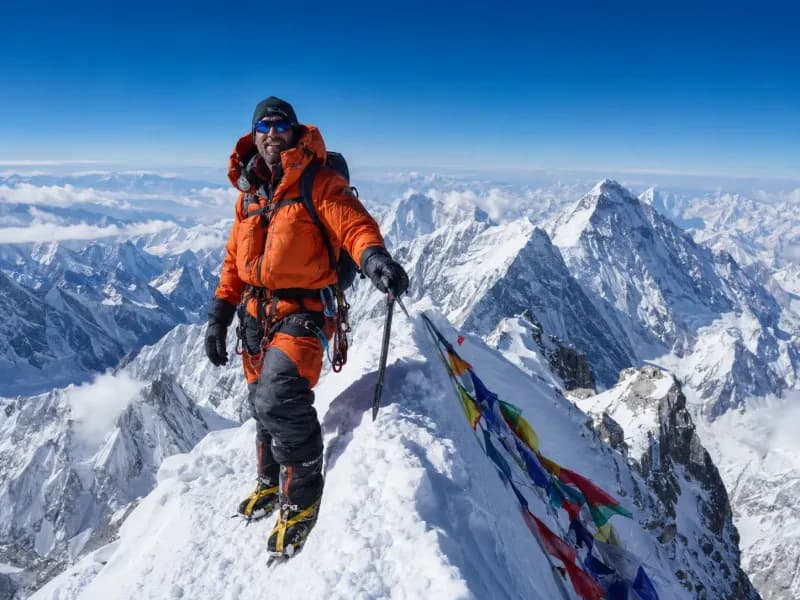
K2 Base Camp and Gondogoro La are often sold in one itinerary, which can make them sound like two scenic stops on the same trek. They are different types of objective. K2 Base Camp is reached by a long, rough, high-altitude glacier trek. Gondogoro La adds a steep technical pass that can require crampons, harness, helmet, ice axe and fixed-rope movement in darkness or early morning.
The pass creates a through-route from the upper Baltoro toward Hushe. Without it, the team usually returns along the Baltoro. With it, the team gains a dramatic high crossing and a different descent—but also avalanche, rockfall, fixed-line and snow-condition problems that cannot be guaranteed safe on a particular date.
Guide’s rule: Reaching K2 Base Camp does not prove that a trekker should cross Gondogoro La. The pass decision is made from current snow, weather, rope condition, team health and movement—not from how much someone wants a circular itinerary.
The essential difference
Factor | K2 Base Camp standard return | K2 Base Camp with Gondogoro La |
|---|---|---|
Main technical level | Strenuous trekking on moraine and glacier | Trekking plus steep high-pass systems |
Route shape | Out and back through Baltoro | Traverse from Baltoro toward Hushe |
Equipment | Trekking boots and poles; route-specific glacier items | Harness, helmet, crampons, ice axe and fixed-line equipment |
Departure timing | Normal trekking starts | Often night or very early start for snow and hazard timing |
Main additional hazards | None beyond the already serious trek | Avalanche, rockfall, steep snow, fixed ropes and pass descent |
Guarantee | Base camp subject to health and conditions | Pass never guaranteed even after reaching Ali Camp |
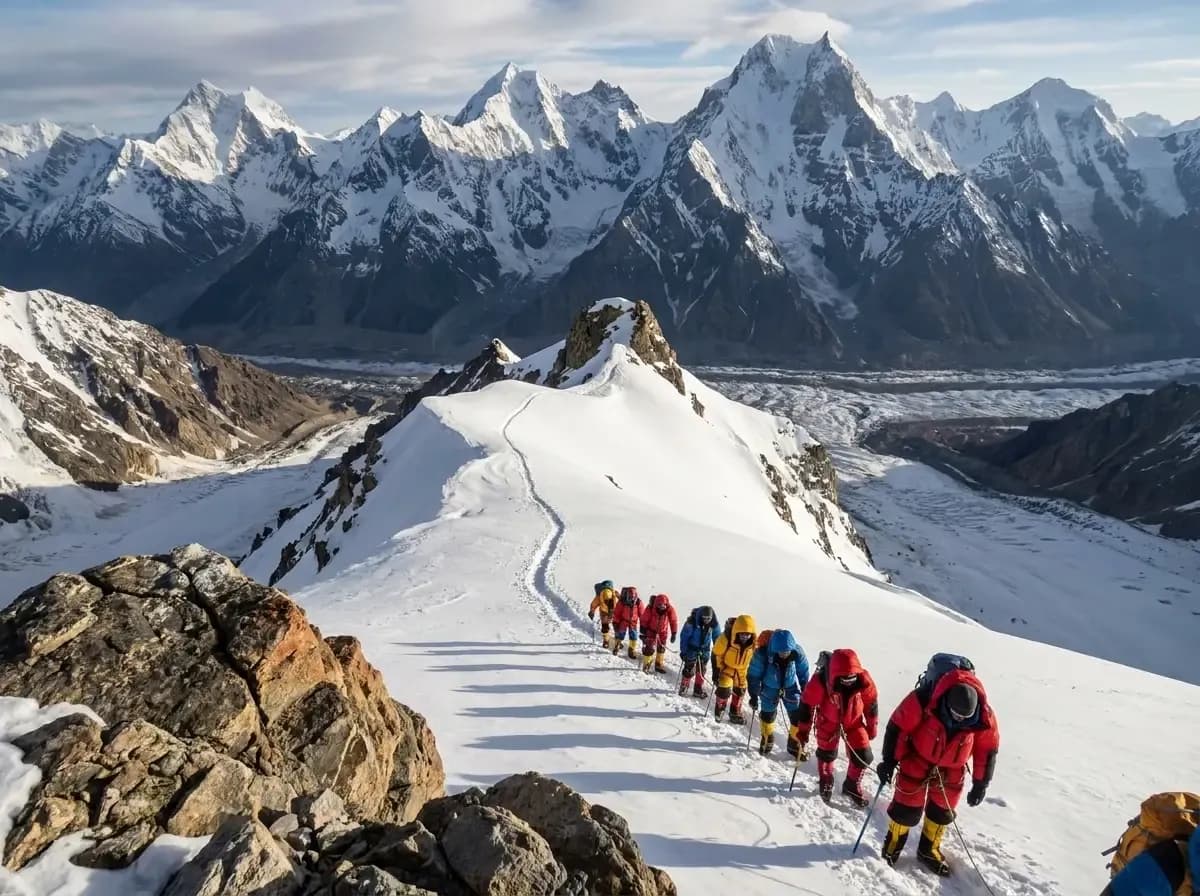
Exact pass heights vary between maps and GPS records. The commonly quoted figure is around 5,600 metres. The operational issue is not a small numerical difference; it is climbing steep terrain at very high altitude after many expedition days.
The standard K2 Base Camp route
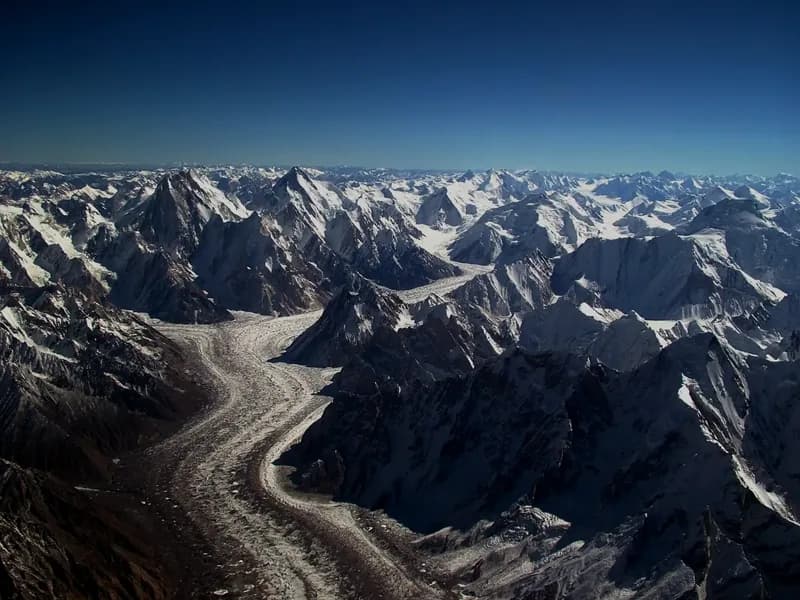
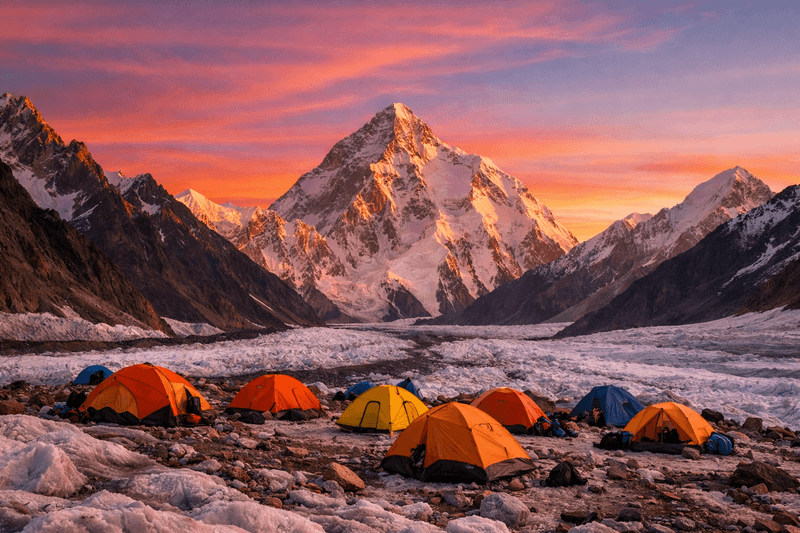
The journey begins in Skardu, travels through Shigar to Askole and follows the Braldu approach to Paiju. From there, teams move onto the Baltoro Glacier past the Trango group, Urdukas and Goro toward Concordia. A side journey on the upper glacier reaches Broad Peak and K2 Base Camp.
The terrain is rough. Moraine creates unstable stones, boulders, dirty ice, gullies and repeated short climbs. Camps are tented, facilities basic and communication limited. A return along the same route may sound less exciting, but it has practical advantages: the team knows the corridor, uses established camps and avoids the technical pass.
The standard route is still a serious remote trek. It should not be labelled easy merely because it does not require a pass crossing.
How Gondogoro La changes the itinerary
After visiting Concordia or K2 Base Camp, the team positions toward Ali Camp. Equipment, health and pass conditions are reviewed. A crossing typically starts at night or very early so the team can use firmer snow and reduce exposure to warming hazards.
The ascent and descent use ropes where installed and may require front-pointing or careful crampon movement. Guides manage spacing, attachment and transitions. After the pass, the route descends toward the Hushe side through camps such as Khuspang, with further glacier and trail travel before road access.
This creates different transport and porter logistics. Vehicles and exit arrangements must be prepared toward Hushe rather than Askole. If the pass is cancelled, those plans change and the team returns by the Baltoro.
What fixed ropes do—and do not—do
Fixed ropes provide a managed line for ascent or descent. They do not remove the gradient, prevent rockfall, guarantee anchor quality or make every trekker competent. Lines can be buried, damaged, icy, crowded or repositioned between seasons.
Participants should know how to:
- Fit a harness correctly over mountain clothing
- Attach and detach from the rope as instructed
- Use an ascender or safety system without cross-loading hardware
- Move in crampons without catching points on clothing or rope
- Keep appropriate spacing and avoid dislodging rocks
- Descend under the guide’s chosen system
- Communicate clearly while cold, tired and in the dark
The operator should provide or specify route-compatible equipment and practise systems before the crossing, not explain every movement for the first time on the steep slope.
Objective hazards on the pass
Snow and avalanche
Fresh snow, wind loading, weak layers or warming can make the pass unsafe. Deep snow also slows the group, increasing exposure and pushing descent later into the day.
Rockfall
Loose rock can be released naturally or by climbers above. Helmets and spacing reduce some risk but cannot remove it. Warming may increase activity.
Fixed-line and anchor condition
Snow, ice, UV exposure and rock movement affect the system. Local teams inspect and maintain lines, but the guide must judge their current condition.
Weather and visibility
Wind, snowfall and cloud can make route finding, communication and heat management difficult. A forecast window must cover the complete crossing, not only departure.
Altitude and fatigue
The team reaches the pass after many days. A trekker who is still recovering from illness or struggling at Concordia may not have the margin for several technical hours.
Why the crossing can be cancelled
Cancellation may result from snow, avalanche evidence, rockfall, damaged ropes, poor visibility, weather, illness, pace or a combination. The expedition contract and itinerary should state that the pass is conditional and that returning by the Baltoro is the safe alternative.
A traveller should never offer staff extra money to “try anyway.” The guide is responsible for guests and workers, and pressure distorts a technical decision. Travel insurance may not cover a deliberate breach of advice.
Difficulty comparison
Both versions require excellent endurance and balance on moraine. Gondogoro La additionally requires technical movement, confidence with exposure, cold tolerance and the ability to follow commands while clipped to a rope.
Skill | Standard K2 Base Camp | Gondogoro La version |
|---|---|---|
Consecutive trekking days | Essential | Essential |
Rough-ground balance | Essential | Essential |
Crampon experience | Route-dependent | Strongly recommended and often required |
Fixed-rope movement | Not normally central | Required |
Comfort with exposure | Helpful | Essential |
Night movement | Usually limited | Common on pass day |
Technical descent | Not normally central | Required |
Someone can be aerobically very fit and still unsuitable for the pass because of panic on exposure or poor crampon technique. Conversely, a technically capable climber may be too fatigued or unacclimatised to cross safely.
Training for each route
For standard K2 Base Camp, train long uphill and downhill days, leg strength, balance, foot durability and back-to-back effort. Spend time on loose, uneven terrain with a daypack.
For Gondogoro La, add:
- Crampon walking on firm snow, including descent
- Fixed-rope ascent and controlled lower or abseil systems
- Movement by headlamp
- Glove-on carabiner and ascender handling
- Exposure management and clear communication
- Longer back-to-back days with an early start
Practise with qualified instruction before Pakistan. A gym stair machine cannot teach crampon placement.
Equipment differences
The standard trek requires robust boots, trekking poles, layered clothing, waterproofs, warm insulation, glacier sun protection and a cold-rated sleep system. Gondogoro La adds a technical kit specified by the operator.
Pass equipment commonly includes
- Helmet
- Climbing harness
- Crampons compatible with boots
- Ice axe
- Ascender or attachment system
- Locking carabiners and sling as specified
- Headlamp plus spare batteries
- Warm gloves that still allow hardware use
- Glacier eyewear and backup eye protection
Do not buy crampons before confirming boot compatibility. Flexible hiking shoes are a poor platform for many technical crampon systems.
Acclimatisation and health decision
The Baltoro itinerary builds altitude progressively, but individual response varies. Fitness does not prevent acute mountain sickness. Tell the guide about headache, nausea, poor sleep, diarrhoea, cough, unusual fatigue and loss of coordination.
Pass day is not a treatment for altitude symptoms. A person who worsens at the same height or shows signs of cerebral or pulmonary oedema needs descent and medical management, not a push to a higher pass.
The CDC high-altitude travel guidance states that worsening symptoms require descent and that gradual sleeping-height gain is central to prevention.
Rescue and insurance
The pass has limited rescue options. A helicopter flight depends on weather, daylight, aircraft, altitude, landing terrain, official coordination and payment authorisation. Direct extraction from a steep slope may be impossible.
Insurance must cover the itinerary’s maximum altitude and the use of ropes, crampons and technical pass equipment. Some trekking policies exclude exactly those activities. Obtain written confirmation and provide the assistance number before departure.
Which route should you choose?
Choose standard K2 Base Camp if this is your first multi-week Karakoram trek, you are not comfortable with technical exposure, or your priority is K2 and Concordia rather than a circular route. It remains an exceptional expedition.
Choose Gondogoro La if you have strong previous high-altitude trekking, recent crampon and fixed-rope practice, excellent endurance and a mature acceptance that the pass may be cancelled.
Do not choose the pass only to avoid retracing steps. The return along the Baltoro reveals different light, views and terrain and is the responsible alternative when conditions are poor.
Pre-booking checklist
- Have I completed a long tented trek at altitude?
- Can I move confidently in crampons on ascent and descent?
- Have I used a fixed rope with gloves and a pack?
- Am I comfortable moving before dawn?
- Does insurance explicitly cover the pass activity and altitude?
- Does the itinerary allow a Baltoro return if cancelled?
- Is technical equipment included or clearly specified?
- Will I respect the guide’s no-crossing decision?
Internal planning links
Compare the K2 Base Camp and Gondogoro La Trek with the standard K2 Base Camp Trek. Prepare with the K2 Base Camp packing list, trekking difficulty guide and Baltoro vs Snow Lake comparison.
Frequently asked questions
Is Gondogoro La part of every K2 Base Camp trek?
No. The standard trek can return along the Baltoro. Gondogoro La is a more technical variation that crosses toward Hushe.
Is Gondogoro La a trekking pass or a climbing pass?
It is commonly included in trekking itineraries, but the crossing involves technical mountaineering systems such as crampons, harness, helmet and fixed ropes.
Can the pass crossing be guaranteed?
No. Snow, avalanche risk, rockfall, rope condition, weather, visibility and team health can force a return through the Baltoro.
Do I need previous crampon experience?
Yes, practical experience is strongly recommended. Participants should not rely on learning all crampon and rope movement during the night crossing.
Is Gondogoro La harder than reaching K2 Base Camp?
Yes, technically. The base-camp trek is long and strenuous; the pass adds steep snow, exposure, fixed ropes, an early start and more complex hazards.
What happens if Gondogoro La is closed?
The team normally returns along the Baltoro toward Askole. The operator reorganises porter and vehicle logistics according to the contingency plan.
End of field note
Continue your research.
Browse all notes