In this field note17 sections +Close −
- 01The essential difference
- 02The Baltoro journey
- 03The Snow Lake journey
- 04Scenery: peaks versus glacial scale
- 05Terrain underfoot
- 06Difficulty and commitment
- 07Altitude and acclimatisation
- 08Camps and daily life
- 09Weather and best operating window
- 10Crowds and social atmosphere
- 11Porter and animal logistics
- 12Rescue and route changes
- 13Who should choose the Baltoro?
- 14Who should choose Snow Lake?
- 15Decision checklist
- 16Internal planning links
- 17Frequently asked questions
The Baltoro and Snow Lake are the two great multi-day glacier journeys reached from Askole, but they offer different experiences. The Baltoro leads into the famous amphitheatre around Concordia, with views toward K2, Broad Peak and the Gasherbrums. Snow Lake follows the Biafo into a vast high glacial basin and, on the full traverse, crosses Hispar La toward Nagar.
The Baltoro is more iconic and has a more established expedition corridor. Snow Lake is quieter, more route-dependent and, when combined with Hispar La, more committing. Neither is a lodge trek. Both require tented support, rough approaches, altitude management and the ability to live simply for many days.
Askole guide’s summary: Choose the Baltoro for the world’s most concentrated high-peak scenery. Choose Snow Lake for a long glacial journey where the route itself—not a single base camp—is the objective.
The essential difference
Factor | Baltoro / K2 Base Camp | Snow Lake / Hispar La |
|---|---|---|
Main objective | Concordia and K2 Base Camp | Biafo, Snow Lake and often Hispar La traverse |
Glacier character | Extensive debris-covered moraine and upper-glacier travel | Moraine below, broader snow-covered glacier above |
Famous mountain views | Trango, Masherbrum, K2, Broad Peak, Gasherbrums | Ogre, Latok region, Hispar peaks and wide accumulation basin |
Route pattern | Usually out-and-back or Gondogoro La variation | Out-and-back on Biafo or traverse to Hispar village |
Trail traffic | More expeditions in the main season | Generally quieter |
Technical commitment | Trekking; Gondogoro La adds technical pass | Glacier travel and Hispar La snow/crevasse exposure |
Exit flexibility | Return along known Baltoro corridor | Full traverse commits toward a separate valley exit |
The Baltoro journey
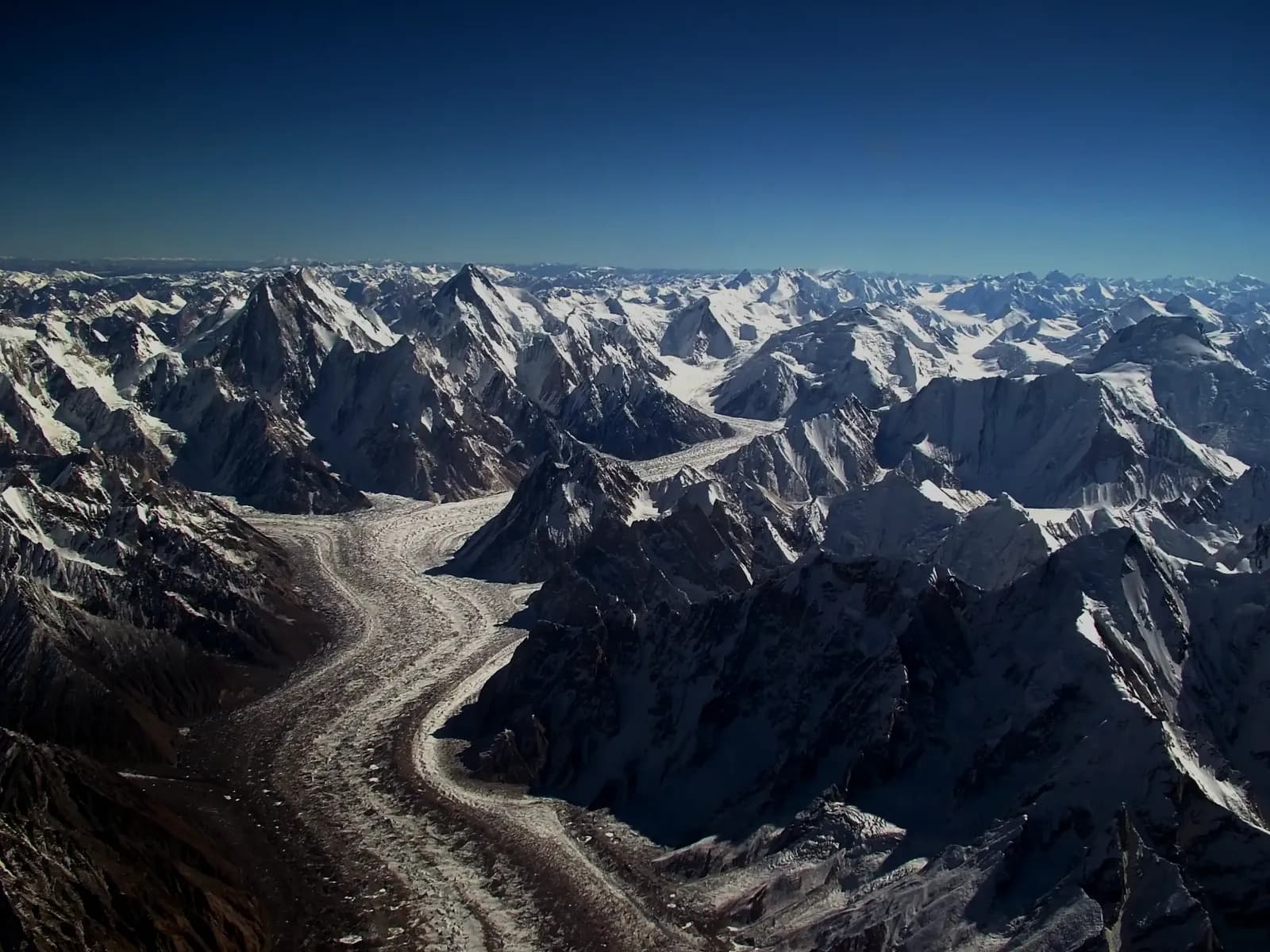
From Askole, teams follow the Braldu approach through camps such as Jhola and Paiju before moving onto the Baltoro Glacier. The surface is often rough moraine—loose rock and debris over active ice—rather than the clean white glacier imagined by first-time trekkers.
The mountain scenery builds through the Trango group and toward Urdukas, Goro and Concordia. Concordia is the geographical and visual centre of the trek. From there, an itinerary may continue toward Broad Peak and K2 Base Camp before returning along the Baltoro or attempting Gondogoro La under a different plan.
The route is established but not developed. There are no continuous lodges, shops or road access after Askole. Camps, food, fuel and personal baggage move with porters and pack animals where possible.
The Snow Lake journey
The Biafo route leaves the Baltoro corridor and follows its own glacier system. Lower stages include trail, moraine, exposed ice and broken glacier terrain. Higher up, the glacier opens toward Snow Lake—Lukpe Lawo—and the accumulation zones become broader and whiter.
The classic traverse crosses Hispar La and descends the Hispar Glacier toward Hispar village and the Nagar side. This creates a through-journey rather than a return to Askole. Logistics must be coordinated at both ends, and changes on the pass can affect the entire exit plan.
Snow Lake feels more exploratory because there are fewer teams and less fixed camp rhythm. That remoteness is part of its appeal and its seriousness. Trail information is less useful than current route knowledge on the glacier.
Scenery: peaks versus glacial scale
The Baltoro offers extraordinary named-peak concentration. The progression past the Trango Towers, Cathedral, Masherbrum and toward the 8,000ers is visually immediate. K2 Base Camp provides a powerful destination and a strong narrative for the trek.
Snow Lake’s impact is spatial. The upper basin feels enormous, and the Biafo–Hispar system creates a sense of travelling across the interior of the range rather than approaching one mountain. Baintha Brak, the Latok group and surrounding towers form a wilder, less familiar skyline for many international trekkers.
There is no objective winner. A photographer seeking recognised peaks may prefer the Baltoro. A glacier traveller drawn to a long traverse may prefer Snow Lake.
Terrain underfoot
Baltoro
Expect repeated short climbs and descents over loose moraine, boulders, gravel, dirty ice and meltwater channels. The route changes as the glacier moves. Balance and foot placement matter more than fast hiking speed.
Snow Lake
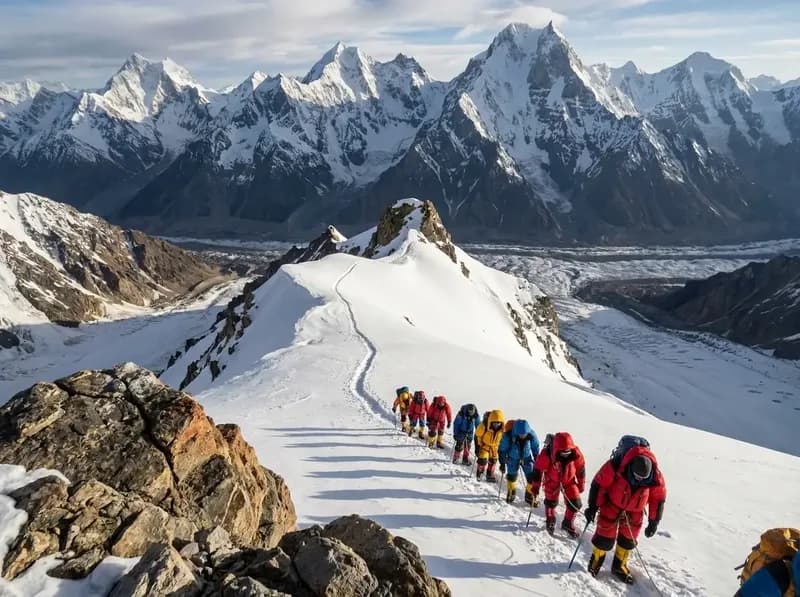
The lower Biafo also contains rough moraine and exposed glacier. Higher sections can require roped travel across snow-covered crevassed terrain. Snow firmness and bridge strength vary with season, time and weather. Hispar La adds high snow travel and a committing descent.
Walking poles and broken-in supportive boots are valuable on both. On Snow Lake, the technical list may also include harness, crampons and glacier equipment according to conditions and operator plan.
Difficulty and commitment
The standard K2 Base Camp trek is strenuous because of duration, rough footing, altitude and tented living. It follows a corridor used by multiple teams, giving operators more current information and some shared presence in the main season.
The full Snow Lake–Hispar traverse is generally more committing. Crevasse conditions, pass weather and the separate exit reduce flexibility. Trail-breaking or slow glacier navigation can lengthen days. A standard Biafo out-and-back itinerary is less committing than the traverse but still remote.
Gondogoro La changes the Baltoro comparison. Once a K2 itinerary includes the high pass toward Hushe, it also requires crampons, harness, fixed-rope movement and an early or night start. That version can be technically more demanding than the standard return route.
Altitude and acclimatisation
Both journeys reach heights where acute mountain sickness can occur. Exact camp and pass elevations should be taken from the booked itinerary; GPS readings and published figures vary. The important measures are sleeping-height gain, rest, symptoms and descent options.
The Baltoro approach offers gradual progress but contains long stages. Snow Lake’s upper camps and Hispar La require careful scheduling. Fitness does not prevent altitude illness. The team should not ascend with worsening symptoms, and participants must report headache, nausea, poor coordination or unusual breathlessness.
Camps and daily life
Both routes use tented camps. A typical day includes packing the duffel, breakfast, filling water, walking with the guide, reaching camp, changing into dry layers, eating and attending the next-day briefing. Porters and staff dismantle, carry and rebuild the group system.
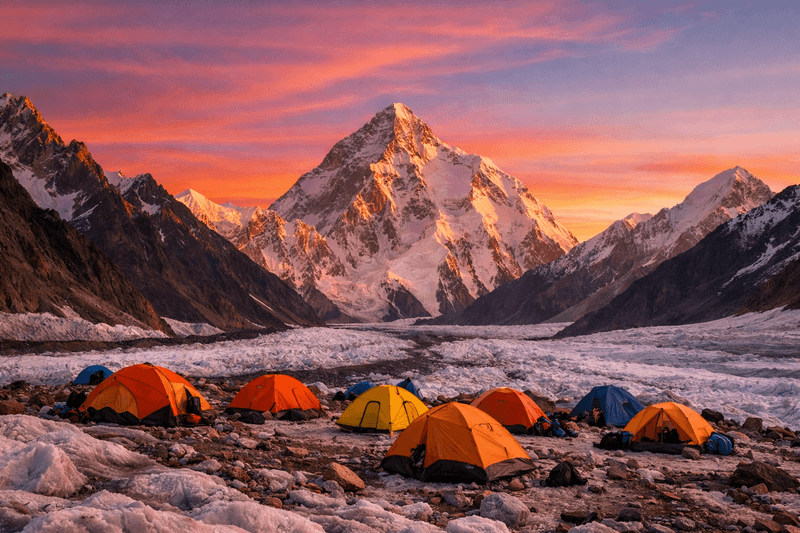
The Baltoro has more established camps, but facilities remain basic and can vary in condition. Snow Lake camps may feel more improvised because safe glacier and water locations change. On either route, expect limited washing, basic toilets, glacial sediment in water and no dependable mains electricity.
Bring power banks, offline documents and realistic family communication expectations. Satellite systems are for operations first.
Weather and best operating window
Both summer treks are usually planned when road access and glacier travel are most practical. The lower approach can be hot and dusty; upper camps can be cold, windy or snowy. The Karakoram’s relative shelter from the main South Asian monsoon does not mean it receives no summer precipitation or storms.
Snow Lake and Hispar La can be especially sensitive to snow coverage and bridge condition. A very snowy period may increase avalanche or trail-breaking difficulty; a warm period can weaken bridges. Baltoro moraine remains difficult in wet weather and fresh snow.
Historical season is a starting point. Final decisions use current road, river, snow and route reports.
Crowds and social atmosphere
The Baltoro receives K2, Broad Peak, Gasherbrum and trekking teams during the main season. Camps can be active, especially near Paiju and Concordia. It is still remote by global trekking standards, but you will likely meet other groups.
Snow Lake generally receives fewer teams. That produces quiet camps and a stronger sense of isolation. It also means fewer nearby resources or current tracks. People who equate solitude with easier travel should reconsider; quiet routes require more self-sufficiency.
Porter and animal logistics
Both treks depend on local staff. Lower stages may use pack animals where terrain allows; glacier and pass stages increasingly depend on people. Load limits, insurance, food and equipment should match the terrain and worker category.
The Snow Lake traverse requires careful end-to-end planning because staff and equipment move toward a different roadhead. A return route can reuse some support patterns; a traverse cannot assume the same exit logistics.
Participants should keep duffels within the allowance and carry waterproofs, warm layer, water, sun protection and medicine in the daypack. The porter bag may arrive after the walker.
Rescue and route changes
Neither route has guaranteed helicopter evacuation. Weather, altitude, landing terrain, aircraft, authorisation and insurance approval affect flights. The expedition must retain ground movement and first-aid capacity.
On the Baltoro, a team may return by the approach if Gondogoro La is unsafe. On a Snow Lake traverse, a pass decision can require waiting, retreating down the Biafo or changing the exit plan. That is why contingency food, staff arrangements and flexible transport matter.
Who should choose the Baltoro?
Choose the Baltoro if K2 and the central 8,000-metre peaks are the main inspiration, you want a recognised expedition corridor and you prefer a route with a clear destination. The standard K2 Base Camp return is often the better first remote Karakoram trek.
Who should choose Snow Lake?
Choose Snow Lake if you have strong expedition-trekking experience, enjoy glacier travel as the main objective, accept quieter and less fixed route conditions, and have the technical preparation required for Hispar La when crossing.
Decision checklist
- Do I prefer iconic peaks or the scale of a glacier traverse?
- Have I completed a multi-week tented trek?
- Am I steady on loose moraine for consecutive days?
- Do I have glacier and crampon experience if the itinerary requires it?
- Can my travel dates absorb road, weather and pass delays?
- Does insurance cover the route’s maximum altitude and technical activity?
- Am I comfortable with limited washing, power and communication?
- Will I accept retreat if a pass is unsafe?
Internal planning links
Compare the K2 Base Camp Trek, Snow Lake and Hispar La Trek and Biafo Glacier Trek. Read life on the Baltoro, trekking difficulty guide and Gondogoro La vs K2 Base Camp.
Frequently asked questions
Is Snow Lake harder than K2 Base Camp?
The full Snow Lake–Hispar La traverse is generally more committing because of crevassed snow travel, pass conditions, quieter route and separate exit. Standard K2 Base Camp remains strenuous and remote.
Which trek has better mountain views?
The Baltoro has the greater concentration of famous peaks, including K2 and Broad Peak. Snow Lake offers immense glacier scenery and views of the Ogre, Latok region and Hispar mountains.
Are there lodges on either route?
No continuous lodge network exists after Askole. Supported teams normally use tented camps and carry food, kitchen, fuel and group equipment.
Can beginners trek Snow Lake?
The full traverse is not a good first remote high-altitude trek. Strong previous multi-day trekking, camping and appropriate glacier preparation are recommended.
Is the Baltoro crowded?
It receives more teams during the main season than Snow Lake, especially at established camps. It remains a remote expedition route rather than a developed teahouse trail.
Can both treks be combined?
A complex expedition can link glacier systems only with specialist planning, permits and a highly capable team. For most travellers, these should be treated as separate journeys.
End of field note
Continue your research.
Browse all notes