In this field note16 sections +Close −
- 01Quick comparison
- 02Access and the start of the trek
- 03Accommodation and daily comfort
- 04Terrain underfoot
- 05Altitude and acclimatisation
- 06Which trek is physically harder?
- 07Crowds and the social environment
- 08Culture and local connection
- 09Rescue and medical access
- 10Weather and the operating season
- 11K2 Base Camp versus Gondogoro La
- 12Who should choose K2 Base Camp?
- 13Who may prefer Everest Base Camp?
- 14Training differences
- 15Our honest conclusion
- 16Frequently asked questions
K2 Base Camp and Everest Base Camp are often compared because both journeys approach one of the world’s highest mountains. On the ground, they are very different expeditions. The important distinction is not which mountain is more famous or which photograph looks stronger. It is how each route operates day after day.
We organise K2 Base Camp journeys from Skardu and Askole, so our view begins with the practical realities of the Baltoro: camping, porter logistics, rough glacier terrain, limited resupply and a long distance from road access. Everest Base Camp in Nepal normally uses a much more developed lodge and settlement network.
For many trekkers, K2 Base Camp is the more committing journey. That comes from remoteness and expedition logistics, not simply the altitude shown on an itinerary.
Quick comparison
- K2 Base Camp: Karakoram, Pakistan; Everest Base Camp: Himalaya, Nepal
- K2 approach: tented expedition; Everest approach: normally lodge to lodge
- K2 terrain: long moraine and glacier sections; Everest terrain: established mountain trails and glacial moraine
- K2 resupply: very limited after Askole; Everest resupply: available through Khumbu settlements
- K2 communication: limited and expedition-dependent; Everest communication: generally more available
- K2 evacuation: complex and condition-dependent; Everest evacuation: more established but still weather-dependent
- K2 atmosphere: remote expedition corridor; Everest atmosphere: inhabited cultural landscape with more trekkers
Access and the start of the trek
A K2 journey normally reaches Skardu by domestic flight or a long road journey. The team then travels through Shigar and the Braldu Valley toward Askole. Road condition, landslides, river damage and vehicle access can change, so contingency time matters before the walking begins.
The common Everest Base Camp approach reaches Nepal’s Khumbu through Lukla or alternative road and trail combinations. Mountain flights can be delayed by weather, but the subsequent route passes through permanent settlements with lodges, shops and other services.
Accommodation and daily comfort
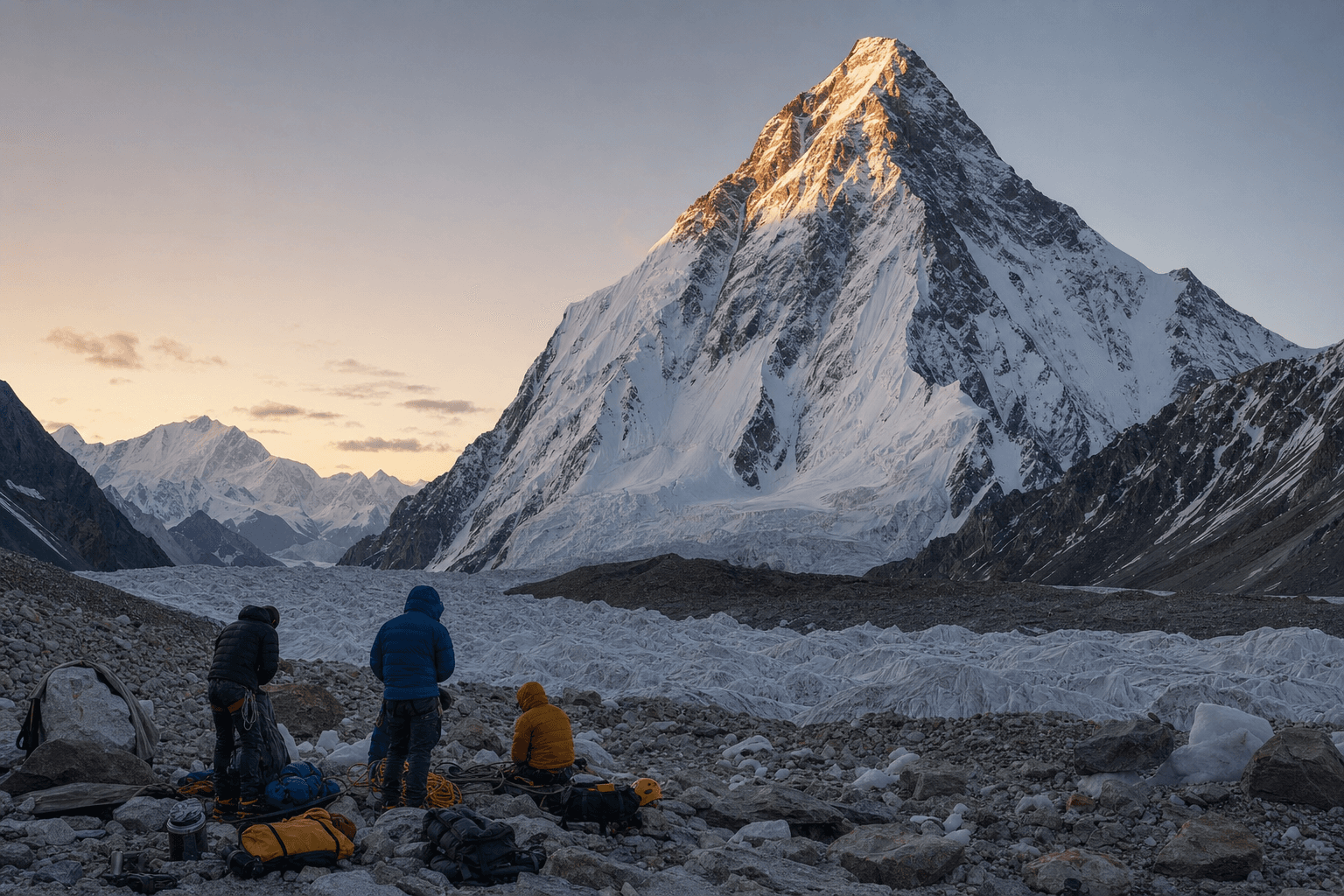
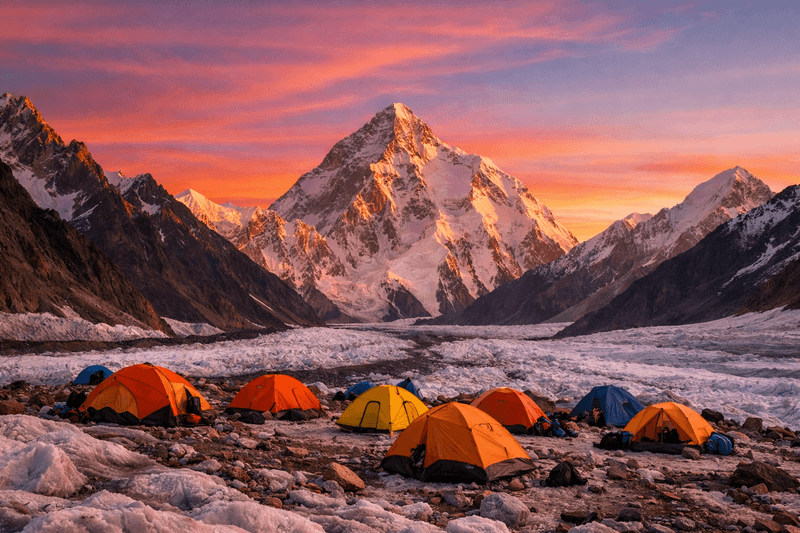
K2 Base Camp is primarily a camping expedition. The team carries sleeping tents, a kitchen, dining shelter, food, fuel and group equipment. Washing is limited, toilets are basic and personal charging depends on the expedition power system.
Everest Base Camp is commonly trekked using teahouses. Standards vary, but participants usually sleep in simple rooms and can buy meals and some additional services along the route. This does not remove the cold, altitude or physical effort, but it changes recovery and daily logistics.
Terrain underfoot
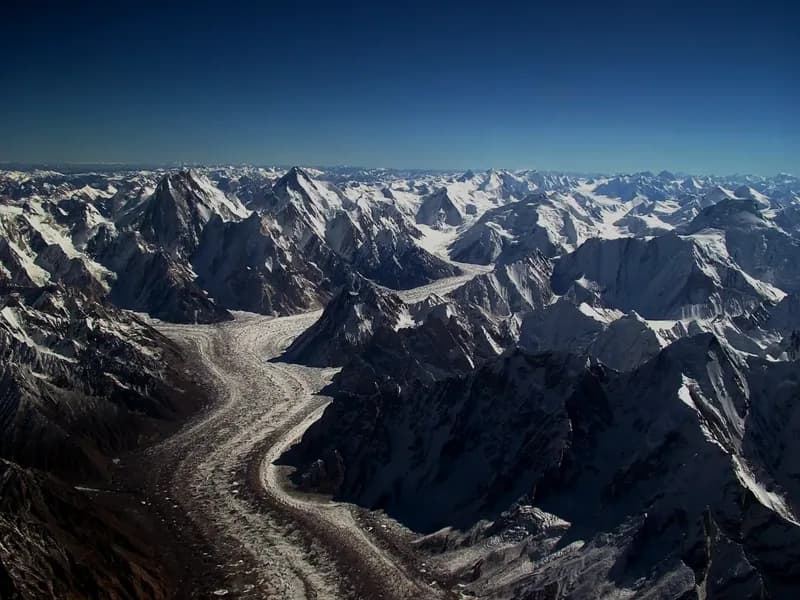
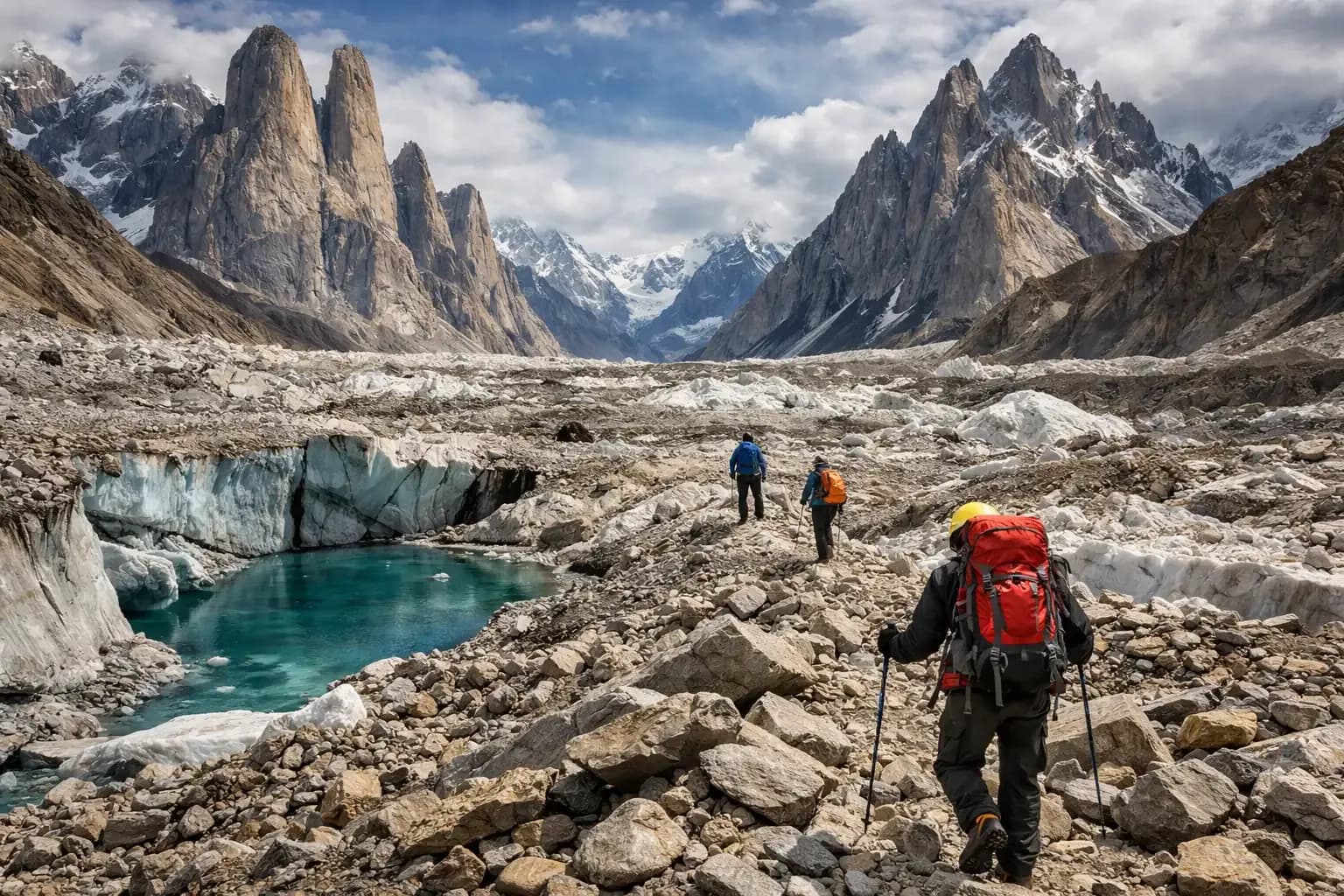
The Baltoro involves sustained travel over rocky moraine, uneven glacier debris, loose stones, meltwater channels and changing route lines. It demands concentration and balance over consecutive days. Walking poles and strong, broken-in boots are important.
The Everest route includes long ascents, stone steps, bridges, maintained trail, settlements and moraine near the upper valley. It remains physically demanding, but the main route is more established and receives much more regular traffic.
Altitude and acclimatisation
Both routes enter altitudes where acute mountain sickness can develop. K2 Base Camp is commonly described at about 5,150 metres. Everest Base Camp is higher, at roughly 5,364 metres, and many Nepal itineraries also visit Kala Patthar at a higher elevation. Exact itinerary design matters more than comparing one final number.
The body responds to the rate of ascent, sleeping altitude, rest, illness and individual physiology. Fitness does not prevent altitude illness. A sensible schedule, honest symptom reporting and willingness to descend are necessary on either trek.
Which trek is physically harder?
For many experienced hikers, K2 Base Camp feels harder overall. The reasons are its length, rougher sustained footing, expedition camping, limited facilities and remoteness. The return along the Baltoro also requires continued effort after reaching the main objective.
Everest Base Camp has its own demanding features: repeated climbing and descending, cold, high sleeping elevations and busy trail sections. A person accustomed to camping may find the Baltoro routine comfortable, while another strong walker may struggle with many nights in a tent. Difficulty is partly personal, but K2 normally requires greater self-sufficiency.
Crowds and the social environment
The main Everest trail can be busy during peak seasons. Trekkers share lodges and paths with local residents, porters, pack animals and many international groups. The Khumbu’s villages and monasteries are central to the journey.
The Baltoro receives far fewer visitors and has no comparable settlement network beyond Askole. Camps can still be active during the main climbing and trekking season, especially around Paiju, Concordia and the base camps, but the space between them feels much more remote.
Culture and local connection
An Everest trek moves through Sherpa communities where daily life, trade, religion and trekking infrastructure share the same valleys. The cultural experience develops continuously along the route.
A K2 journey begins in Baltistan and passes through Askole before entering an uninhabited glacier corridor. Its local connection is expressed strongly through the expedition team: Balti guides, cooks, porters, drivers and operations staff who move the camp system from the roadhead to the upper glacier.
Rescue and medical access
Helicopter services are more routinely associated with Nepal’s trekking regions, although flights still depend on weather, altitude, landing conditions and insurance authorisation. Medical posts and settlements also exist along parts of the Everest approach.
A Baltoro evacuation is more complex. Communication, weather, aircraft availability, official coordination and financial guarantees all affect the response. Teams need a ground plan as well as suitable search, rescue and medical evacuation insurance. A helicopter should never be treated as guaranteed on either route.
Weather and the operating season
The common K2 Base Camp season falls in the Karakoram summer, when access and glacier travel are most practical. Even then, teams can experience heat on the lower approach, rain, snow, strong wind and cold upper camps.
Everest Base Camp is commonly trekked in pre-monsoon spring and post-monsoon autumn. Temperatures, trail traffic and flight reliability vary through those periods. In both regions, historical averages cannot predict the conditions of a specific departure.
K2 Base Camp versus Gondogoro La
Not every K2 itinerary is the same. A standard K2 Base Camp trek can return along the Baltoro. A Gondogoro La itinerary crosses a high, steep pass toward Hushe and may require crampons, harness, helmet and fixed-rope movement.
The pass is subject to snow, avalanche exposure, rockfall, visibility and fixed-rope condition. It cannot be guaranteed. Trekkers comparing K2 with Everest should first decide whether they are considering the standard return route or the more technical Gondogoro La variation.
Who should choose K2 Base Camp?
- Trekkers comfortable with a long tent-based expedition
- People who have trained for consecutive days on rough ground
- Travellers who accept limited washing, power and communication
- Those who can remain flexible when roads, weather or glacier conditions change
- Experienced hikers seeking a remote, self-contained expedition environment
Who may prefer Everest Base Camp?
- Trekkers who prefer lodge accommodation to expedition camping
- People who value more frequent services and inhabited valleys
- First-time high-altitude trekkers with appropriate preparation and guidance
- Travellers who want the cultural rhythm of the Khumbu alongside the mountain objective
Training differences
Both treks require aerobic endurance, leg strength and the ability to walk on consecutive days. For K2, place extra emphasis on long back-to-back hill days, balance on loose ground, recovery while camping and carrying a daypack for many hours.
Stair training alone is not enough. Walk outdoors in the boots and pack you will use. Build volume gradually, include descents and arrive rested rather than trying to gain fitness in the final week.
Our honest conclusion
Choose Everest Base Camp if you want an established lodge trek through inhabited high valleys with more services. Choose K2 Base Camp if you are ready for a longer, rougher and more self-contained expedition through the Baltoro.
Neither should be chosen only for status. The right route is the one that matches your experience, preferred living conditions, available time and ability to manage altitude and uncertainty.
Frequently asked questions
Is K2 Base Camp higher than Everest Base Camp?
No. Everest Base Camp in Nepal is higher. K2 Base Camp is commonly listed at approximately 5,150 metres, while Everest Base Camp is about 5,364 metres.
Which trek is more remote?
K2 Base Camp is substantially more remote because the Baltoro has no continuous settlements or lodge network beyond Askole.
Is K2 Base Camp technical?
The standard route is a demanding trek rather than a technical climb. Gondogoro La variations can involve fixed ropes, crampons and steeper terrain.
Which trek is better for a first high-altitude journey?
Many first-time altitude trekkers find the Everest lodge system easier to manage. A well-prepared first-time participant may still complete K2 Base Camp, but should understand the longer camping commitment and remoteness.
End of field note
Continue your research.
Browse all notes