In this field note8 sections +Close −
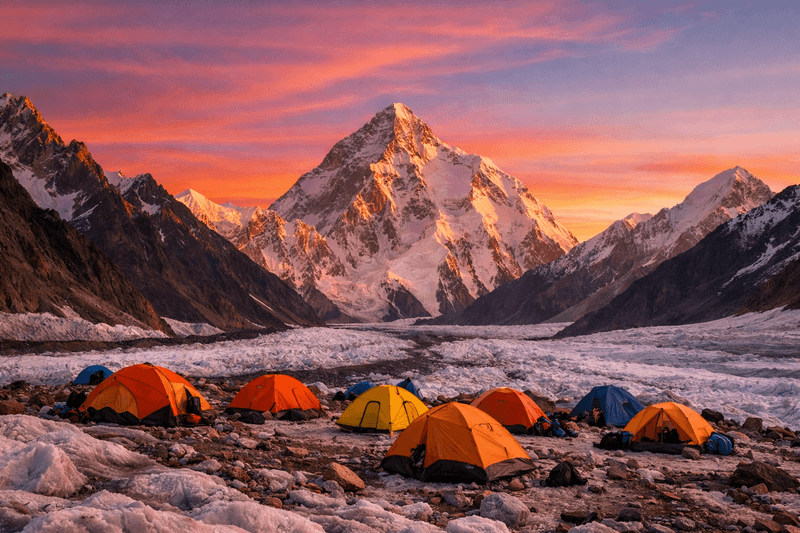
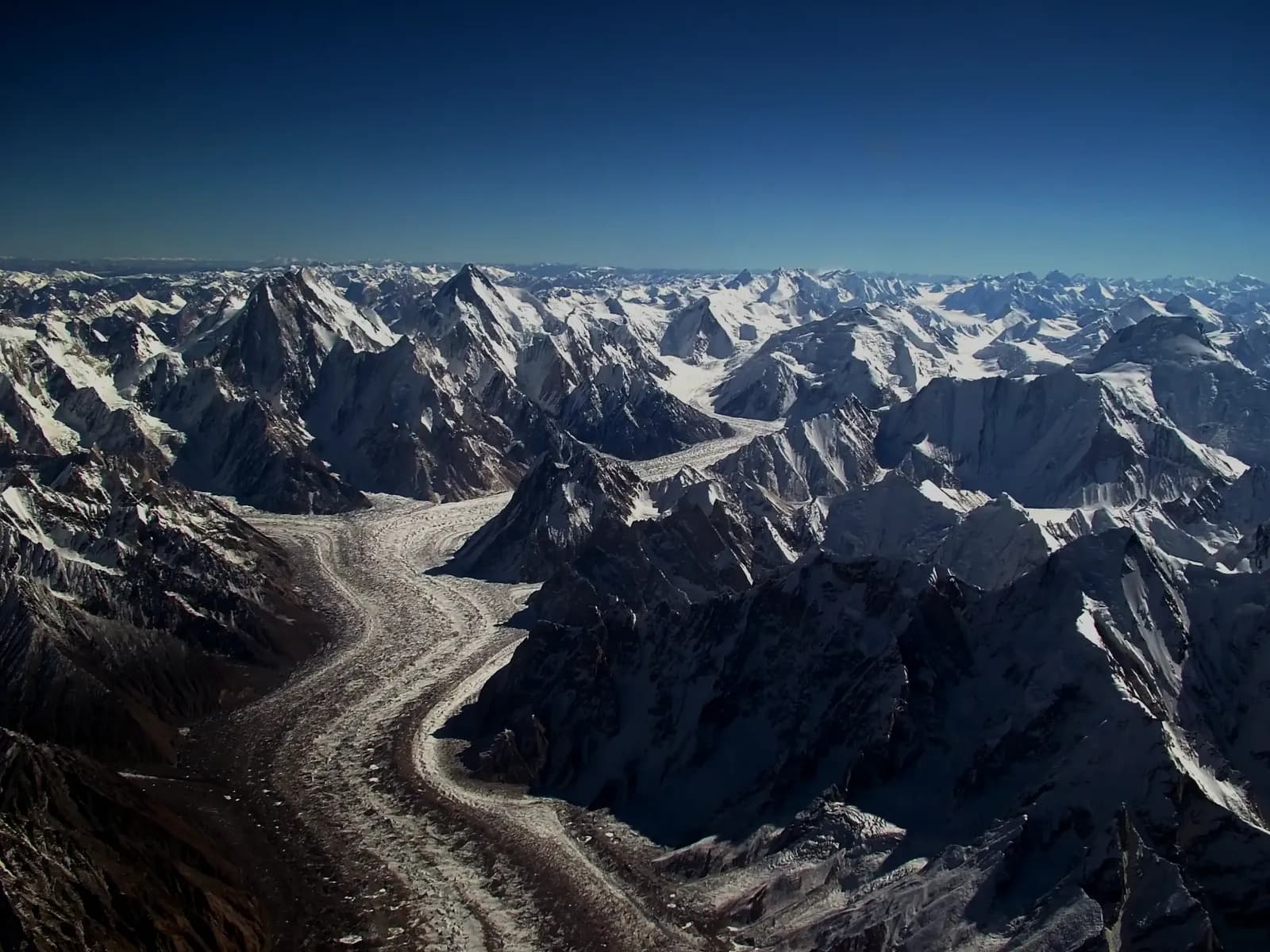
The Baltoro and Biafo begin from the Askole side of the central Karakoram, but they are not the same journey. The Baltoro leads toward Concordia and the great 8,000-metre peaks. Biafo rises toward Snow Lake and, on a full traverse, Hispar La. Both are active glacier systems whose surfaces and access change continuously.
“Changing conditions” does not mean every difference is caused by climate change. Glaciers flow, crevasses open and streams move naturally. Weather, snowfall, debris, surging behaviour and long-term warming interact. For safe travel, the immediate cause matters less than recognising that last season's line is not a guarantee.
The Baltoro: debris, moraine and moving camp lines
Much of the trekking surface is debris-covered ice. Teams cross stones, boulders, melt channels, exposed ice and repeated rises rather than a smooth white glacier. Melt can undermine apparently solid moraine; a small collapse can force a detour. Camp ground also changes as ice beneath debris settles.
Heat affects walking comfort and afternoon water. Rain can loosen slopes on the approaches and turn drainage channels into hazards. Guides compare current reports, scout uncertain sections and choose a line for today's surface.
The Biafo: transition to snow and crevasse terrain
Lower Biafo includes rough moraine and broken glacier. Higher travel toward Snow Lake becomes broader and whiter, but snow can conceal crevasses. Bridge strength changes with snowfall, temperature and time of day. The full Biafo–Hispar traverse adds a high pass and a separate exit, making retreat and resupply more complicated.
Roped travel, technical equipment and team spacing depend on the actual itinerary and conditions. A white surface is not automatically safer than debris-covered ice.
Water changes through the day
Glacier streams commonly strengthen with afternoon melt. A simple morning crossing may become deeper or faster later. Cold weather can reduce a source or freeze hoses and filters. Fine sediment can clog equipment. Teams need adequate bottle capacity and more than one treatment method.
Snowfall can create opposite effects
Fresh snow can improve surface coverage while hiding holes and loading avalanche terrain. Low snow may expose more crevasses and rough ice. Rapid warming after snow weakens bridges and increases wet-snow problems. This is why “more snow” and “less snow” cannot be reduced to safe and unsafe.
Access begins before the ice
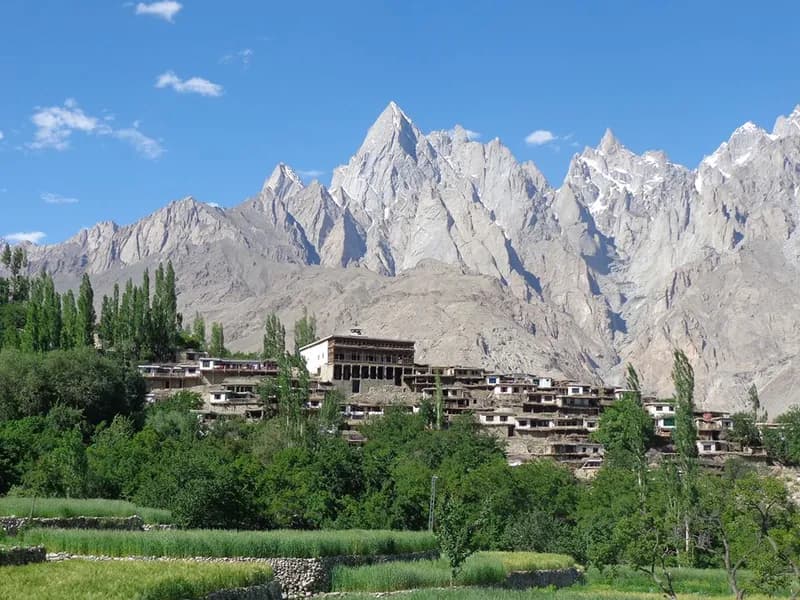
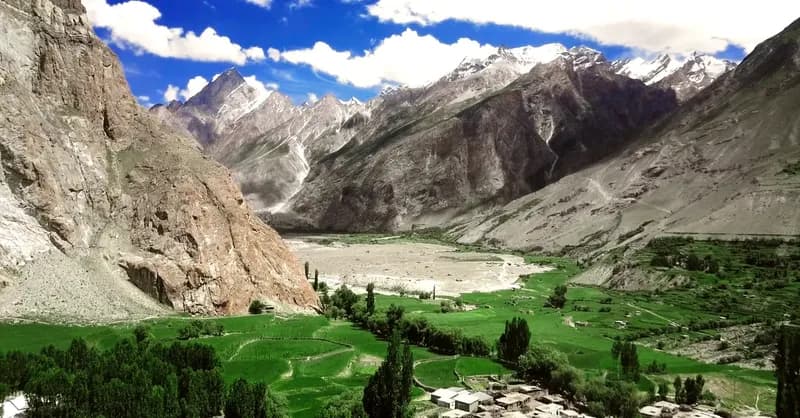
Road and trail conditions between Skardu, Shigar and Askole shape both routes. Flood or landslide damage may add an unplanned walking stage and change porter recruitment, food and timing. A responsible itinerary includes margin before the team reaches the glacier.
How local teams adapt
- Confirm road, bridge and trail reports before leaving Skardu.
- Use recent team observations, then verify the surface directly.
- Start early where heat, snow strength or stream rise makes timing important.
- Carry contingency food, fuel, communications and water treatment.
- Rebalance loads when a detour or access change increases effort.
- Turn back from a pass or crossing when the safe margin disappears.
What trekkers should understand
Fitness helps, but patient foot placement and acceptance of route changes matter as much as speed. Carry waterproofs, insulation, sun protection, medication and water in the daypack. The porter bag may take a different line or arrive later.
Do not pressure a guide to reproduce a photograph, campsite or GPS track. An itinerary names an objective; it does not freeze an active glacier.
Frequently asked questions
Is the Baltoro easier than Biafo?
The classic Baltoro route is more established, while a full Biafo–Hispar traverse is generally more committing. Both involve remote rough glacier travel.
Can the route change during one season?
Yes. Meltwater, collapse, snowfall and traffic can change the preferred line over weeks or days.
Are these treks possible without local support?
Their remoteness, permits, camps, staffing and changing glacier terrain make experienced licensed local support the responsible choice.
End of field note
Continue your research.
Browse all notes