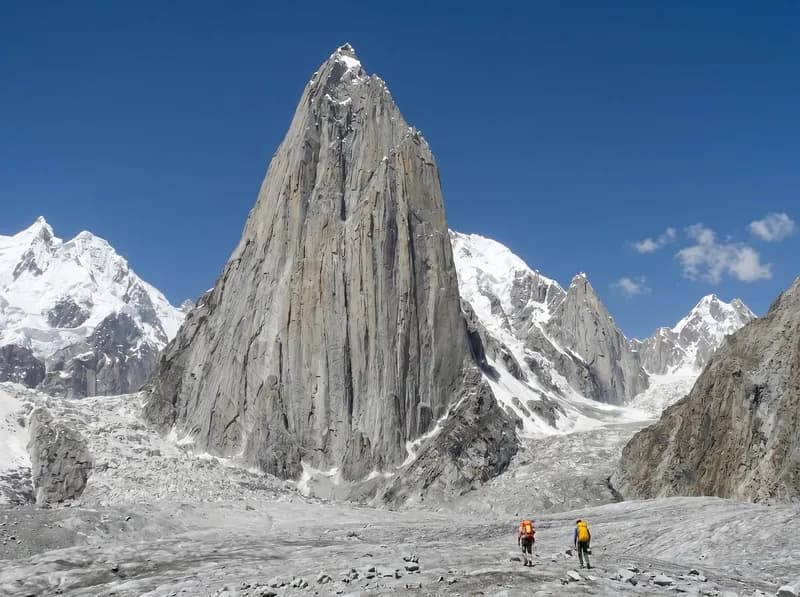
In this field note14 sections +Close −
- 01The climbing areas are not interchangeable
- 02Trango Towers: expedition rock climbing
- 03Nangma, Charakusa and the Hushe side
- 04Grade conversion is only the beginning
- 05Season and wall aspect
- 06Permits and documentation
- 07Team structure and local support
- 08Equipment and repair strategy
- 09Acclimatisation and fitness
- 10Rescue and retreat
- 11Low-impact big-wall practice
- 12Expedition checklist
- 13Internal planning links
- 14Frequently asked questions
Rock climbing in Gilgit-Baltistan ranges from short acclimatisation routes near settled valleys to multi-week big-wall expeditions on some of the world’s most serious granite towers. Calling all of it “rock climbing” hides the differences that matter: altitude, approach, objective length, retreat, aid ability, glacier access and the time a team can remain self-contained.
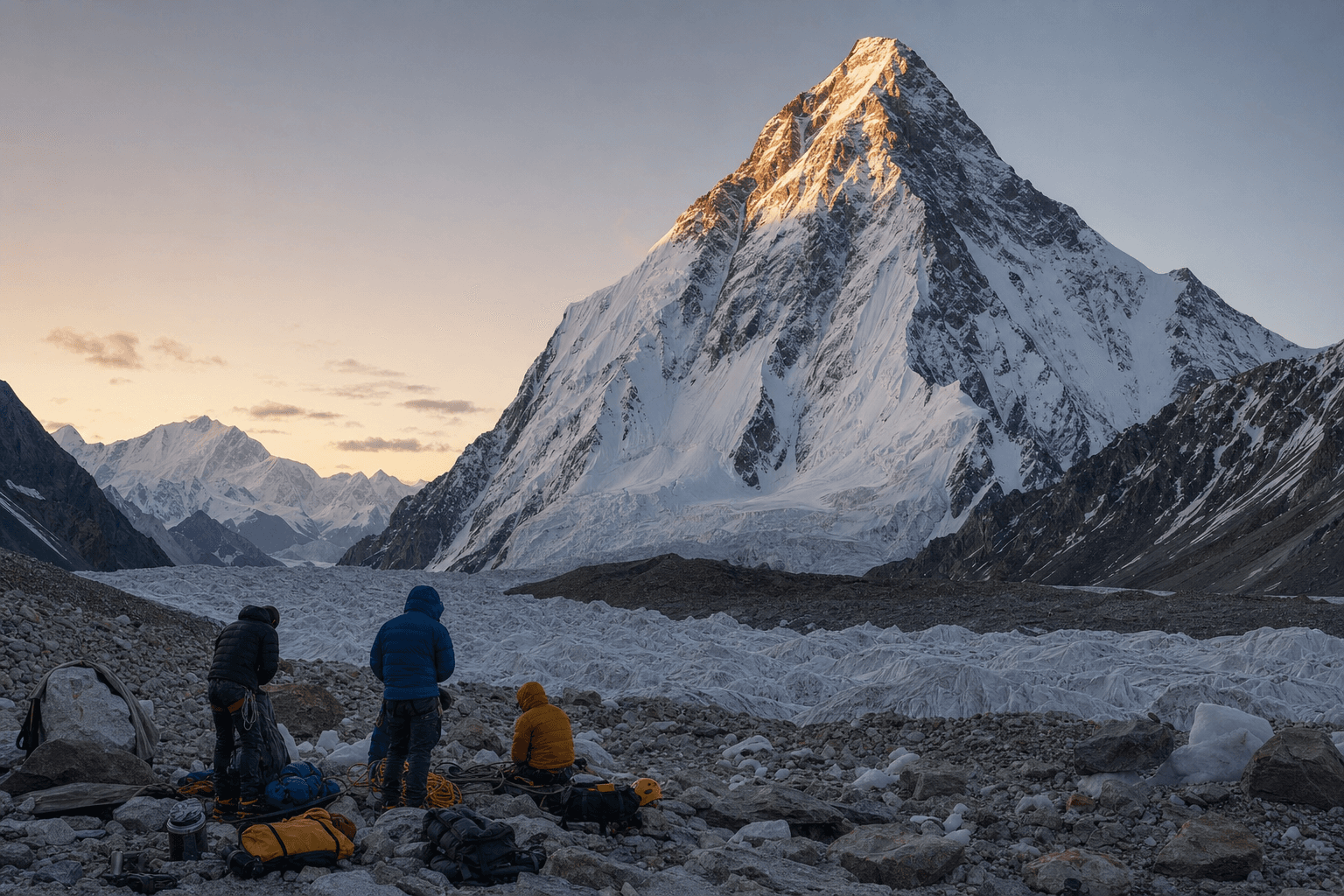
Skardu is the main operations base for climbing in Baltistan. Equipment, food, fuel, porters, vehicles, permits and communications are organised here before teams move toward Askole, Hushe, Kande or another roadhead. A climber who arrives with a gym grade and a photograph of a tower still has several planning questions to answer.
Local operator’s rule: Choose the valley only after choosing the style of climbing. A short granite programme and an alpine big wall require different permits, support, rescue plans and partners.
The climbing areas are not interchangeable
Area or objective | Character | Access model | Appropriate experience |
|---|---|---|---|
Skardu and lower-valley crags | Short rock routes and training | Road-based | Competent outdoor climber or coached progression |
Nangma Valley | Granite towers and alpine rock | Kande approach and camp | Multi-pitch and alpine experience |
Charakusa and Hushe | Rock, mixed faces and high towers | Hushe plus glacier camps | Strong alpine team |
Trango group | Very large high-altitude granite walls | Askole and Baltoro approach | Expert big-wall expedition climbers |
Shipton Spire and Uli Biaho | Technical big walls in the Baltoro corridor | Remote glacier expedition | Expert aid, free and expedition systems |
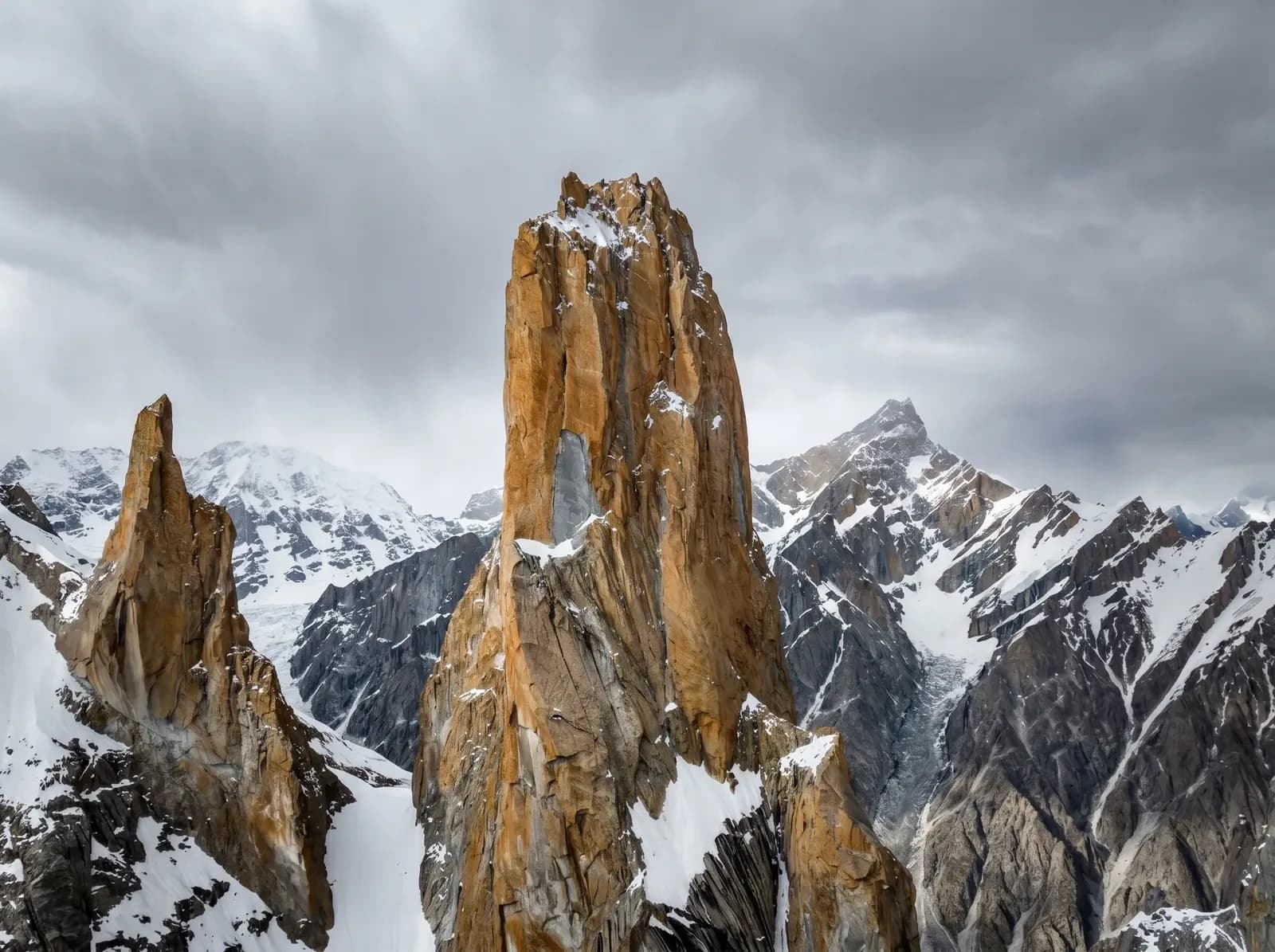
The American Alpine Journal archive is one of the best starting points for researching historical ascents. It records, for example, long technical routes on the Trango group and climbing in Nangma and Charakusa. Reports are valuable but may use approximate heights, old access information or grading conventions. Verify every operational detail for the current season.
Trango Towers: expedition rock climbing
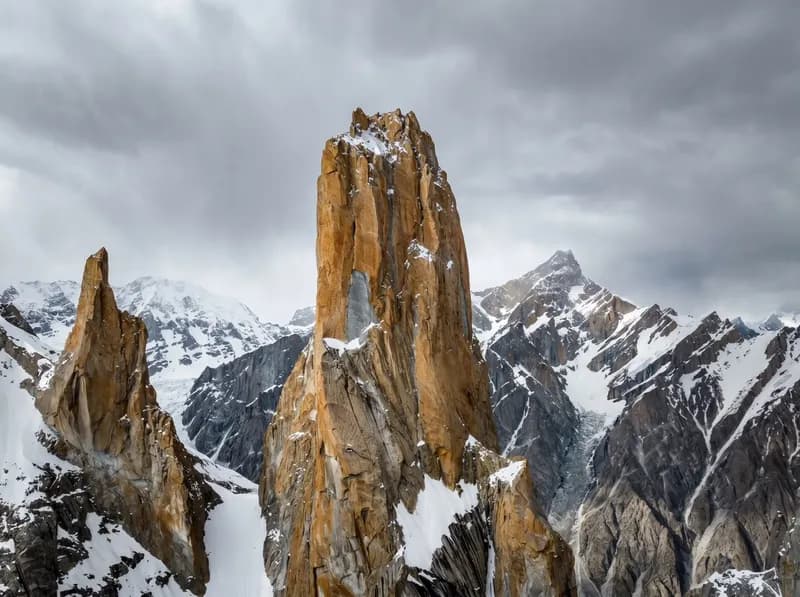
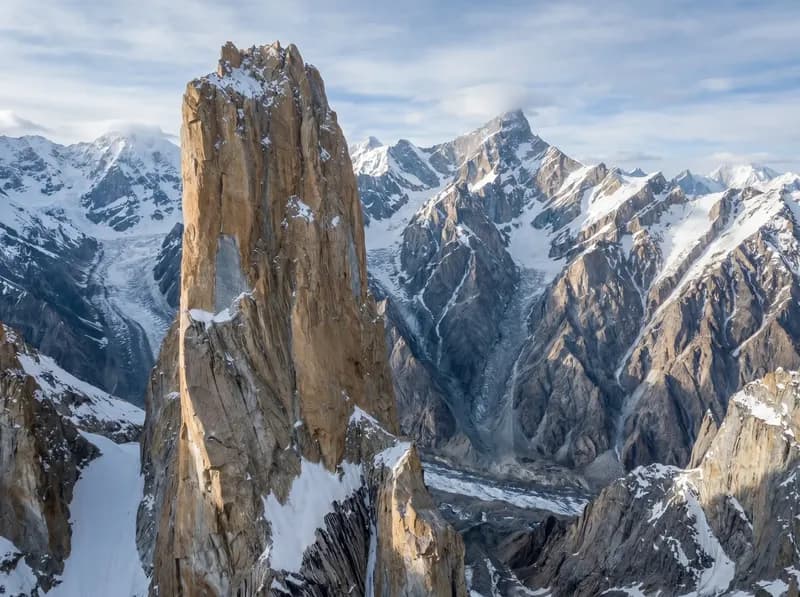
The Trango group is not a casual add-on to a K2 Base Camp trek. Approaching through Askole and the Baltoro corridor involves camping, porter logistics and glacier terrain. The climbing combines altitude with huge walls, changing weather, rockfall or ice hazards, complicated retreat and days of exposure.
Historic routes on Nameless Tower and Great Trango include free and aid climbing at a very high standard. An AAC account of the Eternal Flame route describes 35 pitches and sustained difficult climbing. Modern conditions, fixed material and route state must be assessed rather than inferred from the first-ascent report.
Teams need a clear plan for acclimatisation, load carries, base camp, wall equipment, food, water, waste and retreat. Portaledges and haul bags must be inspected before Pakistan. Specialised replacements cannot be assumed in Skardu.
Nangma, Charakusa and the Hushe side
The valleys reached through the Hushe and Kande side can provide comparatively direct access to granite towers, but “accessible” is relative. Approaches still involve local transport, camps, porters and high-altitude terrain. Routes range from exploratory alpine climbs to long technical walls.
An early AAC report on Nangma Valley granite describes the predominance of granite and multi-pitch climbing on Changi Tower. Charakusa records show a mixture of steep rock, ice and serious alpine objectives. Climbers must identify whether their intended line is primarily rock, mixed or dependent on glacier and snow conditions.
Local communities are part of the access system. Ask before photographing people or property, follow village guidance and keep camps within agreed areas. A climbing team’s relationship with the roadhead community affects future access as well as the present expedition.
Grade conversion is only the beginning
French, UIAA, YDS, British, aid and commitment grades appear in Karakoram reports. A numerical conversion does not capture altitude, protection quality, rock condition, remoteness or retreat. A team that comfortably climbs a grade at sea level may move much more slowly above 5,000 metres with a haul bag.
Evaluate the complete route
- Hardest free and aid pitches
- Sustained grade, not only the crux
- Length and expected wall days
- Natural protection and required rack
- Fixed anchors or ropes and their uncertain condition
- Snow, ice or mixed approaches
- Objective hazards such as rockfall and serac exposure
- Bivouac sites and water strategy
- Descent and retreat complexity
- Altitude and acclimatisation
A conservative schedule should use the team’s demonstrated speed on comparable routes, then add margin for weather and altitude. Fast claims from elite climbers are not a planning standard.
Season and wall aspect
Summer is the general operating period for high Karakoram rock objectives because roads, approaches and glacier camps are most practical. Specific wall aspects behave differently. Sun can dry south and west faces while shaded aspects retain snow and ice. Late summer may offer drier rock on some lines but shorter days and colder shaded conditions.
An old Trango report notes good late-summer conditions on southern faces while an unsunned northeast buttress remained icy. That is useful context, not a forecast. Current snowfall, freeze–thaw, seepage and wind matter more than the calendar alone.
Lower crags and valley programmes can have a wider season, subject to heat, rain and local access. We often use them for skills review and movement before a remote objective.
Permits and documentation
Permit requirements depend on the peak, height, zone and activity. A general tourist visa or trekking permission does not automatically authorise an ascent. Foreign teams should work through a licensed Pakistani operator and use the official Pakistan Online Visa System and current Gilgit-Baltistan tourism regulations.
We normally need passport details, exact objective, dates, team list, climbing résumés, route information, insurance and supporting documents well before arrival. Exploratory teams should not use a vague valley name when their activity may require peak-specific approval.
Team structure and local support
A technical climbing partner is not replaced by an expedition guide unless that service has been specifically agreed. Define who leads pitches, who manages medical decisions, who coordinates porters and who controls communication with Skardu.
Local high-altitude staff bring route, language and logistical knowledge, but their technical role must be explicit. Do not assume a trekking porter will carry on steep glacier or wall terrain. Loads, insurance, equipment and pay need to match the assigned work.
Information to share before mobilisation
- Complete climbing résumé for every member
- Recent multi-pitch, aid and self-rescue experience
- Medical conditions and medications
- Intended route plus alternatives
- Rack, rope and haul system inventory
- Expected wall days and food plan
- Communications equipment and schedule
- Rescue and repatriation insurance details
Equipment and repair strategy
The rack is route-specific, but remote teams should think beyond the published topo. Bring enough rope to retreat the relevant terrain, material for replacing unsafe anchors within accepted ethics, and a repair kit for portaledges, haul bags, ascenders, stoves and footwear.
Core categories
- Climbing ropes, static haul line and tag or retreat system
- Full traditional rack and route-specific aid equipment
- Helmets, harnesses, ascenders and personal tethers
- Portaledge, fly and secure wall shelter where required
- Haul bags, durable water containers and waste system
- Glacier equipment for the approach
- Radios or agreed communication devices
- Expedition first aid, personal medication and shelter
- Spares for stoves, headlamps and critical hardware
Equipment should be marked and inventoried before Askole. A missing connector discovered at base camp may end an objective.
Acclimatisation and fitness
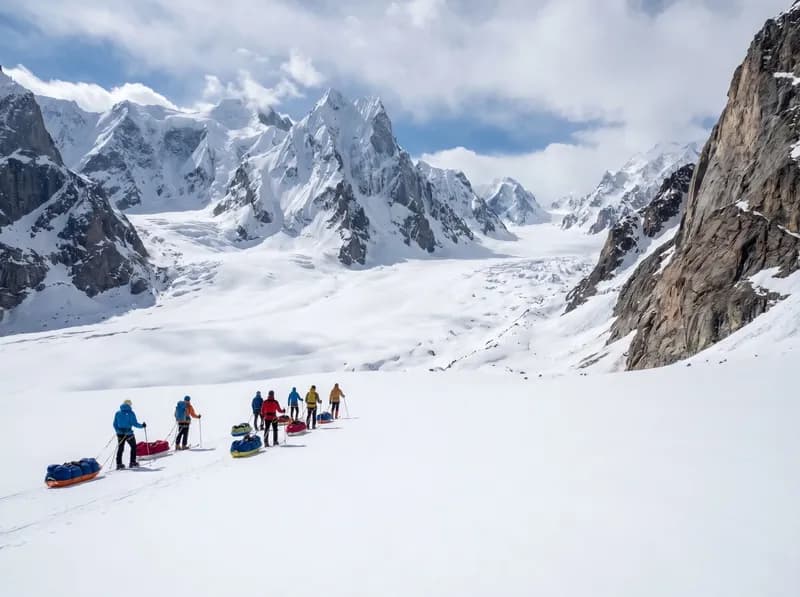
Rock ability does not prevent altitude illness. Teams need a staged approach and enough time to recover before climbing hard. The Baltoro approach can assist acclimatisation, but it also creates fatigue. A rest day is useful only if people eat, hydrate, sleep and address illness rather than continuing heavy load carries.
Training should include long multi-pitch days, hauling, ascending fixed ropes, loaded approaches and consecutive effort. Practise self-rescue until systems remain reliable when cold and tired. A climber should not first learn to pass a knot or raise a partner on the wall.
Rescue and retreat
Helicopters cannot pluck a climber from every wall. Weather, altitude, rotor clearance, landing terrain, authorisation and aircraft availability impose limits. The team’s first rescue system is its own ability to stabilise, lower, haul or retreat.
Insurance must cover Pakistan, the route altitude, rock climbing or mountaineering, search and rescue, medical evacuation and repatriation. Many recreational policies exclude aid climbing, big walls, unclimbed routes or work above a stated elevation.
Define decision points before climbing: latest start, maximum weather window, minimum food and fuel reserve, acceptable fixed-rope condition and the symptoms that end an ascent. Agreement at base camp reduces summit-driven conflict on the wall.
Low-impact big-wall practice
Carry human waste according to the route and camp system; do not throw bags or food from the wall. Avoid leaving excess fixed rope, batteries, damaged equipment or food caches. Replace dangerous anchors thoughtfully rather than adding hardware without need. Photograph and report abandoned expedition material when removal is unsafe so a later plan can address it.
At base camp, follow the same waste, water and staff-welfare practices expected of a trekking team. Technical ambition does not excuse a larger mess.
Expedition checklist
Before confirming
- Verify route history, grade, aspect and retreat.
- Confirm current permit category and processing time.
- Match every partner’s recent experience to the objective.
- Obtain written insurance confirmation.
- Allow weather and flight contingency days.
Before leaving Skardu
- Inspect ropes, rack, haul system and repair kit.
- Weigh and waterproof all loads.
- Confirm communication and check-in schedule.
- Review base-camp and wall waste systems.
- Reconfirm alternatives and turnaround rules.
Internal planning links
Compare our Trango Tower Rock Climbing, Great Trango Tower Climbing and Shipton Spire Expedition. Read trekking versus mountaineering, the Pakistan visa and permit guide and guided versus private expedition.
Frequently asked questions
Is Gilgit-Baltistan suitable for beginner climbers?
Selected lower-valley rock programmes can be designed for developing outdoor climbers. The famous Karakoram towers are expert expedition objectives and are not suitable first multi-pitch climbs.
What is the best season for Trango Towers?
Summer into suitable late-summer windows is typical, but wall aspect, snow, seepage, weather and route condition decide what is climbable. Dates should be route-specific.
Do I need a permit for rock climbing?
Requirements depend on location, peak, height and activity. High towers and regulated objectives generally require operator-supported documentation. Confirm current rules before booking flights.
Can I hire all technical equipment in Skardu?
Do not assume so. Bring personally fitted and route-critical equipment. Any local equipment provision should be itemised and verified before the expedition.
Are fixed anchors reliable?
Never assume they are. Age, weather, corrosion, rock movement and previous use affect fixed material. Teams need the equipment and judgement to inspect, back up or retreat.
Can a helicopter rescue climbers from a big wall?
Direct wall rescue may be impossible. Aircraft operations depend on weather, altitude, terrain and authorisation. Teams must have strong self-rescue and retreat systems.
End of field note
Continue your research.
Browse all notes