In this field note9 sections
A route decision before a booking decision
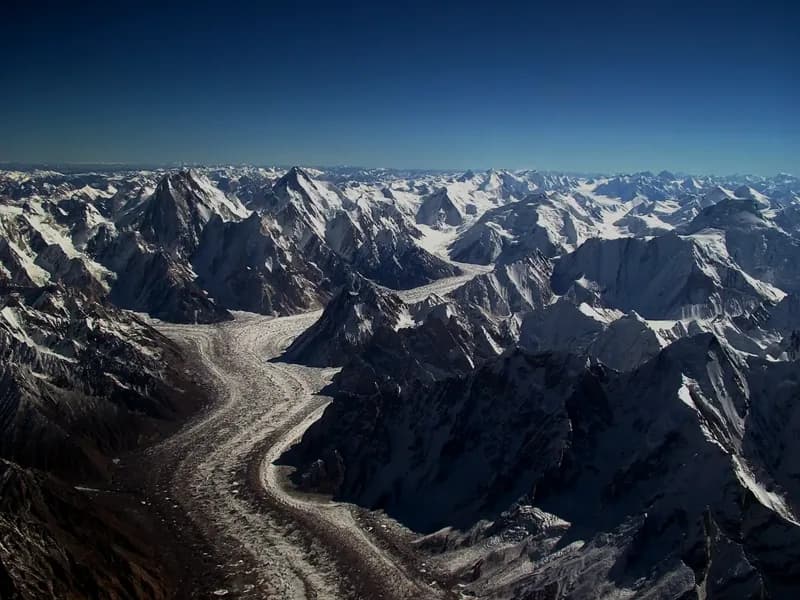
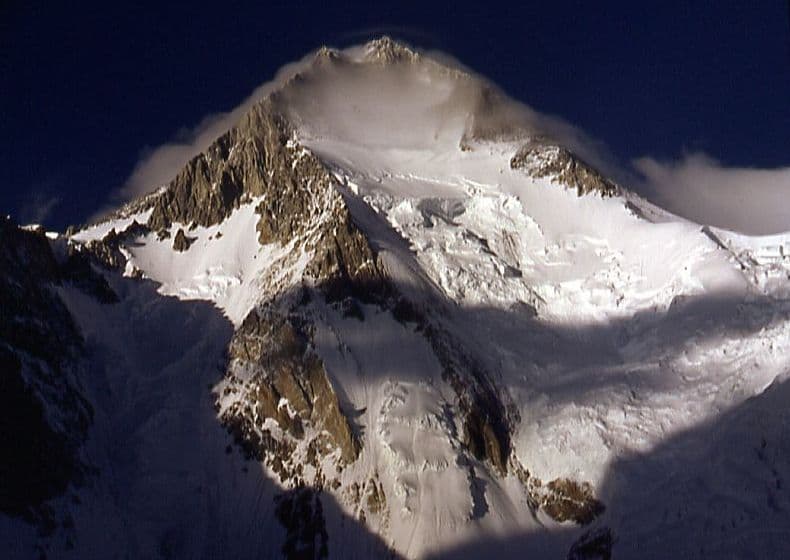
Gasherbrum I and Gasherbrum II share a remote Karakoram approach, but they are separate objectives. A shared region does not make their upper routes, descent demands or support requirements interchangeable. This comparison helps you prepare questions for an expedition leader; it does not rank either mountain as safe or confirm a current itinerary.
Compare the proposed routes
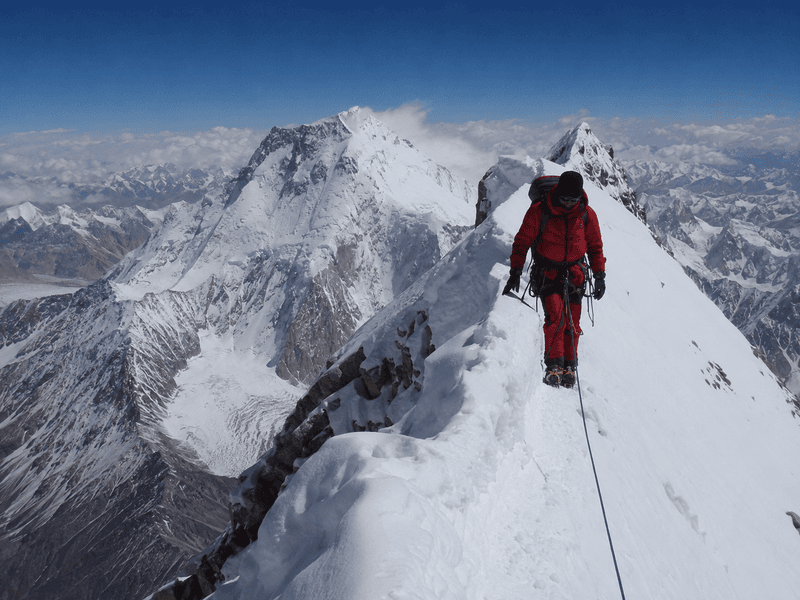
American Alpine Journal accounts identify the Japanese Couloir on Gasherbrum I and the southwest ridge normal route on Gasherbrum II. These are historical descriptions. The route proposed for your season, including changes around crevasses and fixed ropes, needs recent confirmation. AAJ: Gasherbrum I attempt; AAJ: Gasherbrum II southwest face and normal-route context.
Ask the leader to explain the specific climbing and descent tasks on each objective: movement on steep snow or ice, transitions between pitched or fixed-rope sections, camp management and retreat. A mountain’s reputation as a first 8,000-metre peak is not an individual readiness assessment.
Use an experience record
Send a concise climbing record with routes, dates, altitudes, nights at altitude, conditions, equipment used and the level of support. Include occasions when you turned around. The useful comparison is between your demonstrated skills and the proposed route, rather than between summit heights alone.
Confirm support and contingency separately
For each option, request a written description of base-camp support, high-altitude staffing, equipment responsibilities, medical arrangements, communications and retreat plans. Ask which services depend on other teams or seasonal arrangements. This article makes no claim about Namla’s current staffing ratios, oxygen provision, rope installation or rescue capacity.
If considering both peaks, ask how the extra objective changes permits, time, supplies and recovery. Do not assume a second summit can be added within spare days or without separate arrangements.
Confirm the current expedition proposal
Confirm current route descriptions, the experience assessment process and whether combined itineraries are offered. Current permits, durations, costs, oxygen policy and seasonal availability belong in the written journey proposal.
Related planning
Compare the current Gasherbrum I expedition and Gasherbrum II expedition pages. For a different comparison, read Broad Peak versus Gasherbrum I. Preparation advice is in the expedition fitness guide.
Bring a climbing record to the objective discussion
For each mountain, ask the leader to explain the proposed route tasks, the evidence they need from your climbing record and the support that would actually be contracted. Neither objective is an easy or beginner-friendly 8,000-metre expedition. A comparison cannot replace individual assessment.
Use the inquiry on the Gasherbrum I journey or Gasherbrum II journey. Send your dates, previous expedition routes, nights at altitude, technical experience and preferred support style. Ask for the route and acceptance discussion before choosing a departure. Personal insurance remains a separate traveller expense unless explicitly included in writing.
Frequently asked questions
Does choosing Gasherbrum II remove the need for expedition experience?
No. Both are serious high-altitude objectives. The operations team must assess your experience against the proposed route; this article does not set or waive Namla's acceptance criteria.
Can the same support description be used for both peaks?
Do not assume so. Request a separate written description of the route, high-altitude support, equipment responsibilities and retreat plan for each objective.
Is a combined expedition included in either itinerary?
No combined service is established by this comparison. Ask whether it is offered and how an additional objective changes the written itinerary, permits, support and costs.
Sources
American Alpine Journal — Gasherbrum I and II account, publication year 2022
American Alpine Journal — Gasherbrum II, climb year 2018, publication year 2019
End of field note
Continue your research.
Browse all notes