What K2 is
K2 rises to 8,611 meters in the central Karakoram, making it the second-highest mountain on Earth. Height alone does not explain its reputation. K2 is remote, steep, cold, technical, and exposed to fast-changing weather. It stands in a region where the approach itself is a major undertaking, and where the mountain is reached only after days of travel through one of the largest glacier systems outside the polar regions.
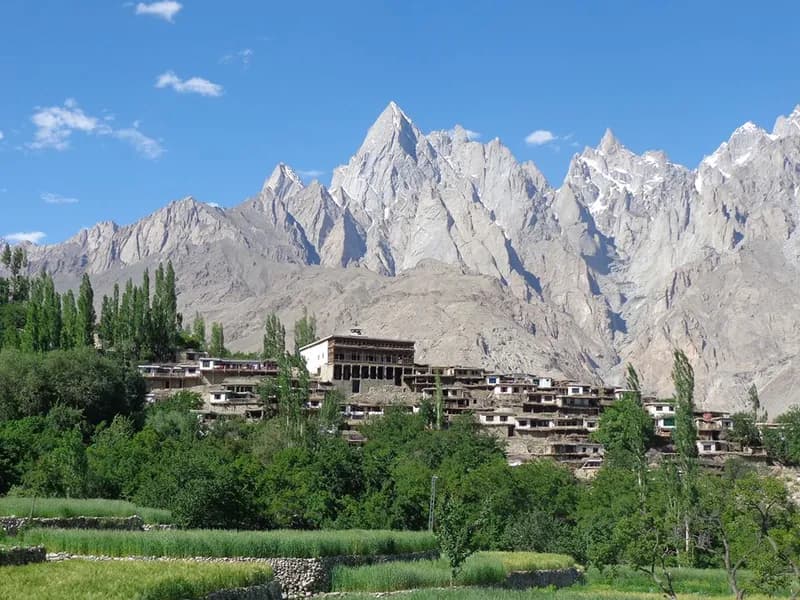
On the Pakistan side, K2 is approached through Gilgit-Baltistan: usually Islamabad to Skardu, Skardu to Askole by road, and then on foot through the Baltoro corridor. By the time a team sees K2 clearly from Concordia or moves toward base camp, it has already passed through river valleys, dusty tracks, hot approach days, cold nights, moraine, glacier camps, and increasing altitude.
Why K2 feels different from other famous mountains
Some mountains are famous because they are high. K2 is famous because everything about it is serious. The mountain has no easy side. The weather is less forgiving, the climbing is steeper, and the margin for error is thin. Even strong teams spend much of an expedition waiting: waiting for weather, waiting for route conditions, waiting for acclimatization, waiting for the right moment to move higher.
The name Savage Mountain is often used carelessly, but it points toward a real truth: K2 is not a mountain that can be forced. Ambition must be balanced by judgment. A safe expedition depends not only on strength, but on timing, retreat discipline, camp management, communication, oxygen strategy where used, and the ability to make conservative decisions under pressure.
The route to base camp
The standard trekking approach to K2 Base Camp follows the Baltoro system. After Askole, teams move through a sequence of camps that may include Jhola, Paiju, Khoburtse, Urdukas, Goro, Concordia, and then onward toward the Godwin-Austen Glacier and K2 Base Camp. Names and exact camps can vary by itinerary, weather, route condition, and operator planning.
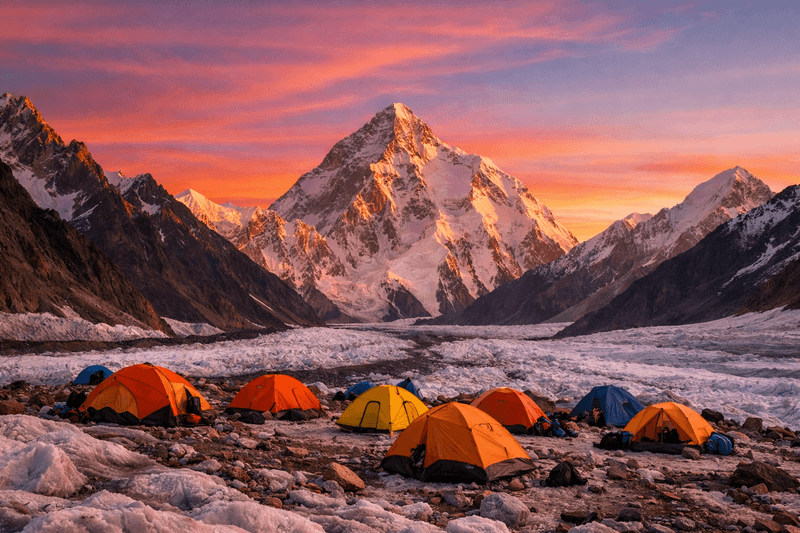
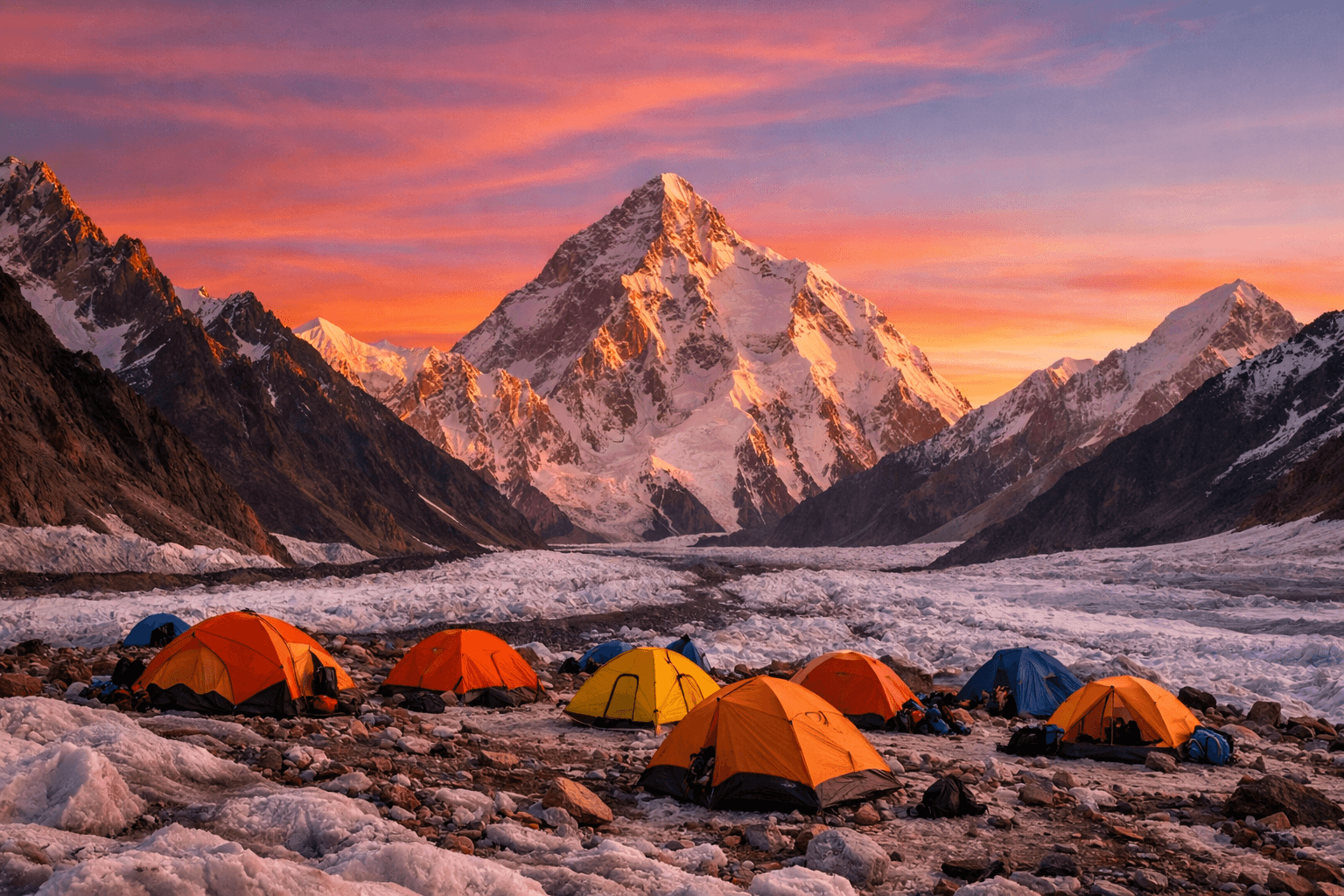
Concordia is one of the great mountain amphitheaters of the world. K2, Broad Peak, Gasherbrum IV, Mitre Peak, and many other summits define the skyline. For trekkers, Concordia and K2 Base Camp are often the emotional center of the journey. For climbers, they are the beginning of a longer period of load carries, rotations, weather watching, medical self-monitoring, and high-altitude decision-making.
K2 for trekkers
Trekking to K2 Base Camp is not technical climbing, but it is still a serious high-altitude journey. The route is long, remote, and physically demanding. Trekkers should expect rough trails, moraine, glacier travel conditions, basic camps, cold nights, strong sun, dust, wind, and days when progress is slow. The difficulty is cumulative. A person may feel good for two or three days and then discover that altitude, poor sleep, heat, and repeated walking hours have started to compound.
- Train for back-to-back walking days, not just one strong hike.
- Break in boots well before arrival in Pakistan.
- Use trekking poles if they help your knees and balance on moraine.
- Protect feet early; small blisters can become trip-shaping problems.
- Respect pacing. The Baltoro rewards steady movement more than speed.
K2 for climbers
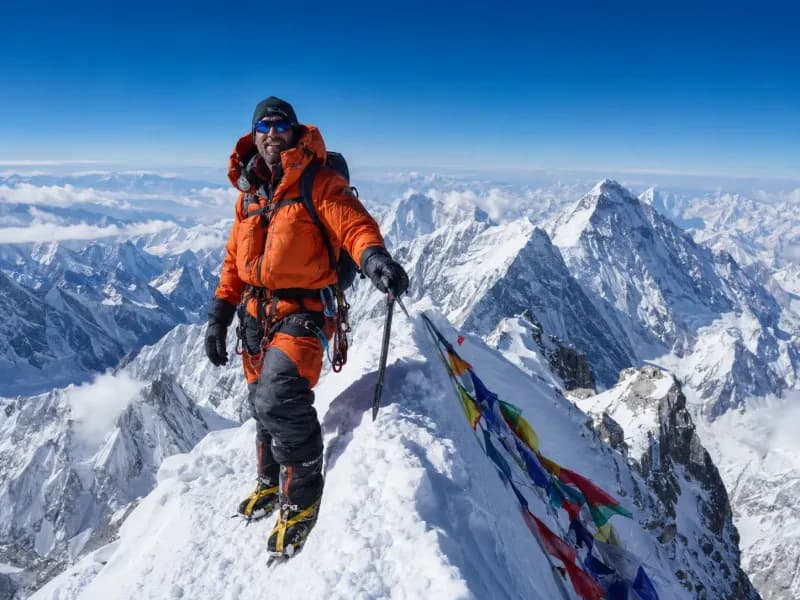
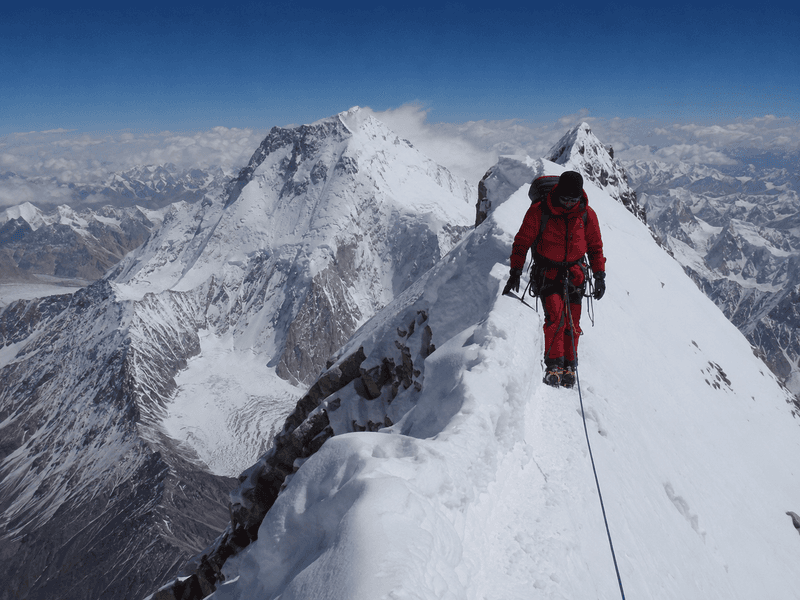
Climbing K2 is a high-altitude expedition objective requiring deep experience. The commonly discussed route from Pakistan is the Abruzzi Spur, but normal route does not mean safe or simple. The climb involves steep snow and ice, mixed terrain, high camps, objective hazard, severe cold, and long exposure above 7,000 and 8,000 meters.
At altitude, every system becomes more fragile. Eating, drinking, sleeping, clipping, melting snow, changing gloves, checking oxygen equipment, and making decisions all take more effort. A good climber on K2 is not only technically capable, but organized, patient, and honest about physical condition. Summit ambition must never outrun descent planning.
Base camp life
K2 Base Camp is a seasonal working settlement of tents, kitchens, communications, medical kits, solar panels, drying lines, oxygen storage, climbing gear, food, fuel, and route information. It can feel lively in good weather and very isolated in storms. The mountain is always present, but much of expedition life is made of small routines: checking forecasts, drying socks, repairing gear, eating enough, drinking enough, monitoring headaches, and preparing loads.
Good base camp systems reduce risk. Clean kitchens, waste management, medical monitoring, clear radio schedules, careful equipment storage, and honest guide briefings all matter. The summit may be the headline, but base camp discipline is what keeps people functioning long enough to make good decisions.
Weather and risk
Weather is one of the defining forces on K2. A clear morning can turn into a dangerous afternoon. Wind can strip heat quickly. Snowfall can change avalanche conditions. Forecasts are useful, but they are never a promise. Teams must combine forecast models with local observation, route reports, and conservative judgment.
- Altitude reduces physical reserve and slows recovery.
- Cold affects hands, feet, hydration systems, batteries, and decision-making.
- Wind can make otherwise manageable terrain dangerous.
- Rockfall, icefall, avalanche conditions, and crevasses are objective hazards.
- Helicopter rescue is weather-dependent and cannot be treated as guaranteed.
How to prepare
Preparation depends on whether the objective is trekking or climbing. Trekkers need durable endurance, leg strength, stable ankles, broken-in boots, and the ability to walk for many days with a daypack. Climbers need expedition history, technical competence, high-altitude judgment, cold-weather systems, and the ability to operate as part of a disciplined team.
For both trekkers and climbers, paperwork and insurance matter. Remote Karakoram travel should include high-altitude insurance coverage, emergency evacuation planning, permit clarity, and realistic buffer days. A tight schedule may look efficient before departure, but K2 country rarely rewards tight schedules.
Final field note
K2 is not a mountain for hurry. It asks for preparation, humility, patience, and respect for scale. Whether you see it from Concordia, walk to its base camp, or attempt it as a climbing expedition, the mountain leaves a lasting impression because it feels fully alive: remote, severe, beautiful, and indifferent to human plans.
End of field note
Continue your research.
Browse all notes