In this field note6 sections
Choose a Biafo out-and-back if you want to approach Snow Lake and return toward Askole. Choose a Snow Lake–Hispar La traverse if your aim is to continue across the pass and descend the Hispar Glacier toward Hispar village. They share a glacier approach, but the turnaround, onward terrain and transport plan are different. Neither itinerary should be selected from its name alone.
For planning from Skardu, the useful first question is where you intend to finish. A journey returning to Askole and a journey leaving through Hispar need different arrangements at the far end. This article compares those decisions; the booked journey page and written itinerary should specify camps, duration, prices and services.
Start with the route shape
Biafo out-and-back: agree the furthest point
An out-and-back follows the Biafo from the Askole side and returns along that glacier corridor. The current Namla Biafo Glacier Trek describes an approach to Snow Lake followed by a return. Ask the team to identify the intended furthest camp and turnaround point on your particular itinerary.
“Biafo trek” is not a promise that every itinerary reaches the same location. A shorter Biafo programme, a Snow Lake visit and an attempt to cross Hispar La should not be treated as interchangeable descriptions. Check whether Snow Lake is a planned walking objective, an overnight location, or an option dependent on progress and conditions.
Full traverse: understand the separate exit
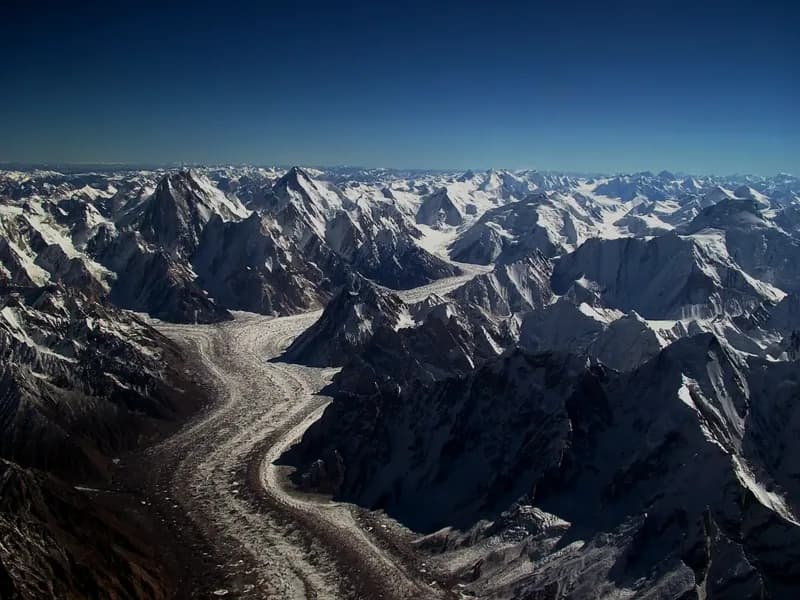
The Snow Lake and Hispar La Trek continues from the Biafo side across the Hispar La area and down the Hispar glacier system. Ask for the planned walking finish and onward vehicle arrangement in the same document. A map showing the pass without the exit stages leaves out a substantial part of the decision.
The Gilgit-Baltistan tourism department identifies the Biafo–Hispar connection with Snow Lake. That geographic link does not establish that the crossing is open, suitable for a particular group, or available on particular dates. Those are current operational questions.
Compare commitment before comparing scenery
Both options involve remote glacier travel and camping. Returning on the Biafo removes the planned Hispar La crossing; it does not turn the approach into a maintained lowland trail. Equally, reaching Snow Lake is not evidence that continuing over the pass is an appropriate next step.
Ask the operations team to compare these points against your actual experience:
- The surface and glacier travel expected on the proposed line, rather than a previous season's track.
- The team's method for assessing participant experience and the practical skills it expects.
- Equipment responsibilities and any preparation or instruction needed before departure.
- The point at which the onward route and exit plan are reassessed.
- What happens to transport, food, staff arrangements and your onward bookings if the original exit cannot be used.
This is a booking checklist, not a technical instruction for crossing crevasses or a statement of Namla's acceptance criteria. The field team must review current route conditions and participant suitability.
Plan the finish as carefully as the approach
An Askole return and a Hispar finish place the team at different roadheads. From the Skardu planning desk, that changes the conversation about collection, onward accommodation and the next fixed travel commitment. Confirm where the included transfer ends rather than assuming a journey ending on the Hispar side returns directly to Skardu.
Keep arrival contingency, route contingency and onward travel margin separate in your notes. The same spare day cannot simultaneously resolve every possible delay. Request the operator's current recommendation for your itinerary; no universal buffer or driving time is established here.
For a broader comparison with the other main Askole corridor, read Baltoro versus Snow Lake. For changing surfaces on the two glacier systems, read Baltoro and Biafo conditions. Biafo and Snow Lake are separate from the Baltoro route.
Send an inquiry that helps choose between them
Use the inquiry on the Biafo journey or the Hispar La traverse. Include your dates, previous multi-day treks, nights at altitude, glacier experience, group size, preferred finish and any fixed onward flight. Ask Namla to compare the two route patterns against that information before discussing a departure.
Request a written itinerary and equipment responsibility list. Arrange personal travel insurance separately unless your written agreement explicitly confirms inclusion; confirm cover for the actual itinerary and activities with the insurer. Prices, permit requirements, availability and the final service scope belong in the journey proposal.
Frequently asked questions
Does visiting Snow Lake mean crossing Hispar La?
No. A Biafo out-and-back can have Snow Lake as its intended objective and still return toward Askole. A traverse adds the onward crossing and the Hispar-side exit. Confirm the route on the actual itinerary.
Is the Biafo return simply the easy version?
No. Removing a planned high-pass crossing changes the route, but remote glacier walking, camping and conditions still need an individual assessment. Do not infer suitability from the shorter route name.
Can I decide to cross Hispar La after reaching Snow Lake?
Do not assume a crossing can be added in the field. It changes the itinerary, required preparation, authorisations, supplies and exit coordination. Discuss the intended route before booking; any field change remains an operational decision.
Where should I look for the daily itinerary and included transfers?
Use the relevant journey page and request the current written proposal. This comparison deliberately leaves daily stages and commercial arrangements with those records.
Sources
Gilgit-Baltistan Tourism: Hispar Glacier, checked 6 November 2026, supports the geographic connection. Route patterns were compared with the current Namla CMS journey records. No glacier lengths, pass gradients, equipment rental, staffing or certifications have been inferred from older material.
End of field note
Continue your research.
Browse all notes