Highlights
Route Highlights
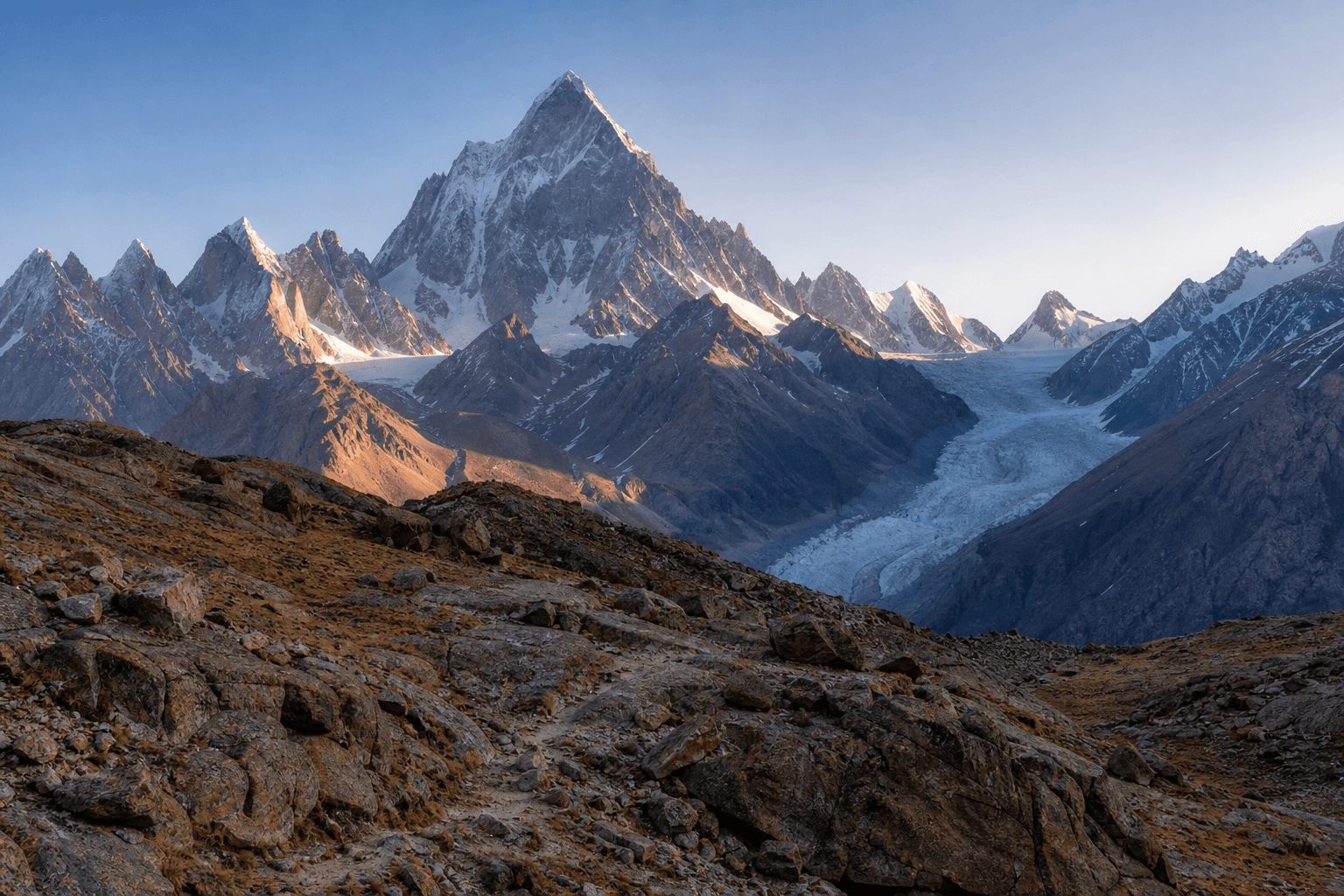
A quieter alternative to the main Askole road corridor, with Shigar villages, remote camps, a roughly 5,070-metre pass, broad views toward the central Karakoram, and a descent toward Askole.
K2 Expeditions & Trekking Announces Strategic Partnership with Namla Expeditions

A 14-day private Skori/Skoro Pass journey toward Askole, with a condition-dependent high-point extension, local guides, camps, permits, and porter support.
Shigar Region — 5,070 m
Adventure Overview
This private journey follows the historic high route commonly referred to locally and in older route notes as Skori or Skoro Pass, linking the Shigar side with the Askole and Braldu region at approximately 5,070 metres.
Any additional Skori Peak or nearby high-point attempt is not assumed in the base trek. It is included only after the local team verifies the intended objective, access, permit position, snow conditions, participant experience, and equipment required.
Suitable For
For very fit, experienced trekkers comfortable with consecutive camp days, loose trail, moraine, snow, steep ascent and descent, early starts, cold high camps, and basic roped or protected movement where conditions require it.
Route Notes
Highlights
A quieter alternative to the main Askole road corridor, with Shigar villages, remote camps, a roughly 5,070-metre pass, broad views toward the central Karakoram, and a descent toward Askole.
Terrain
Expect rough village trail, scree, boulders, seasonal streams, moraine, steep snow near the pass, and a long descent. Snow cover and meltwater can substantially change the route; camp positions remain flexible.
Camp Life
Hotels are used in Islamabad and Skardu. On trek, guests sleep in two-person tents supported by a dining tent, kitchen team, cooked meals, and boiled-water routines. Dietary allergies and medical requirements must be disclosed before departure.
Support
Namla coordinates licensed local guides, cooks, porters, drivers, and camp staff through its Askole and Skardu operations network. Staff ratios and porter loads are confirmed against route, group size, season, and current regulations.
Departures & Pricing
Expedition Price
On request
Pricing depends on group size, route support, permits, and preferred departure window.
Listed Dates
Flex
Seats Open
Ask
Departure Dates
Departure Window
Flexible
Share your preferred arrival window and our team will confirm route timing, permits, and local crew availability.
Custom departure windows are confirmed with route timing, permits, and crew availability.
Itinerary
Route Span
Days 1-14
13 detailed stages
Opening Stage
Day 1: Arrive in Islamabad
Final Stage
Day 14: Return travel arrangements
Airport welcome, hotel transfer, and journey briefing.
After immigration and baggage collection, a Namla Expeditions representative meets the group in the arrivals area and coordinates the hotel transfer. At check-in, the team confirms delayed baggage, emergency contacts, insurance details, dietary information already supplied, and the next morning’s schedule. The first full briefing introduces the Skori Peak & Pass Trek route, transport and weather contingencies, luggage separation, communications, and outstanding equipment questions. The remainder of the day is intentionally unstructured for rest, hydration, and recovery after international travel.
Fly when weather permits or use the road contingency.
The operations team checks the latest airline and weather information before leaving the hotel and coordinates the airport transfer, tickets, and expedition baggage. Mountain flights remain weather-dependent; if a cancellation occurs, Namla Expeditions explains the available road contingency and revises later stages without compressing essential acclimatisation or safety time. After landing, the group collects all luggage before transferring to the hotel. A short arrival briefing covers meals, local timing, equipment access, and the next day’s plan.
Check equipment, permits, weather, route information, and porter loads.
This is a working preparation stage for the Skori Peak & Pass Trek, not simply a free day. The Namla Expeditions team reviews passport and permit details, insurance and emergency contacts, personal equipment, group loads, food, fuel, communications, medical kits, and transport timing. Participants lay out critical clothing and technical items so missing or unsuitable equipment can be identified before leaving town. Staff then separate road, porter, base-camp, and personal baggage, followed by an evening briefing on weather, wake-up time, and the next route segment.
Travel to the locally confirmed roadhead and establish the first camp.
The group leaves after breakfast with personal bags and expedition loads secured in the assigned vehicles. Namla Expeditions drivers and field staff assess road, river, traffic, and weather conditions throughout the journey; stops are made for permits, meals, photography, and comfort only where parking is safe. Travel time can change after landslides or road works, so the day remains flexible. On arrival, rooms or tents are allocated, luggage is checked, and the guide gives a short briefing before dinner and rest.
Walk through rough valley terrain in supported stages.
After breakfast, the camp crew packs the shared equipment and the porter team receives the day’s allocated loads while participants carry their personal daypacks. The lead guide sets a sustainable pace over the terrain described above, with planned stops for water, food, layer changes, and regrouping before exposed, loose, or glaciated sections. On reaching camp, the team checks in with the guide, changes into dry layers, hydrates, and inspects feet and equipment. Dinner is followed by a weather, health, and route briefing for the next stage.
Gain altitude conservatively and establish the camp selected for current water and snow conditions.
After breakfast, the camp crew packs the shared equipment and the porter team receives the day’s allocated loads while participants carry their personal daypacks. The lead guide sets a sustainable pace over the terrain described above, with planned stops for water, food, layer changes, and regrouping before exposed, loose, or glaciated sections. On reaching camp, the team checks in with the guide, changes into dry layers, hydrates, and inspects feet and equipment. Dinner is followed by a weather, health, and route briefing for the next stage.
Rest, inspect the pass approach, and review every participant and piece of required equipment.
A rest or acclimatisation day is managed actively and may change with weather and team condition. Priorities are sleep, regular meals, hydration, foot care, drying clothing, charging essential devices, and repairing equipment. When appropriate, the guide leads a short, unhurried acclimatisation walk before returning to the same sleeping altitude. Each participant reports headache, nausea, unusual fatigue, sleep problems, or other concerns privately and promptly. Staff reorganise loads and supplies, and the evening briefing confirms whether the planned route can continue safely.
Start early for the steep high route, cross around 5,070 metres if conditions permit, and descend to a protected camp.
The pass team normally starts very early to use the most stable available conditions. Before departure, guides inspect the approach and check boots, layers, headlamps, helmets, harnesses, crampons or traction, and the rope or fixed-line system required for the day. Participants move at controlled spacing, clip and unclip only as instructed, and regroup at protected points. Weather, snow, ice, rockfall, or participant condition can force a retreat. After the high point, attention remains on the longer descent, safe transitions, hydration, and reaching camp together.
Use the day for weather, recovery, descent, or an approved extension; no peak ascent is guaranteed.
A rest or acclimatisation day is managed actively and may change with weather and team condition. Priorities are sleep, regular meals, hydration, foot care, drying clothing, charging essential devices, and repairing equipment. When appropriate, the guide leads a short, unhurried acclimatisation walk before returning to the same sleeping altitude. Each participant reports headache, nausea, unusual fatigue, sleep problems, or other concerns privately and promptly. Staff reorganise loads and supplies, and the evening briefing confirms whether the planned route can continue safely.
Continue through moraine and valley terrain to the Braldu side.
After breakfast, the camp crew packs the shared equipment and the porter team receives the day’s allocated loads while participants carry their personal daypacks. The lead guide sets a sustainable pace over the terrain described above, with planned stops for water, food, layer changes, and regrouping before exposed, loose, or glaciated sections. On reaching camp, the team checks in with the guide, changes into dry layers, hydrates, and inspects feet and equipment. Dinner is followed by a weather, health, and route briefing for the next stage.
Meet jeep transport when the road is open and return through Shigar.
The group leaves after breakfast with personal bags and expedition loads secured in the assigned vehicles. Namla Expeditions drivers and field staff assess road, river, traffic, and weather conditions throughout the journey; stops are made for permits, meals, photography, and comfort only where parking is safe. Travel time can change after landslides or road works, so the day remains flexible. On arrival, rooms or tents are allocated, luggage is checked, and the guide gives a short briefing before dinner and rest.
Rest, debrief, and retain time for road or weather delay.
A rest or acclimatisation day is managed actively and may change with weather and team condition. Priorities are sleep, regular meals, hydration, foot care, drying clothing, charging essential devices, and repairing equipment. When appropriate, the guide leads a short, unhurried acclimatisation walk before returning to the same sleeping altitude. Each participant reports headache, nausea, unusual fatigue, sleep problems, or other concerns privately and promptly. Staff reorganise loads and supplies, and the evening briefing confirms whether the planned route can continue safely.
Fly toward Islamabad or begin the road contingency with buffer before international departure.
The operations team checks the latest airline and weather information before leaving the hotel and coordinates the airport transfer, tickets, and expedition baggage. Mountain flights remain weather-dependent; if a cancellation occurs, Namla Expeditions explains the available road contingency and revises later stages without compressing essential acclimatisation or safety time. After landing, the group collects all luggage before transferring to the hotel. A short arrival briefing covers meals, local timing, equipment access, and the next day’s plan.
Field Planning
Fitness
Train for at least 10 to 12 weeks with progressive hill walking, back-to-back long days, leg and core strength, balance work, and a loaded daypack. Arrive with broken-in footwear and honest recent altitude and medical information. Fitness improves work capacity but does not prevent altitude illness.
Acclimatization
The route is paced with staged camps and a dedicated acclimatisation or weather day before the pass. A high-point extension is considered only if every participant is adapting well and the guide judges the terrain acceptable.
Equipment
Bring broken-in boots, warm sleeping bag, layered clothing, waterproofs, trekking poles, headlamp, sun protection, and personal first aid. Microspikes, crampons, harnesses, helmets, axes, ropes, or technical boots are specified after a current-condition review.
Safety
The guide checks snow, stream crossings, rockfall, weather, participant health, and descent timing. Fixed protection may not be present. The team carries communications, emergency oxygen, and medical supplies, but external rescue is conditional.
Permits
Namla confirms the route name and objective with the group before arranging permits, transport, local staff, porter loads, camp equipment, food, communications, and the Askole-side exit plan.
What's Covered
Included
Not Included
Common Questions
The spelling varies in local and older route references. Namla confirms the intended pass, trailhead, and exit with the group before opening permits or quoting final logistics.
Not automatically. A high-point or peak extension requires a clearly identified objective, appropriate permits, suitable conditions, accepted experience, and the correct technical equipment.
Yes. Weather, water levels, snow, trail condition, road access, participant health, and local advice can require a slower plan, an alternate camp, or a retreat.
No. Weather, daylight, aircraft availability, authorisation, insurance approval, and terrain all affect an evacuation. The field team also maintains a ground response plan.
Yes. Private dates are reviewed against the normal operating season, permits, road access, porter availability, group profile, and the time required to prepare the route safely.
From the same region
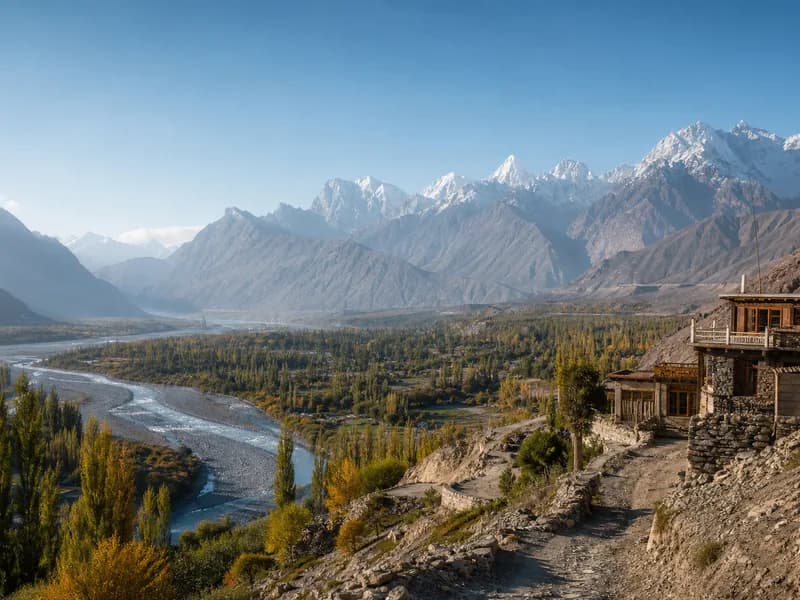
A premium 9-day private journey through Skardu, Shigar and wider Baltistan, combining heritage stays, local guiding, mountain landscapes and flexible seasonal touring.
Spantik Peak expedition to the 7,027m Golden Peak via Arandu and the Chogolungma Glacier with local Skardu logistics and base camp support.
Start Your Journey
Reach our team directly. No booking system, no automated responses — a direct line to the people who run these routes.